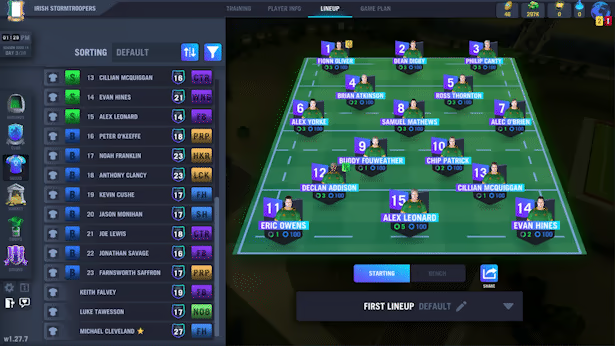
Blackout Rugby is a modern, multiplayer, social, world-class Rugby Manager Game! Take control of a novice club and sidestep and fend your way to glory. Take on people all around the world as you strategise, conquer the league, battle your way up the ladder, and build up your club infrastructure.
Revenue comes from in-game items and microtransactions, which our price-based model doesn't estimate. Copies below reflect the player base, not paid sales.
Media

About

Genres
Stats
Languages: English, French
Engagement
Reviews
Themes across 41 recent reviews and how positive each mention is. A keyword signal, not full sentiment analysis.
Reviews
Le jeu bug au tutoriel ce qui m’empêche d'aller plus loin c'est dommage. Je ne peux pas le recommander.
its because it wont let you play a real mach
YOU CANT PLAY MATCHES
Related
Related
Trends
Concurrent players on Steam, sampled daily since tracking started.
Hours played at review time, across 41 reviews with recorded playtime.
positive critical· bar length = how often the theme comes up
Blackout Rugby by Blackout Games is a management-focused sports simulation that takes the complex, strategic nature of rugby and translates it into a long-term, system-driven experience built around planning, development, and competition. Rather than putting players directly in control of on-field action, it places them firmly in the role of a club manager, responsible for shaping every aspect of a team’s growth. The game’s identity is rooted in preparation and decision-making, offering a slower, more deliberate take on sports gameplay that prioritizes strategy over immediacy. The core of the experience revolves around building a rugby club from the ground up. Players are tasked with managing a roster, developing individual athletes, and constructing tactical approaches that align with their team’s strengths. Each player is defined by a range of attributes that influence performance, requiring careful consideration when assembling a squad. Training systems allow for targeted development, giving players control over how their team evolves over time. This creates a sense of ownership, as progress is tied directly to the decisions you make rather than to random outcomes. Matches themselves are simulated rather than actively played, which shifts the focus entirely onto preparation. Tactical planning becomes the primary tool for success, with players adjusting formations, strategies, and priorities before each game. Once a match begins, the outcome is largely determined by these pre-match decisions, reinforcing the importance of understanding your team and anticipating your opponent. This approach can be highly satisfying for those who enjoy strategic depth, but it also means that the excitement of direct control is absent, making the experience feel more passive during key moments. A significant part of the gameplay loop is tied to progression systems that operate over time. Daily decisions involve allocating resources, selecting training activities, and managing infrastructure upgrades such as facilities and youth development programs. These systems add layers of complexity, as each choice contributes to long-term growth. The inclusion of additional mechanics, such as card-based bonuses or tech tree upgrades, introduces further strategic considerations, allowing players to shape their approach in different ways. Over time, the club evolves not just through player improvement but through the development of its entire ecosystem. The multiplayer environment is a central component, placing players in a shared world where they compete against others for rankings and progression. This adds a dynamic element, as success depends not only on your own strategy but also on how other managers develop their teams. Competitions, leagues, and player trading systems contribute to a sense of a living environment, where the state of the game is constantly shifting. This persistent structure gives the game a strong sense of continuity, encouraging players to return regularly to maintain and improve their position. However, this same structure introduces some of the game’s main challenges. Progression is tied to real-time systems, which can make advancement feel slow, particularly for new players. The competitive environment can also be uneven, as more established players have access to stronger teams and resources. Additionally, the presence of optional monetization systems can influence progression speed, creating moments where advancement feels gated. These elements do not prevent enjoyment, but they can affect pacing and accessibility. Visually, the game takes a functional approach, focusing on clarity and usability rather than presentation. Menus and interfaces are designed to handle a large amount of information, which is essential for a management-heavy experience. Match displays are minimal, emphasizing data and outcomes over visual spectacle. While this aligns with the game’s strategic focus, it may feel underwhelming for players who expect a more immersive representation of the sport. The pacing of Blackout Rugby is deliberate and long-term. It is not a game designed for quick sessions or immediate gratification, but rather for gradual progression over days and weeks. This can be rewarding for players who enjoy building systems and watching them develop over time, but it also requires patience. The lack of direct interaction during matches and the reliance on repeated management tasks can make the experience feel repetitive if the player is not fully invested in the process. Replayability is inherently tied to its persistent online structure. With ongoing competitions, evolving teams, and continuous progression systems, there is always something to work toward. However, the core gameplay loop remains consistent, and long-term engagement depends on the player’s interest in refining strategies and competing within the community. In the end, Blackout Rugby is a solid and thoughtfully designed management simulation that caters to a specific audience. It offers depth, strategic complexity, and a strong sense of progression, particularly for players who enjoy long-term planning and competitive environments. At the same time, its passive match structure, slower pacing, and reliance on real-time systems limit its appeal for those seeking a more immediate or interactive experience. It succeeds within its niche, delivering a detailed and engaging take on rugby management, even if it does not broaden its reach beyond that focus. Rating: 7/10
Énorme bug pour rentrer dans le jeu ce qui a valu un désinstallation de celui ci
Great game.
i
good game fr
nie git
☀️
Audience
Estimated from the language of this game's reviews — a proxy for where players are, not official Steam demographics.
Related
| Soccer Manager | — | 218 | 63% | — |
| War Blade | — | 161 | 61% | — |
| theHunter Classic | $0 | 44.5K | 58% | Free |
| Pool Nation FX Lite | $0 | 2.6K | 73% | Free |
| Freestyle 2: Street Basketball | $0 | 12.7K | 72% | Free |
| Real Pool 3D - Poolians | $0 | 19.7K | 76% | Free |