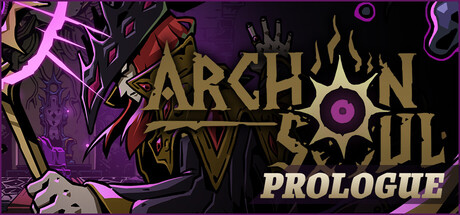
Archon Soul is a 2D roguelike dice-builder where you create powerful dice using swappable faces, runes, and bodies with unique effects. Draft spells, craft powerful synergies, defeat challenging enemies, and conquer the Archon's palace.

Revenue comes from in-game items and microtransactions, which our price-based model doesn't estimate. The player count below is how many people own it, not what they spent.
About
Archon Soul is a 2D roguelike dice-builder where you create powerful dice using swappable faces, runes, and bodies with unique effects. Draft spells, craft powerful synergies, defeat challenging enemies, and conquer the Archon's palace.


In the Prologue: 15 dice bodies (plus event only dice bodies) and 25 runes available.
In the full game: In addition to changing the face values of your dice, you can also modify them with Dice Bodies and Runes. With 40 runes and over 30 dice bodies, each dice has more than 65,000 combinations to master.

In the Prologue: Play as the Gaiamancer, with over 50 spells available.
In the full game: Play as the Gaiamancer, the Pyromancer, or the Thaumancer (or even a secret fourth character). Each mage has their own unique spells to choose from, over 200 spells in total! But spells alone won't be enough to get you through the palace to find the Archon Soul.

Craft powerful combos between your spells, runes, and bodies to survive and thrive through brutal combats.

Explore the Archon's palace, choose your path, engage in combat, encounter events, defeat powerful bosses, and fight your way through 4 acts to make your way to the Archon Soul. Can you prove your worth to the Soul, and become one with its power?
Skill testing and strategic roguelike gameplay
4 playable characters to choose from (in the full game)
Over 200 spells (in the full game)
40 dice runes and over 30 dice bodies (in the full game)
Dozens of unique enemies to challenge your play style
Beautiful illustrated artwork by Anais Lehoux and Natalya Samutina
Soundtrack by Ofelia Argiro
Genres
Stats
Languages: English, French, German, Japanese, Simplified Chinese, Traditional Chinese, Korean
Engagement
Reviews
Themes across 45 recent reviews and how positive each mention is. A keyword signal, not full sentiment analysis.
Reviews
Le concept est cool et le jeu est très sympa, mais on sent bien qu'il n'est pas encore fini. Quelques problèmes liés à l'équilibrage se font très très très bien sentir. Espérons que cela sera corriger, on croise aussi les doigts pour l'ajout de consommable et une possible personnalisation des personnages (deck de départ, ou pouvoir) car un seul disponible durant le prologue
the prologue is already good , there are several great and fun ways to win a run
Media

Related
Related
Price dynamics, follower growth, revenue and sales trajectories with interactive tooltips
This and every other Pro feature is free until October 20, 2026. A free account is all it takes.
Hours played at review time, across 45 reviews with recorded playtime.
positive critical· bar length = how often the theme comes up
Excellent! Slay the Spire but with dice. I like the idea of upgrading your dice rather then the cards, puts a new spin into the roguelike deckbuilding genre. Excited to play the full game, I see myself putting in work!
还不错
还行
Archon Soul: Prologue is a tactical roguelike that combines turn-based encounters, spell-focused build creation, and an unusually flexible dice customization system. Rather than treating dice as a basic source of random numbers, the game makes them an important part of character development. Players can alter how their dice function and then combine those properties with spells to create increasingly elaborate strategies. Developed by PolyGryph and published by Goblinz Publishing and Maple Whispering Limited, this Prologue works as an introduction to the broader concept while still offering enough mechanical variety to stand on its own for several runs. The defining feature is the ability to construct and modify dice through different bodies, faces, and runes. The Prologue provides 15 dice bodies, with additional possibilities appearing through events, alongside 25 runes that can influence how a build behaves. This approach gives players meaningful control over an element that would normally be associated almost entirely with chance. Rolls still introduce uncertainty, but preparation determines how effectively different results can be exploited. A strong build is therefore less about hoping for a perfect number and more about arranging the available components so that several possible outcomes remain useful. Spell selection adds another substantial strategic layer. The playable Gaiamancer has access to more than 50 spells, allowing runs to develop in noticeably different directions. Individual spells can provide immediate value, but the more satisfying strategies come from discovering combinations between spells and customized dice. Effects that initially appear modest can become extremely powerful when supported by the correct runes or dice configuration. Conversely, taking every seemingly strong spell can weaken a build by reducing consistency. The game rewards specialization, careful drafting, and understanding how individual mechanics contribute to a larger strategy. Combat is turn-based and places considerable emphasis on planning. Each encounter becomes an exercise in evaluating resources, potential combinations, enemy threats, and the consequences of available rolls. Because the mechanics are interconnected, decisions made outside combat can be just as important as choices during battle. Changing a die or selecting a new spell can alter the effectiveness of an entire setup. This makes progression feel more involved than simply collecting upgrades with increasingly large numbers. Exploration through the Archon's palace follows a roguelike structure built around repeated attempts, branching decisions, encounters, events, and increasingly dangerous opposition. Choosing a route introduces risk and reward considerations because the easiest immediate path may not necessarily provide what a developing build needs. Players have to balance survival against opportunities to acquire better components. Boss encounters act as important tests of whether a strategy has genuine consistency or has simply survived earlier battles through favorable circumstances. The difficulty can be demanding, particularly during the first few attempts. There are enough interacting systems that understanding the value of every rune, spell, and dice body takes time. New players may initially create combinations that appear effective but fail when confronted with enemies requiring a different response. Fortunately, this process of experimentation suits the roguelike format. Failure provides information, encouraging the player to reconsider previous decisions and approach the next run with a more coherent plan. Replayability is one of the Prologue's stronger qualities. Although its content is naturally narrower than what is planned for the complete experience, dozens of spells combined with numerous runes and dice configurations produce plenty of experimental possibilities. One run might emphasize reliable and controlled effects, while another can embrace more volatile combinations capable of generating dramatic results. Players interested in optimization can spend considerable time testing how small changes affect the overall efficiency of a build. The 2D presentation gives the adventure an appealing dark fantasy identity. Character illustrations, interface elements, environments, and effects support the mystical setting while keeping the strategic information reasonably understandable. This clarity matters because the player frequently needs to compare several interconnected mechanics. The atmosphere also helps give personality to what could otherwise have felt like an abstract collection of numbers and probability calculations. The largest limitation comes directly from being a Prologue. Only part of the broader game's intended selection of characters, spells, dice bodies, and runes is available, so players should not expect the full scope of progression promised by the complete version. The focus on the Gaiamancer nevertheless provides a useful demonstration of how substantially different builds can emerge from one character. It succeeds at showing the foundation of the larger game rather than merely presenting a short tutorial. Steam Deck compatibility is officially categorized as Playable rather than fully Verified. Performance with the default graphics configuration is considered suitable, and the game can run successfully on SteamOS. However, handheld players should expect compromises. Some functionality is not fully accessible through the default controller configuration, touchscreen interaction or a community controller layout may occasionally be useful, and text entry can require manually opening the virtual keyboard. Some interface text may also appear small, while certain prompts can display keyboard, mouse, or non-Steam Deck controller icons. It is therefore functional on the Deck, but the experience is less seamless than a fully optimized handheld release. Overall, Archon Soul: Prologue offers an inventive interpretation of the roguelike deckbuilding formula by making customizable dice central to both progression and combat. Its strongest quality is the way it allows players to influence probability through preparation rather than eliminating randomness altogether. The combination of spell drafting, dice construction, runes, branching progression, and challenging encounters creates considerable strategic depth from a relatively compact introductory package. Some players may find the number of interacting systems initially overwhelming, and the Prologue inevitably stops short of the variety expected from the complete game, but it provides a compelling foundation for players who enjoy experimentation and highly customizable builds. Rating: 8/10
Very fun demo which allows a full run with one character (of what looks like 4). Manipulating dices is fun and the mechanics are explained by hovering. Waiting for the full release :)
所謂スレスパライクなデッキ構築ローグライトですね。 カスタマイズできるサイコロを振った目で戦うところが特徴的。 デモ版でもけっこう遊べるし面白いです! 日本語訳も良くできていて問題なさそうです。
骰子加卡牌的搭配很有趣, 骰子又拆分成骰体、骰面、符文 技能也需要特定的骰子启动。 骰子和技能的融合度比较高。 不会有什么没啥用的功能模块。 总体来说是比较好玩的, 缺点方面,就是UI和美工差点意思。 卡牌和骰子希望有更好的展示效果。 战斗中的操作便利性能更顺手一些。 还有就是随机性的事件,希望能多一些选择和趣味。 以及攻略路线方面,希望也能有更多的选择。 大致就没有其他什么问题了
+Free, but with actual content -> you can clear a run +Plays fantastically well +Player choice everywhere +Functional UX/UI +Neat audio -Full game isn't released yet :] = Highly recommended!
Selling now
See how fast this game is selling right now — estimated copies and revenue per day from recent review growth.
Players by region
Where this game's players are, estimated from review languages.
Related
| Game | Estimated lifetime revenue | Reviews | Review score | Price |
|---|---|---|---|---|
| — | 0 | — | — | |
| $2M | 3K | 92% | $24.99 | |
| $174 | 1 | 100% | $5.40 | |
| — | 0 | — | — | |
| — | 0 | — | — | |
| $0 | 15 | 80% | Free |