Modeled estimate, not a reported figure. How we estimate →
Media

About
Genres
Stats
All-time low is the lowest price we've recorded for this game since we started tracking it.
Languages: English, Spanish - Spain, Spanish - Latin America
Engagement
Reviews
Themes across 41 recent reviews and how positive each mention is. A keyword signal, not full sentiment analysis.
Reviews
I really wish I could give this game a neutral rating. First of all, unlike a game like Chants of Sennaar, this game really doesn't have anything to do with language. It's a sokoban game that uses alephs as some of the objects you can manipulate. Aside from the game's clever name, you could just as easily replace these alephs with smiley faces or Christmas trees and the mechanics would be exactly the same. In this game you push around symbols that, if I understand correctly, correspond to different Hebrew vowel points. They can connect to one of the alephs, and once connected these alephs have different mechanics. The game is clever in its mechanics and the level design is done very well. However, the game does not do a good job of explaining the mechanics to you. Each new world introduces a new type of symbol but it doesn't give you any clue as to what it does. So the first level of the world is fairly small, but I often found myself moving around randomly trying to figure out what this new symbol is supposed to do. The puzzles in the levels are clever, but several times I found myself stuck on a level for an extended period of time (over an hour) having seemingly exhausted all possibilities. In frustration, I'd look at the solution online, and in every case the the solution required using a mechanic that wasn't introduced previously in the game. Often times these mechanics were in the middle of a level that would be fairly challenging without the need of figuring out a new rule to the game on your own. Maybe this game isn't for me and I need more hand holding in my puzzle games, but I ultimately found this game to be more frustrating than enjoyable. I rarely had this feeling while playing other "hard" puzzle games like Baba is You or Stephen's Sausage Roll. The thought of continuing feels more like a chore to me, so unfortunately I had to uninstall. If you like sokoban/grid based puzzle games like Felix the Reaper or Slayaway Camp where the solutions start to become borderline over-complicated, then you'll probably enjoy this game.
Related
Related
Trends
Concurrent players on Steam, sampled daily since tracking started.
Hours played at review time, across 41 reviews with recorded playtime.
positive critical· bar length = how often the theme comes up
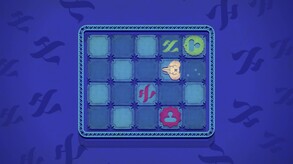
[h1] Alephant: An enigmatic Hebrew Sokoban about elephants and language [/h1] [quote] [h2] Verdict: ★★★★✩ (9/10) [/h2] [/quote] [h2] [u] Background [/u] [/h2] Alephant is very much derived from the Sokoban style, but its unique style sets it apart from other games in the genre. The game is themed around the quirks and idiosyncrasies of the Hebrew language and follows the journey of a player-controlled elephant as it meets a group of Hebrew-speaking oxen. However, the oxen do not fully speak Hebrew; instead, dialogue (and the game in its entirety) is centered around the silent Hebrew letter aleph (א) and the diacritical signs it is modified with to produce sound. The aforementioned “aleph”-ant’s task throughout the game is to learn about the different diacritical signs of Hebrew’s niqqud system (i.e. kamatz, segol, and hiriq). As such, the use of the niqqud system functions largely as a core gameplay mechanic to augment the Sokoban formula with unique mechanics. [h2] [u] A Rich Cultural History [/u] [/h2] The game hides the rich cultural history it represents in its design. The non-playable oxen symbolize the original Proto-Sinaitic glyph for the aleph (and elephant as a word speculatively shares a cognate with the aleph), the grainy textile-like aesthetic and soundtrack are reminiscent of a general Middle Eastern style, the right-to-left level progression comes from the right-to-left nature of Semitic script, and the various chapter themes (English, Greek, Phoenician, Arabic, and finally Hebrew) depict the languages’ connections to the aleph. [h2] [u] The Sokoban Formula [/u] [/h2] Alephant has a surprising amount of depth, with its deceivingly simple twists to the Sokoban formula allowing for some really expertly-crafted levels that can be very tricky to solve. Completely varied and increasingly complex techniques need to be used from level to level, a process made exponentially harder by the game’s intentional lack of tutorial, hints, and any sort of assistive mechanisms. In other words, the player is left in the dark on what to do and how gameplay elements operate, requiring a significant amount of trial-and-error and self-discovery to “learn” the game’s seemingly arbitrary rules (very similar to the process of learning a language!). Each level includes one or more silent alephs and the corresponding number of separated niqqud tiles. The player has to connect all the alephs to all the niqqud tiles Sokoban-style. However, the core mechanics come into play as the player must make use of the various formed sounds (אָ ,אֶ, and אִ) and utilize their unique effects on the board (for example, the segol niqqud causes the player to teleport to a different aleph). It would be interesting to see the developer tackle the other diacritics of the niqqud system in future updates and how they would interact in more complex and compounding ways, but the game is already quite engaging as is. [h2] [u] Doable with Some Finagling [/u] [/h2] The main game (the middle rows of each chapter) is fairly doable with some finagling, but optional levels become exceedingly complex as the player progresses — it can take up to an hour to find the solution for a particularly difficult level. Puzzle-solving can get excruciatingly frustrating, especially when the player is struggling to figure out how to even start a level, but the intrinsically-motivated payoffs are surprisingly rewarding every time. [h2] [u] Final Thoughts [/u] [/h2] It’s a very unique puzzler and, to be honest, I can’t find even a single fault with the game. The exceptional level design, the remarkable and enigmatics gameplay mechanics, the cozy aesthetic, and the deeply embedded cultural representation all come together perfectly to make Alephant a standout addition to the Sokoban genre.
类推箱解谜 分支难度曲线有点陡峭 看完第五章机制,想到后续的可能性直接肃然起敬了
Very few games manage the design feat of 1) restraining themselves to a very small amount of core mechanics, 2) exploring the full depth of suprising consequences to those rules, and 3) constructing levels that are minimal and fair, yet remain challenging and interesting to solve. For those who like focused, tight levels with powerful ideas, and a logical march towards a unique solution - it is a very good puzzle game, among the best in its class. Definitely Le Slo's best game so far, although if you do play and like it, I recommend that you also check out his earlier free games at https://le-slo.itch.io, notably its closest sokoban cousins Flockoban and Metamor[ρ]hosis, for even more of this style of puzzle design!
Un puzzle game in stile sokoban davvero ben realizzato con delle meccaniche sempre nuove che tengono incollato il giocatore fino alla fine. Il problema è proprio riuscire ad arrivare al finale perchè la difficoltà è elevatissima e non ci sono aiuti di alcun genere. Adatto ad un pubblico già abituato a sfide impegnative.
游戏机制在富有创意的同时做到了简洁而易于理解。谜题设计清晰,可推性强。 游戏画面,背景音乐和音效都很优美。 是像精美的桌面小摆件一样,使人想要珍藏的解谜游戏。 (神秘剧情) (还在第三章)
Overwhelming state space, some really cool tricks and levels (like top right in Theox), but I can't quite keep up. Last level was so demoralizing, spending hours building out a solution that's barely not possible, then looking it up to see I understood literally nothing relevant. [Note: Non-background playtime was 27h]
レベルデザインを通してルールや技を自力で学んで解いていく倉庫番パズル。 コンパクトな盤面の中に様々なアイデアが詰め込まれており、何かしら気付きが無いと解けない問題も多数。 パズルとしての楽しさもさることながら、独自のビジュアルや随所のカットシーンから醸し出される独特の雰囲気も癖になる良さがあります。 しかもこのカットシーンが単なる演出に留まっていないのが何とも憎いところだゾウ……!
前半部分引入机制非常有趣且亲民,最后一章机制引入完难度骤升变成腾挪地狱,需要腾挪很好才能玩下去。我不喜欢这种腾挪盖过点子的关卡设计,鉴于关卡不多,不推荐但不至于差评。
제발 방향을 바꾸지 말아다오...
Audience
Estimated from the language of this game's reviews — a proxy for where players are, not official Steam demographics.
Related
| 7 Days to Die | $425.3M | 403.5K | 87% | $44.99 |
| Mount & Blade II: Bannerlord | $309.8M | 293.9K | 88% | $49.99 |
| Squad | $166.3M | 240.4K | 81% | $39.99 |
| Don't Starve Together | $164.6M | 539.5K | 95% | $14.99 |
| Satisfactory | $164.4M | 275.8K | 97% | $27.99 |
| Kerbal Space Program | $154.7M | 144.7K | 96% | $39.99 |
Related
| PolyCore Defense | $14K | 58 | 90% | $9.99 |
| Alternate Existence | $14K | 60 | 83% | $11.99 |
| Sky's The Limit MAH-JONG | $14K | 58 | 69% | $8.99 |
| Tex Murphy: The Pandora Directive | $14K | 74 | 86% | $9.99 |
| Raindrop Sprinters | $14K | 72 | 99% | $9.99 |
| StarCrossed | $14K | 75 | 77% | $9.99 |