Modeled estimate, not a reported figure. How we estimate →
Media

About
Genres
Stats
All-time low is the lowest price we've recorded for this game since we started tracking it.
Languages: English
Engagement
Reviews
Themes across 40 recent reviews and how positive each mention is. A keyword signal, not full sentiment analysis.
Reviews
Physics based puzzle game. Fine. Janky controls. Pretty bad but not a complete turn off. Add timing to your puzzles with janky controls. Absolute mess.
Akda claims to be a simple puzzle type game, but it isn't. This game relies almost entirely on luck. Even after copying a guide, if you're a fraction of a black dot off, the ball will be either be sent off the screen, or will stop completely once it has hit whatever was in its way. Both issues force you to retry the same level a dozen times, if not more, just to complete it. Manually restarting once a ball has gone out of bounds gets tiring, but the music's nice, I guess. While it's possible to complete, it's not worth the hassle, or the full price.
Related
Related
Trends
Modeled estimate over time, reconstructed from Steam's monthly review histogram.
Hours played at review time, across 40 reviews with recorded playtime.
positive critical· bar length = how often the theme comes up
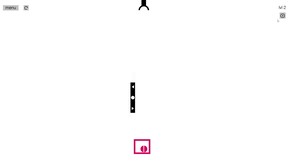
akda by Snkl Studio is the kind of small-scale indie puzzle game that immediately signals its intentions through simplicity. It strips the genre down to its bare essentials: a ball, a basket, and a series of obstacles that stand between the two. The player’s role is to release the ball at the right moment and manipulate the environment so that it lands successfully in its target. On paper, this is a clean and familiar concept rooted in physics-based problem solving, evoking the spirit of early casual puzzle games that relied on timing, trajectory, and experimentation rather than elaborate systems or storytelling. As you move through its set of roughly thirty levels, the game gradually introduces additional layers of complexity. Moving platforms, shifting barriers, and timing-sensitive elements begin to appear, requiring more precise inputs and sharper observation. At its best, akda can deliver brief flashes of satisfying problem-solving, especially when a solution clicks after a few failed attempts. The core loop is easy to grasp, making it accessible even to players who don’t typically engage with puzzle-heavy experiences. There’s a certain purity to how it avoids overcomplication, focusing entirely on the act of manipulating motion and timing within a confined space. However, the simplicity that initially feels like a strength quickly reveals its limitations. The game leans heavily on precision timing, often to a degree that feels excessive rather than challenging. Instead of encouraging thoughtful planning or creative solutions, many levels end up demanding near-perfect execution, where even slight deviations can cause failure. This creates a dynamic where progress feels less like the result of understanding the puzzle and more like persistence through repeated attempts. Over time, this trial-and-error approach begins to erode the sense of accomplishment that is typically central to the genre. A major contributing factor to this frustration is the inconsistency of the physics system. Movements and interactions don’t always behave in a predictable or intuitive manner, which is particularly problematic in a game built entirely around physics-based mechanics. When outcomes feel unreliable, it becomes difficult for players to refine their approach or learn from mistakes. Instead of building confidence in the system, the player is often left second-guessing whether a failure was due to their own timing or the game’s internal logic. This unpredictability undermines the otherwise straightforward design and makes later levels feel more punishing than engaging. Visually, akda adopts a minimalist style that aligns with its gameplay philosophy. The environments are composed of simple shapes and muted backgrounds, with little in the way of visual flair or thematic identity. While this keeps the focus on the puzzles themselves, it also results in a somewhat sterile presentation that lacks personality. The audio design follows a similarly subdued approach, offering light, unobtrusive sound that neither distracts nor significantly enhances the experience. There is a calmness to the overall atmosphere, but it doesn’t leave a lasting impression. In terms of content, the game is undeniably brief. Most players can complete it in a single sitting, and there is little incentive to return once all levels are cleared. There are no alternate modes, hidden mechanics, or meaningful progression systems to extend its lifespan. This brevity might be acceptable given its low price point, but it reinforces the sense that akda is more of a small experimental project than a fully realized product. It feels like a concept that could have been expanded into something more robust, but instead remains limited in scope and ambition. Ultimately, akda is a mixed experience that highlights both the appeal and the risks of minimalist game design. Its core idea is solid and occasionally engaging, but the lack of polish, inconsistent physics, and reliance on overly precise timing prevent it from reaching its full potential. It may find a niche audience among players who enjoy short, experimental puzzle games and are willing to overlook its rough edges, but for most, it will likely feel forgettable and at times frustrating. There is a foundation here that could have supported a much stronger game, but in its current form, it remains a modest and uneven entry in the physics puzzle genre. Rating: 4/10
+ Easy achievements - Game is too easy - Boring gameplay - It feels like a game made only for achievement hunters to be tempted by easy 100% Seriously, there is no challenge and nothing fun in this puzzle game. Definitely not worth the price.
This game is so PICKY and yet it's so hard to get the sliders exactly where you want them. In theory it seems like a cool little game, but in my opinion, it was NOT executed well. I could move the sliders to what seems the exact same spot 3 times and get 3 different results. I rage quit this game multiple times, but finally powered through it.
Ta bueno, dale un rato.
Здесь вас ждет кривая нереалистичная механика, простенькая графика и унылая музыка, при всем этом разработчику на протяжении 30 уровней ни раз удается заставить напрячь извилины. Рекомендовать могу брать только на бесплатных раздачах.
HORRIFIC physics with tons of random stuff happening you can never reasonably expect, abysmal controls. Absolute nightmare to play. Avoid at all costs.
непроходимый шлак
Horrible physics. The slightest inconsistency in the placement of the movable platforms will have vastly different outcomes.
Momentum
Pace estimated from the game's recent review growth (our daily snapshots) at its own sales-per-review ratio — a momentum signal, not booked sales.
Audience
Estimated from the language of this game's reviews — a proxy for where players are, not official Steam demographics.
Related
| Cockroach! | $1.3K | 78 | 99% | $0.99 |
| Knights and Castles | $1.3K | 88 | 64% | $0.89 |
| Idle Warrior | $1.3K | 68 | 54% | $0.49 |
| FIND KITTENS 9: Aliens | $1.3K | 77 | 97% | $0.99 |
| TOTOBALL | $1.3K | 69 | 78% | $0.99 |
| Geometry Rush | $1.3K | 126 | 85% | $0.69 |