Medieval Europe is in the middle of religious upheaval and many a preacher predict the imminent end of the world. Immerse yourself in a dark fantasy story with true historical events in the background. You'll be facing intricate puzzles, challenging battles and cunning stealth.
Modeled estimate, not a reported figure. How we estimate →
Media

About
Genres
Stats
All-time low is the lowest price we've recorded for this game since we started tracking it.
Engagement
Hours played at review time, across 40 reviews with recorded playtime.
Reviews
Themes across 40 recent reviews and how positive each mention is. A keyword signal, not full sentiment analysis.
positive critical· bar length = how often the theme comes up
Reviews
1428: Shadow over Silesia (v1.1.38) https://steamcommunity.com/sharedfiles/filedetails/?id=3550029169 [b]POSITIVES[/b] + schöne Lichtstimmungen und Schattenwürfe + freie Kameradrehung (leider ohne Zoom) + interaktive Objekte hervorhebbar (Leertaste) + oldschool Gewichtslimit + Auswahlmöglichkeiten bei den ausführlichen und vollvertonten Dialogen + Schleich-Möglichkeit + Chiffre-Rätsel bei denen man in verschlüsselten Briefen, geheimen Zeichen selbst Buchstaben zuordnen muss https://steamcommunity.com/sharedfiles/filedetails/?id=3550555321 [b]NEGATIVES[/b] - miese Grafik - keine deutsche Vertonung (aber deutsche Texte), obwohl diese perfekt in das deutsche Spielgebiet mit seinen deutschen Orten und Bewohnern gepasst hätte, und was noch kurioser ist, man hört manchmal mitten im englischen Satz deutsche Wörter - keine eigene Charaktererschaffung - sehr schlechte Steuerung - furchtbare Kämpfe die man zudem oft in der Unterzahl bestreitet - fehlender Ausrüstungsvergleich für neue Ausrüstung - fehlende Balance und keine anderen optionalen Schwierigkeitsgrade - nerviger „Vergiss nicht die Kamera zu drehen“-Troll-Hinweis, mit dem das Spiel einen etwa zwei Dutzend Mal belästigt (ein Problem das es schon seit Release gibt) - es kann immer nur eine einzige(!) Waffe getragen werden - Fässer und dergleichen können nicht zerschlagen werden, sprich man kann mit vielem was man sieht gar nicht interagieren - Fackelhalter kann man entzünden, aber keine Kerzenleuchter oder Kohlebecken - Zeitkritische Aufgaben, erhöhen nicht wirklich den Spielspaß - HUD mitsamt diversen aktiven Aufgaben, die nicht ausblendbar sind - Inventar nicht aufräumbar und was noch schlimmer ist, es ist nicht ausblendbar, man sieht es also die ganze Zeit unten links im Bildschirm statt es in ein extra Fenster zu packen - seltsame Vermischung von echten historischen Orten, Persönlichkeiten und Gegebenheiten mit übernatürlicher Fantasy (Dämonenbeschwörung, leuchtenden Augen, Höllentore, Untote usw.), was leider sehr unpassend wirkt; entweder man bleibt historisch korrekt, oder man macht Fantasy, beides kombiniert wirkt einfach nur unpassend - linearer Aufbau und Erzählweise ohne wirkliche Freiheiten in der Erkundung - Absturz: „1428.exe reagiert nicht“ https://steamcommunity.com/sharedfiles/filedetails/?id=3550841082 [b]FAZIT[/b] 1428: Shadows over Silesia, von Ende 2022, ist ein düsteres Action-Adventure-RPG in isometrischen Perspektive. Zeitlich ist das Ganze im Spätmittelalter des 15. Jahrhundert angesiedelt, während der Hussitenkriege gegen die Böhmischen Könige und gegen die römisch-katholische Kirche. Protagonisten sind dabei abwechselnd, die auf dem Cover abgebildeten, Hynek „der Fuchs“ von den Hussiten (abgeleitet vom Theologen und Reformator Jan Hus) und der Johanniter-Ritter Lothar von Reichenstein. Die Schwerpunkte des Spiels liegen auf Kampf, Erkundung und Rätseln. Wobei die ersten beiden massive Schwächen haben. Die Optik erinnert ein wenig an das alte Ultima Pagan VIII von 1994, das aber fast besser aussieht, womit die hier dargebotene Grafik mehr als nur gewöhnungsbedürftig aussieht. Das Leveldesign ist eher unglücklich und wirkt oft unfertig. Das HUD und die Inventarbedienung ist einfach nur altbacken und müllt einfach nur dreist einen ungewöhnlich großen Teil des Bildschirms mit selbigem voll. Was hat das Inventar eigentlich im normalen Spielbildschirm zu suchen? Warum packt man das nicht in ein extra optionales Fenster wie in allen anderen Spielen? Aber das mit Abstand Schlimmste ist die Steuerung und die Kämpfe. Man stirbt entweder selbst andauernd nach gefühlt drei Treffern oder wichtige NSCs, die sich tollwütig ins Gemetzel werfen, leben andauernd ab, wodurch man ständig zum Neuladen gezwungen wird. Bitte wer programmiert denn heute noch so einen ♥♥♥♥♥♥♥♥? Wieso muss man einen Brief erst „ausrüsten“ und kann diesen dann erst übergeben. Ich dachte erst das ist ein Plotstopper-Bug, aber nein, so was ist in dieser Spielekatastrophe ein Feature (ein Let‘s Player hat an der Stelle übrigens tatsächlich aufgegeben, weil er dachte das sei ein Bug). Weniger als die Hälfte aller Spieler haben das 1. Kapitel geschafft und nur 1/3 das 2. Kapitel, von wohlgemerkt 13. Kapiteln. Man hat hier ein paar Experimente gewagt, ist aber bereits an den grundlegenden Elementen gescheitert. Am besten vergesst ihr dieses Spiel, das von mir einen klaren Daumen nach unten bekommt, ganz schnell wieder. Wenn ihr an weiteren Reviews von mir interessiert seid, dann folgt meiner [url=http://store.steampowered.com/curator/10868887-Dark-Chummer%27s-Reviews/?appid=63110]Gruppe[/url].
I dropped the game at around chapter 9 and I currently don't want to continue, and it is a pity because the story is good (so far) as well as the characters. In short: PROS: [list] [*]Good story and characters [*]Graphic style [*]Some ideas and puzzles are really nice [/list] CONS: [list] [*]Clunky controls [*]Camera and objects are sometimes really hard to manage [*]Puzzles sometimes are frustrating due to game mechanics (see below) [/list] I my experience the game controls are too clunky and there were several points where I did not know what to do to proceed and sometimes I wasn't sure they were even puzzles but just "tasks". I played the game with a controller and while it helped a lot with the camera and combat, I found a lot of issues with objects and puzzles. In the end I tried with mouse and keyboard but I did not find it much better. Until Chapter 6 it was quite smooth for me, but from Chapter 7 it became really frustrating. There were many situation where I did try things that I thought good but sometimes I was missing something because I was not able to [i]see[/i] it for two main reasons: sometimes it was not highlighted and I did not think I could be able to interact with it, or because of the camera rotation (that is overall a problem, in my opinion, since in many fights or situation it is really hard to manage). In other situation what I was doing did not work but then, after many tries and no more solution to try I watched some videos, and I saw that it [i]was[/i] the correct solution: the problem could have been just a small bug or small thing (position of the character? timing? no clue) that I wasn't doing correctly. However, I feel that most of those issues I had are related to the game mechanics and during the following chapters (8 and 9) I started to feel really annoyed so I gave up.
I haven't seen a game with so many accesibility options for blind people. I like the game and setting by itself too.
I would recommend this game but it's not without MANY flaws. Here is why you should play it though. The game is like poor man's kingdom come deliverance and it doesn't even shy away from some references to that title. It is an action adventure game PURE AND SIMPLE with a strong direction and clearly it is aiming for something in the style of Daniel Vavra. I applaud this effort and I gotta say that in many regards it succeeds. However I cannot say that the graphics help that... The graphics of this game is old Runescape with lights and shadows. It is laughably bad especially during cutscenes. I believe it was a wise choice to have most of the game viewed from distance. The story is nice and even some voice acting is half decent. I liked some of the puzzles and the game surprised me more than once. It's this familiar feeling from your childhood that you play a random game you got on a CD from a magazine and nobody really knows it and you're just figuring it out as you go. I loved the fact that it made me feel that way. Fighting is awkward at best. It's the classic example of "more than the sum of its parts".
[h1][b]Stronger than Expected[/b][/h1] [quote]This is the first game I started playing from DLC, because it is a prequel to the main line, and, as the developer said on the Steam forum, there is a place to learn how to play the game more easily, so I tried it, and I can recommend it to you as well.[/quote] The Tourney at the Bear Rock is a good tutorial for the game. However, it won't teach you how to climb. I found it difficult to climb the rocks and the castle. I played with an Xbox One controller and couldn't find the climb points using the intended buttons, so I ended up randomly pressing keys and clicking the mouse. Also, picking up items from the ground can be frustrating if there are two or more items very close together. What a "tutorial" can teach you relatively well is combat, which is an essential skill to have. It is easy to learn but hard to master, because you must use one button to parry/cover and the other to attack, and you also have to rotate the camera if you want to see the guy who tries to end your pilgrimage. Of course, you are not a superhero, so your health is limited. Some potions can make life easier, such as those that speed up energy recovery or refill hit points. However, don't overuse them or you'll get a hangover. The game offers a variety of basic weapons, including maces, axes and swords. My favourite was the sword because of its greater range, although it requires more energy. You can also find collectables: Prague ducats and Prague groschens. Sadly, they are more useless than useful. In the Torney DLC, you can buy new weapons, potions, shields, horses and horse clothing, but in the main story, there are only a few opportunities to purchase items later in the game. Speaking about the story, I think it is well-made. You play as two characters who are enemies. Hynie is part of the Hussites, who seek to reform the Church, while Lothar is part of the Crusaders, who want to stop them. However, Silesia is not a normal region. There is something dark hidden deep in the mountains that is stronger than either party could have expected. I liked how the stories of the two characters were intertwined and later connected. I played with the Czech voice-over, which was enjoyable and impressive for an indie game like this. Also, 1428 is accessible for blind people, with plenty of options to help them play. [b]Let's wrap it up. I enjoyed the game. It has a nice story that interconnects two different characters and good dubbing with funny quotes. However, the controls and camera can be frustrating. Visually, the game is simple but sufficient for its needs, and it has a well-fitting soundtrack which I was listening to while writing this review. I recommend buying the Tourney at the Bear Rock DLC and playing it before the main game. In addition, I would be very interested in playing any sequel that might be created in the future.[/b] [spoiler]P.S.: Bonus points for a friendly [url=https://steamcommunity.com/id/pkubicek]developer[/url], he helped me to solve [url=https://store.steampowered.com/news/app/1228500/view/505094741826732476?l=english]two[/url] bugs.[/spoiler] [table][tr][td][h2][b]1428: Shadows over Silesia 7.5/10[/b][/h2][/td][/tr][/table] [table][tr] [th]🟢 Story 🟢 Fun characters 🟢 Soundtrack 🟢 Czech dubbing 🟢 Accessibility options [/th][th]🔴 Controls 🔴 Camera 🔴 Nearly useless coins [/th][/tr][/table]
Un juego que solo por el período histórico que abarca y el lugar pocas veces visto en las tramas "videojueguiles", ya merece la pena, por que como dicen todavía muchos "los videojuegos no sirven para nada", pues Shadows over Silesia ya desmiente a esos agoreros porque nos encontramos con un pedazo de historia entre nuestro teclado y ratón. En la extinta Checoslovaquia también se produjeron excisiones dentro de la iglesia católica por diversas motivaciones, estamos ante un período de mucha agitación en este ámbito y tenemos un movimiento reformista que pretendía acabar con los males de la iglesia, podría decirse sin temor a error que fue el inspirador del posterior luteranismo. En este caso nos referimos a Jan Hus, y una vez martirizado sus seguidores, los husitas; en la historia manejamos a Hynek, un husita, y Lothar, caballero hospitalario, sus historias se iran entrelazando y convirtiendo sus objetivos en comunes según vayamos avanzando, unido esto a elementos de fantasía y tramas demoníacas que surgirán avanzado el juego. Está bastante bien la forma de hilar toda la historia, aprovechando el contexto real, luego una vez aparecen los elementos demoníacos a veces se vuelve muy cliché. Tenemos un diario que se va completando al alcanzar objetivos y avanzar en la historia. Si por algo destaca también el juego es por su enorme sentido del humor, guiños a películas u otros juegos y el carisma sobre todo de Hynek, un borrachín pendenciero, tendremos carcajadas aseguradas a lo largo del juego. Al interactuar con los personajes, en muchas ocasiones se nos abrirán líneas de diálogo que nos darán un resultado diferente y romperán un poco la linealidad. La perspectiva en todo momento es una vista isométrica que recordará a juegos de algún pasado no muy lejano, todo en 3D pero básico, eso no quiere decir algo malo, al contrario, todo luce colorido, hermoso en muchas ocasiones a la vista, y con un aspecto y ambientación que sumerge en el medievo, el manejo de los dos personajes es similar, recorriendo escenarios cerrados, explorándolos, hablando con ciertos personajes y buscando elementos para avanzar, es interesante el sistema de juego, aunque a veces cuesta encontrar ciertos objetos por ser muy pequeños. Los efectos de iluminación, luces y sombras son espectaculares, ya quisieran muchos títulos de mayor presupuesto. Otra parte fundamental es la acción, tenemos algunas fases de sigilo, en las que hay que pasar desapercibido, estilo "Commandos" pero más tosco y las fases de acción o lucha propiamente dicha, y ahí es donde puede echar para atrás a muchos jugadores (recomiendo encarecidamente ratón y teclado), la razón es que se necesita práctica y saber cuando asestar los golpes al enemigo, con click izquierdo se golpea y con el derecho se cubre con el escudo, disponemos de barra de vida, barra de energía y pócimas o amuletos para mejorar nuestras prestaciones en combate, pero este no se trata de machacar botones sino que hay que buscar el momento oportuno para golpear, saber esquivar o cubrirse y vigilar siempre al enemigo, olvídate de enfrentarte a más de dos enemigos seguidos sin aliados, estás muerto casi seguro. También existe un pequeño inventario para utilizar a veces cual aventura gráfica El apartado sonoro, viene con una magnífica traducción al castellano, de todo, salvo un par de líneas sin importancia, y voces en inglés o checo, recomiendo la segunda, pues todos los personajes tienen una gran interpretación y realza más el juego. Y la banda sonora es exquisita, con piezas orquestadas siempre acordes con el momento del juego o el lugar que visitemos. Los sonidos tanto del cruzar las espadas como del juego en general son muy buenos. Otros elementos a reseñar son las monedas ocultas, que están repartidas por los escenarios y serán a veces necesarias, los juegos por ejemplo de dados, muy entretenidos, o la resolución de puzzles tanto en el juego como cartas cifradas, requieren paciencia e ingenio así como intuición, son añadidos que aportan mucho al juego. Aparece algún que otro bug puntual pero nada que estropee la experiencia de juego. Además el desarrollador me respondió muy amable un par de dudas que tenía sobre un par de logros, algo muy de agradecer. En definitiva, un gran juego, por ambientación y período que abarca, sentido del humor, carisma, y si aprendes a luchar el sistema te encantará, muy recomendable, al igual que su DLC. NOTA 8´5/10
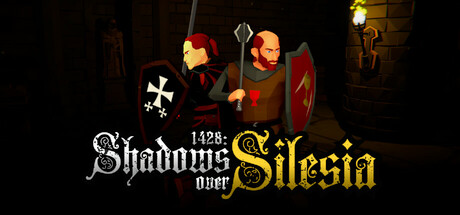
1428: Shadows over Silesia, developed and published by KUBI Games, is an unusually bold indie title because it refuses to treat medieval history as a decorative backdrop. Instead, it uses the Hussite Wars—one of Central Europe’s most turbulent and ideologically charged periods—as the emotional and philosophical foundation for its narrative. The game begins grounded in reality, depicting political mistrust, religious upheaval, and social fragility, yet gradually introduces occult elements, cryptic prophecies, and monstrous entities that feel unnervingly plausible within the era’s worldview. Rather than presenting medieval Europe as a romanticized battleground of knights and chivalry, the story leans into the era’s brutality, scarcity, superstition, and desperation. Through alternating perspectives—Hynek, a stern Hussite commander burdened by responsibility, and Lothar, a resourceful thief navigating society from the margins—the narrative paints a multifaceted portrait of a world collapsing under the weight of faith and fear. Their journeys occasionally intersect, but more importantly, they illuminate different social realities that history books often flatten. The structure of the game mirrors the unpredictability of life during wartime—no two chapters feel mechanically identical. Sometimes the player must infiltrate hostile fortresses without detection, studying patrol patterns and environmental layouts to find weaknesses. Other sections demand measured combat against armored soldiers or unholy creatures, where stamina management, spacing, and timing matter more than speed. The melee system is intentionally slow and tactical, reflecting the weight and risk of real medieval weaponry rather than the fluid power fantasies common in action games. Shields can fail, reckless strikes leave openings, and overconfidence is punished quickly. These grounded mechanics contrast sharply with supernatural encounters later in the campaign, where psychological tension replaces martial pragmatism. Environmental puzzles serve as connective tissue between these set pieces, encouraging observation and logic instead of trial-and-error brute forcing. The result is a campaign that remains mechanically engaging without relying on constant escalation or repetitive combat scenarios. Exploration is equally important, and the isometric perspective is used thoughtfully rather than nostalgically. Settlements, forests, castles, monasteries, and underground passages are constructed with historical awareness—architecture, tools, clothing, and furnishing styles reflect real Hussite-era research instead of generic medieval fantasy tropes. Even background details contribute to worldbuilding, whether it’s livestock wandering muddy roads, plague-marked homes sealed shut, or churches caught between sanctity and militarization. Lighting elevates these environments, creating pockets of uncertainty where torchlight barely penetrates, and the player’s imagination fills the darkness. Long stretches of silence or ambient sound help shape emotional pacing, reminding players that medieval life was as defined by vulnerability and emptiness as by conflict. One of the game’s most striking achievements is its dedication to accessibility, especially for visually impaired players—an aspect rarely prioritized in historically based action adventures. Fully implemented narration, detailed audio cues, text-to-speech features, and carefully designed interface elements allow players who typically struggle with visually intensive genres to navigate environments, solve puzzles, and participate in combat meaningfully. Rather than framing accessibility as an optional afterthought, KUBI Games integrated it into the core experience, demonstrating that historical immersion and inclusivity are not mutually exclusive. For an independent studio, this commitment is impressive and sets a strong example for future developers. The game is not without imperfections, many of which stem from its ambitious scope. Combat can initially feel stiff, and mastering its rhythm requires patience. Difficulty can spike unexpectedly, particularly during encounters that combine environmental hazards with aggressive enemies. The camera sometimes struggles in tight interior areas, causing temporary disorientation. Because the narrative values historical momentum over player-driven branching, choices tend to influence characterization more than plot direction, which may disappoint players seeking radically divergent outcomes. Animation quality, facial expressions, and some environmental textures reveal the constraints of a small development team, especially when compared to large-scale medieval productions. Yet these shortcomings rarely undermine what the game does well—they simply remind players that ambition often precedes budget. What ultimately makes 1428: Shadows over Silesia resonate long after completion is its refusal to sensationalize either history or fantasy. The supernatural elements are not spectacle for its own sake—they emerge from the same psychological landscape that fueled real medieval hysteria, political violence, and religious fervor. Horror becomes an extension of human belief rather than a genre intrusion, blurring the line between internal and external threats. Likewise, the game acknowledges that war is not fought solely by heroes but by flawed people trying to survive forces beyond their control. Its emotional impact comes not from triumph, but from endurance—moral, physical, spiritual. For players who crave historical fiction with thematic maturity, methodical combat, atmospheric worldbuilding, and stories that embrace complexity rather than simplification, 1428: Shadows over Silesia offers a rare and compelling experience. It feels handcrafted—patient, researched, personal—a testament to what a passionate small studio can accomplish when it speaks confidently in its own artistic language. At a time when medieval games often recycle settings without intellectual engagement, this one invites players to inhabit a moment in history where shadows—both literal and symbolic—were never just background scenery, but forces shaping the fate of nations. Rating: 7/10
Hi, I really tried to play the game trough but the entire game is only about cluncky combat with terrible controls. Somehow I never seem to be hitting anything, I need to be in the mouth of the enemy to hit someone. The combat completely does not function. The story was good nothing groundbreaking. Switching back and forth from 2 charachters is incredibly boring and breaks the flow of the game. I dont know even tho I played for 6 hours nothing happened in the game. The game is slow and offers little to satisfy you to keep going. There are these collectibles gold silver or something in the beginning it was sad that it is for buying or selling stuff but I never came across anyone who wanted my money. you can pick up books items etc. as much as you like as long as you dont exceed the carry limit, but there are basically no use for items at all in this game. I came across a skeleton boss so I sad let me drink the strentgh and stamina potions an reck this boss, but nooooo it was a puzzle fight. even tho I tried to kill him with buffs his health does not decay, and also he summones infinite number of enemies constantly... The Art style and overall look is great. There is also stealth for some reason. This game lacks a basic foundation where it can say Im a story telling game with stealth, or Im a combat focused fantasy game, or Im a game where you play 2 charachters one by one and explore the world in which you play the dedektif to solve what is going on in this world. Well this game is everything above. I really wanted this game to be good but for what it is, I cannot recommend this game.
An amazing game. A lot of love was put into it. It has a lot of historical lore which is also partialy based in local folclore. The controles are quite unusual, but once you get a hold of it, its really fun.
Rage Refunded, i cannot be arsed with a game with clunky controls when your trying to chase arsonists with an arrow that tells you the direction to go in, which i do, then to get blocked by trees which you cannot see through, then by a feckin log by a house blocked me the 2nd time, All this whilst trying to rotate the camera around so i can see, by the time i could see the timer expired like my patience. So, the game controls are clunky, the camera rotates far to slow, your blocked inconveniently by ♥♥♥♥ you cannot always see, combat is crap, no dodge or riposte, i think i would rather have my money back, thanks.
Related
Related
Trends
Modeled estimate over time, reconstructed from Steam's monthly review histogram.
Momentum
Pace estimated from the game's recent review growth (our daily snapshots) at its own sales-per-review ratio — a momentum signal, not booked sales.
Audience
Languages: English*, Czech*, Spanish - Latin America, German, Hungarian, Spanish - Spain, French, Ukrainian, Italian, Polish, Simplified Chinese*languages with full audio support
Estimated from the language of this game's reviews — a proxy for where players are, not official Steam demographics.
Related
| The Bunker 69 | $14.5K | 261 | 80% | $3.99 |
| Koloro | $14.5K | 86 | 94% | $9.99 |
| Fiz and the Rainbow Planet | $14.5K | 59 | 100% | $6.99 |
| Fabulous Food Truck | $14.5K | 142 | 49% | $2.99 |
| Edgar - Bokbok in Boulzac | $14.5K | 129 | 81% | $7.99 |
| Space Pilgrim Episode II: Epsilon Indi | $14.5K | 982 | 82% | $0.69 |