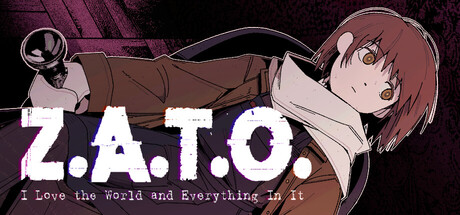
Really putting the "novel" in "visual novel". Z.A.T.O. is barely a video game, as there is zero gameplay. Think of it purely as a story with pictures and sounds. If you do, you're in for a ride, as this is quite the touching, heartfelt and pretty unique tale, with an expert amalgamation of art and royalty-free music to complement it. All this for the criminally low price of FREE (this is genuinely unfair, buy the art pack). I didn't expect it, but it was one of my favourite experiences this year so far.
Vorkuta-5 is a closed-off city in the USSR. Life there is pretty normal, all things considered, but when local problem child Ira Grachevskaya goes missing, seemingly to no one's concern, ripples start to spread in the otherwise dull and quiet existance of the inhabitants. The only one who seems to care is our protagonist, Asya Shubina, a sensitive and quite strange girl who keeps to herself. What follows is a story that's part mystery, part sci-fi and part dissertation on mental health and illness. It's got many surprises up its sleeves. The central mystery is quite compelling, and the pacing is great, mixing plot with slice-of-life character moments that contribute to major themes without you knowing it until way later. The characters are few, but charming - even the bully, who doesn't go through the clichés you'd expect (not entirely, at least). The underlying philosophy of the game is quite thought-provoking, and I thought it offered very interesting ideas to chew on. Leave it to Eastern-European devs to craft existential gut punches that stay with you.
The aesthethic of Z.A.T.O. is extremely appealing. Character design is very Omocat and obviously inspired by anime, but there is a certain expressiveness that sets it apart. The color choice, the subtle details, it all contributes to a very personal declination of that style, which isn't easy, as Omocat's designs are super recognizable. It's all paired with lo-fi, crunchy backgrounds of post-processed real-world locations, which instill both familiarity and alienation, especially when they get more distorted for plot reasons. This is a quality I find infinitely charming about art made in the Soviet block or in other "developed-but-not-Western" countries: there is a society that's similar to what I'm familiar with, but it stems from completely different social and historical conditions, and as such there's a profound "otherness" that's so intriguing. To top it all off, the game makes spectacular use of a completely royalty-free soundtrack, showcasing impressive ingenuity, as the tracks fit the atmosphere to a T, enhancing it even on multiple occasions.
Overall, this was a surprising gem I found entirely at random. I was completely absorbed in the plot, got attached to the character and was even moved by the ending, which instilled a profound sadness but also a sense of hope and faith in the beauty of the world. Thank you, Ferry.
"I am my own parabolic antenna. The strength of my signal is decided by my own levels of gratitude. It's a matter of resolve. It's a matter of admiration. It's a matter of dedication."