I love retro action-adventure games. I love when they are difficult and demand a real degree of mastery.
However, "Where Time Stood Still" was mostly a frustrating experience. I truly wanted to love this game. I wanted to figure it out. But the more I played, the more I realized its gameplay is an unbalanced, maddening mess. It pains me to admit this, because there is a rough gem buried within.
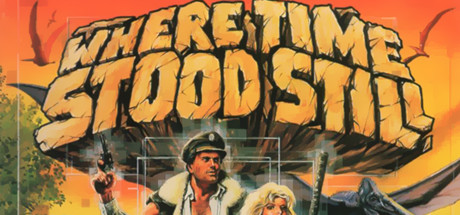
The player commands four plane-crash survivors, one at a time, stranded in a hostile environment somewhere in the Himalayas. They must face countless dangers, including treacherous terrain, man-eating dinosaurs, and violent tribespeople. On top of that, the survivors need to eat, drink, rest, heal injuries, fight, and search for items to overcome obstacles. Each character has a personal inventory, distinct traits, and unique quirks. For example, one character understands the natives’ language and, if present during conversations, translates for the rest of the group.
The goal is to survive and find a way back to civilization. At least one survivor must make it to the end, but the ultimate challenge is to bring the entire group through alive. Exploring the Himalayas in this game is genuinely exciting. The locations are diverse and beautifully drawn. A lot of clever ideas and artistic skill went into crafting a picturesque, richly detailed world. Remarkably, the game world has aged almost flawlessly, still evoking wonder and a sense of wilderness exploration despite the heavy technical limitations under which it was created.
Doesn’t all of this sound exciting? The game could have been a hidden gem, a timeless action-adventure masterpiece.
Unfortunately, it was robbed of such status and, consequently, of fun by a mix of technical limitations and idiotic design decisions.
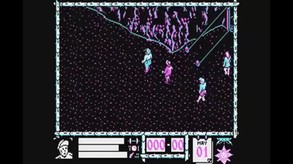
Some shortcomings are annoying but at least understandable. The first is that the game aims to provide the experience of leading a group of clueless survivors through high-risk environments, and it does this a little too well. Characters are actively irritating. When the lead character stands still, the rest of the group wanders around randomly. They do not stray far, but controlling how they follow is difficult and unintuitive. This matters because if they get stuck and leave the player’s view, they start moving independently. To get them to follow again, the player must track them down. This slows the already clunky gameplay to a snail’s pace. Keep in mind, there is no smooth movement. To change direction, the player must stop and rotate, while the other characters are already shifting positions.
Another issue is that every character has collision. The player cannot walk through companions, and they constantly block the path. There is no way to move them. The player either has to wait for them to move or try to walk around. Making matters worse, the only way to switch characters is for the currently controlled one to die. When that happens, the player can take control of another survivor.
And then comes the next issue: there is no save function. Normally, this is not a fatal flaw, but in the case of this game it is catastrophic. The reason why will soon be obvious.
If the earlier issues could be forgiven as clumsy design, the next one cannot. Whoever thought this was acceptable sabotaged the entire game. I am not exaggerating.
Instant deaths. This game is full of them. All of them are completely unfair and punish the player for no reason whatsoever.
From a game design perspective, what is the point of an instant-death trigger in a video game? It is there to create a high-risk, high-tension situation where the cost of failure is as great as it gets. The player knows there is no room for mistakes. Overcoming instant-death obstacles can be exhilarating! It can also be devastating to fail... Which is part of the appeal!
What is the worst thing a game designer can do with death triggers? Make them random. Replace risk with random chance, take away the tension, and leave only the punishment. Punishment administered not because of the player’s performance, but because of an algorithmic dice roll.
Where Time Stood Still is FULL of random instant deaths. Some of them are outright insulting. Just to make it clear: there are random instant deaths of named characters in a group-survival action-adventure game, with no save system and companions you cannot control! The player has no way of preventing such deaths or responding to danger. The group walks, and suddenly a pterodactyl appears and snatches one of the members. The group rests, and then a T-Rex shows up and kills everyone; a T-Rex that runs literally at the same speed as the group. Or a wild armadillo that appears out of nowhere and instantly kills whoever is closest. The list goes on till Jupiter.
The best example of the issue is the swamp. To progress, the group has to cross it. First, the player has to find the right path (there are many paths, but all except one are dead ends). While on the path, if characters stand still, they start sinking. If they don’t move for a second, they sink completely and die. Along the path are tentacles that can snatch and instantly kill. As if this wasn’t enough, the pterodactyl also flies along the swamp path and randomly snatches group members. And don’t forget, the player cannot control companions or their following patterns. The player may carefully avoid a tentacle on the right side of the path... Only for a group member to walk straight into it and get instantly killed.
This is outright insulting. The player is not punished for his actions. He is punished for poor pathfinding and the developers’ bad design decisions.
The whole game is full of gambling. There are deterministic actions and paths the player must take in order to progress. At the same time, there is an algorithmic dice constantly rolling and randomly deciding whether to punish the player or not.
Maybe if there were a save system, or at least checkpoints, it could be bearable. But every time you lose, you must start from the very beginning of the game. Maybe this could have been okay too, if you could get back on track quickly. But you can’t.
Remember that characters have to eat, drink, and rest. Each has their own stats. If the player wants to lead the group, he has to make stops. Frequent stops. Because characters get tired, and their energy meters take absurdly long to restore. Without frequent rests, they will simply deplete. To make things even worse, the developers added the mechanic of group members getting impatient and wandering off on their own. The absurdity is that they get pissed off while resting! So, they complain about how dead tired they are and then demand the player to move forward. This is absolutely ridiculous. So, frequent rests are a must.
So are sluggish inventory manipulations. Be prepared to move a cursor using the keyboard: clicking buttons, watching slow animations, dragging items to slots, and waiting for characters to pick them up. Yes, waiting for characters to pick items up, because they first have to walk to the item. And with the game’s pathfinding, you’d better hope the item is right at their feet.
At the beginning, the player has to pick up five items scattered around the starting location. Then walk all the way to the bridge and repeat the same actions again, and again, and again to save a group member who falls. Making frequent stops, doing the same things, like using food and water, over and over. Hoping to reach the swamp without the pterodactyl snatching anyone away. Hoping to cross the swamp with at least someone still alive. Hoping there isn’t a T-Rex waiting at the end of the mountain crossing. Only for bad odds rob the player of all progress. Repeat.
It’s not fun. The game quickly becomes a repetitive monotony with gambling elements. If you want to grind through it just to prove you can endure the experience, go ahead. Otherwise, use an emulator with save states. Or don’t bother.