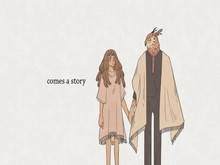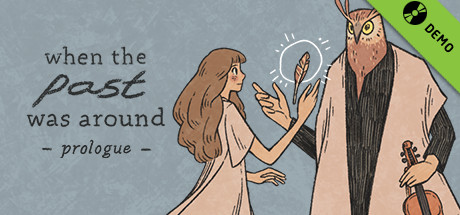
This is the prologue chapter of "When the Past was Around", an upcoming adventure point-and-click puzzle game about love, moving on, letting go, and the joy and pain of everything in between.
Revenue comes from in-game items and microtransactions, which our price-based model doesn't estimate. The player count below is how many people own it, not what they spent.
About
Genres
Stats
Languages: English*, French, Italian, German, Spanish - Spain, Korean, Portuguese - Brazil, Russian, Vietnamese, Japanese, Spanish - Latin America*languages with full audio support
Engagement
Reviews
Themes across 43 recent reviews and how positive each mention is. A keyword signal, not full sentiment analysis.
Reviews
Безкоштовний пролог, що візуально дуже гарний, але за купу років після його виходу я так і не спромігся придбати основну гру, бо крім візуалу все інше таке... порожнє, абсолютно ні про що. Але гарне, та, можна витратити 10 хвилин та потицяти аж надто прості загадки, але ото й все.
Hafif bulmaca tıklama oyunu. Önsöz kısa, bulmacalar basit ve hikayenin konusu açık değil. Ama yine de tam sürümü satın almak beni çekiyor.
When The Past Was Around - Prologue is a compact point-and-click adventure built around memory, affection, loss, and the difficult process of accepting change. Developed by Mojiken and published by Toge Productions, it functions as an introduction to the full experience while establishing its distinctive approach to storytelling. Rather than depending on conversations or lengthy explanations, it communicates through hand-drawn imagery, music, environmental details, and simple interactions. The result is a quiet and personal experience that can create a surprisingly strong emotional impression within its limited length. At the center of the story is Eda, a young woman who finds herself uncertain about the direction of her life and the dreams she once pursued. Her encounter with the mysterious Owl becomes the foundation of an important relationship, bringing companionship, affection, inspiration, and eventually sorrow into her life. The narrative explores these feelings through fragmented memories instead of presenting events as a straightforward chronological story. Rooms and objects often represent particular moments or emotions, giving the adventure a dreamlike quality while allowing players to gradually understand the significance of Eda's past. The absence of extensive dialogue is one of its most effective creative decisions. Facial expressions, gestures, objects, environmental transitions, and music carry much of the narrative weight. Players are encouraged to interpret what they see instead of having every emotion explained directly. This creates room for personal interpretation, particularly because the themes of remembering someone important, confronting painful experiences, and learning to move forward are broadly relatable. The game rarely needs words to make its intentions understandable. Gameplay follows an accessible point-and-click structure. Each environment contains objects that can be examined or manipulated, along with items and clues needed to solve puzzles. Players may search through drawers, inspect furniture, combine information found around a room, or interact with ordinary household objects. These mundane actions are significant because they reinforce the game's interest in everyday memories. Instead of relying on grand events, the story suggests that seemingly insignificant routines and possessions can become powerful reminders of another person. Puzzle difficulty remains intentionally moderate. Most challenges depend on observation, recognizing patterns, locating objects, and determining how different environmental elements relate to one another. The puzzles provide enough involvement to prevent the experience from becoming a passive visual story, but they rarely interrupt its reflective pacing with frustrating difficulty. Experienced adventure players may consider them fairly easy, yet complicated puzzles would arguably work against the gentle rhythm the developers are trying to maintain. The visual presentation is one of the strongest reasons to experience the prologue. Its hand-drawn artwork resembles an illustrated storybook brought to life, using detailed interiors and expressive characters to establish personality without overwhelming the screen. Environments contain numerous small touches that encourage players to examine their surroundings closely. The surreal transitions between locations also fit naturally with the idea of exploring memories, where places and events can blend together rather than obeying ordinary physical rules. Character design contributes significantly to the game's identity. Eda remains recognizable and emotionally expressive despite the restrained presentation, while Owl immediately introduces a more symbolic quality to the narrative. His unusual appearance prevents the relationship from feeling like an entirely conventional romance and strengthens the impression that players are experiencing Eda's memories through an emotional rather than strictly literal perspective. The combination of recognizable domestic settings and surreal characters creates a world that feels intimate yet slightly detached from reality. Music is equally essential to the atmosphere. Violin-centered compositions accompany the visual storytelling and help communicate emotions that would normally be delivered through spoken dialogue. Gentle melodies complement affectionate memories, while more melancholic passages emphasize loneliness and separation. The soundtrack never needs to become excessively dramatic because the artwork and interactions already establish the emotional context. Together, sound and imagery create an atmosphere that is calm, bittersweet, and occasionally haunting. The prologue's greatest weakness is simply its limited scope. It establishes characters, themes, and mechanics but naturally cannot provide the development expected from the complete game. Players can become invested in Eda's emotional journey only to reach the ending relatively quickly. There is also limited mechanical variety because the focus remains firmly on environmental interaction and straightforward puzzle solving. Those looking for lengthy exploration, challenging adventure-game logic, branching decisions, or extensive replay value will find relatively little of that here. Its short duration nevertheless works in its favor as an introduction. The experience communicates exactly what kind of adventure the complete game intends to offer without padding the journey with unnecessary content. It demonstrates how ordinary objects can carry narrative meaning, how music can replace dialogue, and how puzzles can function as part of storytelling rather than existing purely as obstacles. The restrained design gives the emotional moments enough room to resonate without overstaying their welcome. Steam Deck compatibility is another positive aspect. The Steam version is officially categorized as Steam Deck Verified, making it particularly suitable for handheld play. Its controls work with the Deck's standard configuration, important interface text is readable on the portable display, and the game operates appropriately under SteamOS. The relatively simple point-and-click interactions, modest visual demands, and relaxed pacing also make the handheld format a natural match. Playing with headphones is especially worthwhile because music contributes so much to the experience. Overall, When The Past Was Around - Prologue is a beautifully restrained example of visual storytelling. It sacrifices mechanical complexity and length in favor of atmosphere, emotional clarity, and artistic cohesion. Its approachable puzzles give players something meaningful to do while exploring Eda's memories, and the combination of expressive illustrations and violin music transforms ordinary interactions into pieces of a larger emotional story. It is undeniably brief and deliberately incomplete, but as a prologue it succeeds at creating curiosity while establishing a memorable identity. For players who appreciate intimate narrative adventures, gentle puzzles, distinctive artwork, and stories that communicate through imagery rather than exposition, it provides a small but affecting journey. Rating: 8/10
Media

Related
Related
Price dynamics, follower growth, revenue and sales trajectories with interactive tooltips
This and every other Pro feature is free until October 20, 2026. A free account is all it takes.
Hours played at review time, across 43 reviews with recorded playtime.
positive critical· bar length = how often the theme comes up
A very simple yet soothing game. Full of puzzles but easy to follow! The story flow is wonderful and it's a little sad along playing with it. Love the art and aesthetic of the game!
[h3]Quick Impression: The story of learning or unlearning love[/h3] I haven’t played the full version yet, but after experiencing [i]A Raven Monologue[/i] and [i]Banuy Lintar Angin[/i], I was curious to discover more and to “revisit” a certain flavor, a unique poetry, and sensitivity in storytelling—a mix of gentleness and simplicity, even when the underlying theme feels complex. [i]When the Past was Around[/i] tells, through a point-and-click format, a story of love, its various stages, and the emotions it provokes. It remains suggestive while leaving room for personal interpretation (how we, as players, feel/experience/relate to the story and connect it to our own personal history—similar to what I had previously encountered and was specifically seeking in this game experience). I’m charmed by this poetry, and I’m excited to dive into the full version to see how the story develops, as well as to explore the gameplay and get a clearer sense of the overall artistic direction!
러스티 레이크 - 희망편 --------------------------------------------------- Rusty Lake - The Hope Chapter
Adorei o prólogo. Agora fiquei com vontade de comprar o jogo. 8/10
Это милая и атмосферная игра. Музыка очень приятная. Хоть игра коротенькая, но мне нравится эта игра
Slow paced cozy game
Voices from the Sea is a short visual novel that I think works best when I treat it as a small relaxing story rather than a game with lots of things to do. I follow Cantus, a young boy who meets Maris, a mysterious girl by the sea, and their meeting slowly turns into something much more personal and supernatural. The story has a simple slice of life feeling at first, but there is a quiet mystery underneath it that gives me a reason to keep reading. It is a very gentle experience and does not try to overwhelm me with complicated choices or gameplay systems. The atmosphere is probably what I like most. The seaside setting gives the whole thing a calm feeling, and the animated backgrounds make the scenes feel a little more alive than a completely static visual novel. I also like the contrast between the cute character designs and the more emotional parts of the story. There is some comedy mixed into the supernatural elements, so it does not stay completely serious from beginning to end. The story is also short enough that I can finish it without feeling like I have committed myself to a huge visual novel. There are a few small things to do outside of simply reading. I can collect seashells as I go and use them to unlock extra material such as wallpapers, theaters and side stories. I like this because it gives me a reason to pay attention while going through the story rather than simply clicking through every scene. It is not a deep gameplay system, but it suits the type of experience this is. The free version also gives me the main story and animated backgrounds without asking me to spend anything, which makes it easy to appreciate as a small indie project. The biggest weakness for me is that the actual gameplay is extremely limited. This is mainly a visual novel, so most of my time is spent reading and moving through the story. There are not complicated puzzles, combat or a large number of meaningful decisions to keep me involved. That is not necessarily a problem because the story is clearly the focus, but it does mean I have to be interested in the characters and atmosphere for the game to work. If I am not invested in the story, there is not much else here to keep me playing. I also think the free version leaves me wanting a little more. The Plus version adds full voice acting, character, image and music galleries, along with extra wallpapers, theaters and side stories. I understand why those extras are separate because the main experience is already available for free, but the additional material would have been nice to have included. The presentation is also fairly simple by modern standards, although I think that actually suits the gentle style better than a heavily polished presentation would. What makes Voices from the Sea work for me is that it knows exactly what it wants to be. It is not trying to turn a small supernatural story into a massive adventure. It gives me a quiet setting, a simple relationship between the main characters, some comedy and a little mystery, then lets the story carry the experience. I especially like how the seaside setting gives the game its own identity, because the atmosphere is much more memorable to me than the basic visual novel mechanics. Overall, Voices from the Sea is a sweet and relaxing visual novel that I think is worth checking out when I want something short and story focused. I like the atmosphere, animated backgrounds, characters and gentle supernatural story, while the limited interaction and short length keep it from reaching the higher ratings I give to games with much more depth. The fact that the main version is free makes the experience even easier to recommend. It is not a game I would play for the gameplay itself, but as a small story with a calm atmosphere and a little mystery, I think it does what it needs to do. Rating: 7.6/10
Selling now
See how fast this game is selling right now — estimated copies and revenue per day from recent review growth.
Players by region
Where this game's players are, estimated from review languages.
Related
| Game | Estimated lifetime revenue | Reviews | Review score | Price |
|---|---|---|---|---|
| $529.1K | 4.4K | 95% | $7.99 | |
| $471.3K | 1.7K | 90% | $19.99 | |
| $228.2K | 1.3K | 92% | $11.99 | |
| $78.6K | 1.4K | 73% | $3.99 | |
| $74K | 728 | 83% | $14.99 | |
| $75K | 281 | 86% | $14.99 |