Touhou Kishinjou: Double Dealing Character is a fast-paced vertical bullet hell shooter that continues the long-running Touhou Project series with another visually chaotic and mechanically demanding adventure filled with dense projectile patterns, supernatural folklore, and intense arcade-style gameplay. Developed by 上海アリス幻樂団 and published by Mediascape Co., Ltd., the game builds upon the franchise’s established formula while introducing new systems and themes centered around rebellious objects, living weapons, and supernatural imbalance within the world of Gensokyo. Although the game remains brutally difficult for newcomers unfamiliar with bullet hell shooters, it stands out as one of the more refined and creatively designed entries in the Touhou series thanks to its excellent boss encounters, memorable soundtrack, and highly polished gameplay structure.
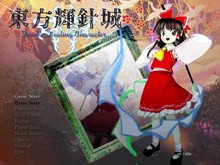
The story revolves around strange incidents spreading across Gensokyo as ordinary objects suddenly begin rebelling against their owners. Weapons refuse to obey commands, magical tools become hostile, and supernatural artifacts awaken with dangerous intentions. Players can choose between familiar Touhou protagonists including Reimu Hakurei, Marisa Kirisame, and Sakuya Izayoi, each paired with different weapon styles and gameplay variations that significantly affect combat strategy and movement patterns. The premise embraces the series’ signature mixture of Japanese folklore, fantasy absurdity, and lighthearted supernatural conflict while providing a fitting setup for the escalating chaos that unfolds throughout the stages.
Gameplay follows the traditional Touhou structure where players navigate vertically scrolling stages while avoiding enormous waves of enemy projectiles covering nearly every part of the screen. Success depends entirely on movement precision, reflexes, memorization, and the ability to identify safe gaps inside increasingly overwhelming bullet formations. At first glance the game appears visually impossible because of the sheer amount of projectiles flying across the screen simultaneously, but over time players begin to understand the hidden structure behind each attack pattern. This gradual learning process becomes one of the game’s most rewarding aspects.
One of the strongest elements of Double Dealing Character is how smooth and carefully balanced the gameplay feels despite the chaos constantly unfolding on-screen. Every projectile pattern is designed with deliberate spacing and rhythm, allowing skilled players to weave through impossible-looking attacks using extremely precise movement. The hitbox system remains incredibly small, which creates the signature Touhou experience where survival often depends on narrowly slipping through tiny openings between hundreds of bullets. The tension created during these moments becomes deeply satisfying once players begin mastering the game’s mechanics.
The game also introduces new systems connected to the theme of rebellious weapons and aggressive playstyles. Certain mechanics encourage players to collect bonus items and maintain offensive pressure while surviving dangerous situations. These additions reward more active and risky movement rather than purely defensive dodging, giving the gameplay additional depth beyond simple survival. While the core formula remains familiar to Touhou veterans, these subtle mechanical changes help Double Dealing Character feel distinct from previous entries.
Boss encounters are easily the centerpiece of the experience. Every stage culminates in lengthy battles against unique characters who unleash increasingly elaborate spell card attacks filled with complex projectile patterns and visually spectacular formations. These encounters constantly evolve during each fight, introducing new movement challenges and attack variations that test both memory and reaction speed. Some attacks focus on slow precision weaving while others require sudden directional changes and split-second movement decisions. The creativity behind many spell card patterns is genuinely impressive, making boss fights feel both mechanically challenging and artistically expressive.
The visual presentation contributes heavily to the game’s identity. While Touhou games traditionally operate with simpler graphics compared to major commercial shooters, Double Dealing Character compensates through strong art direction and remarkable visual clarity. Projectile colors, enemy attacks, and environmental effects remain readable even during the most chaotic sequences. Backgrounds shift between fantasy landscapes, supernatural locations, and surreal environments that reinforce the game’s folklore-inspired atmosphere effectively.
The soundtrack is another major highlight and remains one of the strongest reasons Touhou games continue attracting dedicated fans. The music combines energetic melodies, rock influences, jazz-inspired compositions, and emotional stage themes that perfectly match the frantic pacing of gameplay. Every boss theme carries its own identity and atmosphere, helping major encounters feel memorable beyond the mechanics alone. The soundtrack constantly maintains momentum and intensity while also contributing emotional personality to the characters and environments.
Replay value is extremely high due to multiple playable characters, alternate shot types, scoring systems, hidden content, and higher difficulty modes. Like many arcade-inspired shooters, the game is designed around repeated playthroughs where players slowly improve through practice and memorization. Completing later difficulties becomes a genuine achievement because of how demanding the bullet patterns eventually become.
Another impressive aspect is the consistency of the pacing. Stages escalate naturally from manageable enemy waves into increasingly complex attack sequences without ever feeling random or unfair. Even during moments where the screen becomes almost completely filled with projectiles, experienced players can still identify safe routes through observation and pattern recognition. This careful balance between chaos and control is one of the reasons the Touhou series remains so respected within the bullet hell genre.
However, the game’s greatest strength is also its biggest barrier. Double Dealing Character is extremely unforgiving for newcomers unfamiliar with bullet hell design. Even on lower difficulties, the sheer volume of projectiles and reaction requirements can overwhelm inexperienced players quickly. The game expects players to improve through repetition, failure, and memorization rather than offering extensive accessibility options or simplified mechanics.
The narrative presentation may also feel underdeveloped for players unfamiliar with Touhou lore. Much of the storytelling occurs through short dialogue exchanges before and after battles, and many character interactions rely heavily on existing franchise knowledge. While longtime fans will appreciate the returning characters and references, newcomers may struggle to connect emotionally with the story without additional context.
Another minor criticism is that the game remains relatively close to the traditional Touhou formula without introducing dramatic structural innovations. While the refined mechanics and new systems help distinguish it somewhat, players seeking major experimentation may find the experience familiar compared to previous entries.
Touhou Kishinjou: Double Dealing Character stands as one of the strongest modern Touhou entries and an excellent example of bullet hell design done right. While its brutal difficulty may intimidate newcomers, players willing to dedicate time to learning its systems will discover an incredibly rewarding shooter filled with creativity, precision, and nonstop adrenaline.
Rating: 8/10