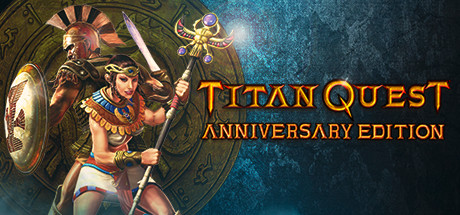
[h1]Titan Quest Anniversary Edition – A Classic Mythological ARPG That Still Holds Up[/h1]
[i]Most of my experience comes from the original physical disc release, which is the version I am currently playing. I later noticed that I also own the Anniversary Edition on Steam, where I have 6.5 hours recorded. I am not going to replay the whole game only to repeat an adventure I already know, so this review focuses mainly on the shared core game while separating that from the Anniversary Edition improvements.[/i]
[hr][/hr]
I have been gaming since the 1980s and grew up through the 1990s. I have played thousands of games across many genres. Titan Quest comes from a different era. It is a traditional loot-driven action RPG that lets you create a character, explore a large handcrafted world and progress at your own pace.
The obvious comparison is Diablo II, but Titan Quest has a strong identity of its own. Instead of placing almost everything inside dark gothic ruins and demonic landscapes, it takes you through Greek countryside, Egyptian deserts, Babylon, China and the Underworld. You fight satyrs, centaurs, harpies, gorgons, skeletons, jackal warriors, demons and many other creatures drawn from ancient mythology.
That setting remains the game’s greatest strength. You travel through farms, villages, forests, temples, caves, tombs, deserts, mountain passes and ancient cities. The regions change their architecture, enemies, equipment and atmosphere as you move between cultures. The graphics are clearly old, but the art direction still gives the world character.
[h2]Combat and character building[/h2]
The gameplay follows the classic action-RPG loop: kill monsters, complete quests, gain levels, find equipment and improve your build.
Instead of choosing one fixed class, you select a Mastery and later combine it with a second one. This allows warriors, archers, spellcasters, summoners, defensive tanks and many hybrids. A character can mix physical combat with elemental magic, hunting abilities, pets or defensive skills rather than being locked into one narrow role.
This dual-Mastery system is one of the main reasons Titan Quest has so much replay value. Different combinations change how you fight, what equipment matters and which statistics you need. It is also possible to build a weak character if you spread points without a plan. Older RPGs were often more willing to let players make mistakes and learn the systems.
Combat can feel slower and less fluid than newer games such as Grim Dawn, Torchlight II or modern Diablo titles. Early characters have few abilities, movement is somewhat stiff and many builds rely heavily on basic attacks and passive bonuses. It improves once more skills and faster equipment become available, but the opening hours can feel slow.
[h2]Loot and progression[/h2]
Titan Quest contains a huge amount of equipment. Enemies often carry the weapons and armour they will drop, which is a detail I still appreciate. When an enemy attacks with a dangerous glowing weapon, there is a chance that the same weapon will be lying on the ground after the fight.
Relics and charms can be attached to suitable equipment, while rarer items and sets encourage particular builds. Finding a meaningful upgrade can be satisfying, especially when it completes part of a character you have been planning.
The system also has problems. The ground can become covered with low-quality equipment that stopped being useful hours earlier. Filters hide some of it, but they do not solve the clutter. Loot progression can also be inconsistent, and you may play for a long time without finding anything better than what you already use.
Storage is another weakness for anyone who collects sets, relics and equipment for future characters. Anniversary Edition improves storage compared with the original, but collectors may still end up using extra characters or external tools.
[h2]Story, quests and pacing[/h2]
The story gives you a reason to cross the ancient world, but this is not a deeply cinematic or character-driven RPG. Most NPCs stand in place and explain quests through voiced dialogue. Many missions involve killing monsters, rescuing someone or retrieving an item.
The mythology makes those familiar tasks more interesting, but repetition is unavoidable. The campaign is long, and higher difficulties require running through it again for stronger enemies and better loot. Players who enjoy builds and farming may like that structure. Players who want a tightly paced story may feel that it lasts too long.
The beginning deserves a warning. Your character starts with limited skills, basic equipment and a lot of walking between small groups of enemies. It becomes more interesting as the world opens, but it does not deliver instant spectacle.
[h2]What Anniversary Edition changes[/h2]
Anniversary Edition combines Titan Quest and Immortal Throne into one installation and adds a large collection of updates.
The later Ragnarök, Atlantis and Eternal Embers expansions are separate purchases, and I am not judging them here.
These include modern resolution support, a scalable interface, greater camera distance, improved performance and stability, balance changes, many bug fixes, better enemy and pet AI, restored multiplayer features, Steam achievements, Workshop integration and quality-of-life improvements. Those include higher item-stack limits, quicker collection of some items, a larger stash and an adjustable game-speed option.
Long-time players often highlight the speed setting, smoother scrolling, modern display support and revived multiplayer as important improvements. Some players still report crashes, network problems, however. I have not tested every Anniversary Edition feature or the current multiplayer deeply enough to judge all of it, so I will not pretend otherwise.
[h2]What still works[/h2]
Titan Quest still succeeds because it feels like an actual journey. You begin as an unknown traveller helping a village and gradually cross countries, mythological realms and increasingly dangerous battlefields. Your simple character slowly becomes capable of fighting legendary monsters and gods.
It also has a calmer atmosphere than many action RPGs. The music and scenery often make exploration feel relaxed between battles. The game does not constantly interrupt you with battle passes, premium currency, daily objectives or pressure to remain online. You can play alone, stop when you choose and return later.
After decades of gaming, I do not need every game to be endlessly updated or designed around keeping me logged in. Sometimes I want a complete adventure on my own terms, and Titan Quest still provides that.
[h2]Final verdict[/h2]
Titan Quest is dated in several ways. The opening is slow, movement can feel stiff, combat can become repetitive, loot creates too much clutter, storage is limited and the story presentation is basic by modern standards.
Despite those flaws, it remains one of the stronger traditional action RPGs. Its mythology gives it a personality many competitors lack, the dual-Mastery system supports a wide range of builds, and the handcrafted world creates a convincing sense of travelling on an epic quest.
Anniversary Edition is the most practical modern package because it combines the original game and Immortal Throne while adding display support, balance work, bug fixes, multiplayer restoration, Workshop support and useful quality-of-life features.
[b]Recommended.[/b]
My recommendation is based mainly on extensive experience with the original physical release and the shared core game, not on pretending that 6.5 Steam hours represent a complete test of every Anniversary Edition change. For players who enjoy Diablo-style combat, mythology, loot and character building, Titan Quest is still worth playing.
https://www.youtube.com/watch?v=LaGW67bf9Mw&t=900s