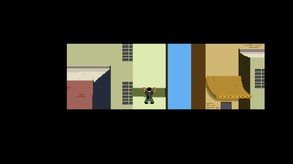
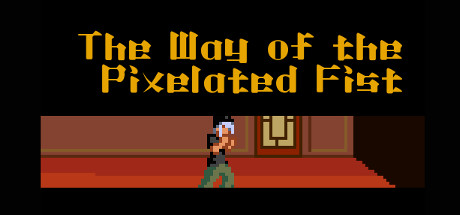
The Way of the Pixelated Fist is a parkour and martial arts inspired free-roaming cinematic platformer. While it blends together the gameplay concepts of The Prince of Persia and Karateka, they are presented with refined controls and other modern innovations to give the game an intuitive and fluid feel.
Modeled estimate, not a reported figure. How we estimate →
Media

About
Stats
All-time low is the lowest price we've recorded for this game since we started tracking it.
Languages: English
Engagement
Hours played at review time, across 40 reviews with recorded playtime.
Reviews
Themes across 40 recent reviews and how positive each mention is. A keyword signal, not full sentiment analysis.
positive critical· bar length = how often the theme comes up
Reviews
скучно Шо пи3дец
I don't have comments for this game, it have some bugs.
The Way of the Pixelated Fist is a pixel styled side scrolling parkour fighter. I enjoyed the atmosphere of the game, which feels like a mix of Jet Set Radio and a Kung Fu flick, but the gameplay fell flat. Pixelated Fist tries to take from various game generes (parkour sim, fighter, and puzzle), but ultimately did each individual one poorly. It fails to be a good parkour runner because the characters don't feel fast. I would best describe it as feeling like you're running in slow motion. In many area's you need pixel perfect precission, but the exact pixel to perform the action wasn't always clear. Grabbable edges were the worse at this as aren't clearly marked. This is incredbly frustrating during the puzzle challenges. Pixelated Fist fails to be a good fighter because enemy telegraphs are so difficult to see. This is probably due to the art style, but zooming in to these battles could have been an option, the game already crops out huge portions of unused screen real estate so it's not as if it doesn't have room. Pixelated Fist is incredibly easy. Spamming kick, kick, high kick will get you through most of the battles, but cheesing your way through the game just makes the fighting segments a chore.
Don't buy this game, is as simple as ♥♥♥♥!
I enjoyed this game. I love the blend of platforming and beat em up elements. There are times when it felt like the platforming bits weren't responding such as jumping off a wall to reach the next platform, but overall it is what it is. I also thought the letterbox style gameplay window in the beginning was creative. Overall, I would recommend it to those wanting go at your own pace type platformer. If your looking for speed or need the button precision to be spot on, you might want to watch some gameplay footage to decide. But really, for the price you can't go wrong.
When you think of parkour games, you probably think of mirror's edge, a game based on speed of completion. This game, is way more foccused on precision: you characther require's room to jump, change direction, he has some weight to him. I appreciate that, a lot. At the beggining it feels kinda jenky, but is pretty tight, which is my jam. What's also my jam is that while the controls are really simple, the combination of what you do and the way you do it gets really complex. You gotta calculate well when to jump, memorize and apply the timming of your punchs and kicks, and again, after a while, it's second nature. And the combat is really cool. Imagine if the first double dragon was more slow and thoughtfull. It's really fun testing stun timmings, moves' range and dash speed to make killer combos. But it's no all a love affair: the open world of this game is confusing, with lots of buildings that look the same you get easily lost; which is odd, the shapes of the buildings are what tells you what parkour habilities you can use, colours don't affect it:buildings could have different windows, colours and posters to differenciate then. Also, considering that there's a some impossible space going on(or so does it feel), it's weird that the world can't be a straigth line with one or two valleys. And the killing flaw is really problematic: the doors that leads to the chambers (challenge levels required to beat the game) some times simply don't open. Is it a bug? I thought it was either a previous chamber that I didn't complete or a npc I've missed, but one the doors, just one, told me I haven't complete the previous chamber; why didn't that message popped in the other doors? I really liked what I've played so far, but to continue is a risk: either I find out what was wrong with the doors and keep having fun, or I don't, and get increasilying frustated, and start to hate this "to be game" that I've loved. So, if you like the concept and have the money, try out a small simple idea for two hours and then leave it, thinking "that was a good while it lasted, gonna keep an eye out for this developer's next game". Which is what I'm doing.
The Way of the Pixelated Fist, developed and published by Blaze Epic, is an experimental indie title that blends cinematic platforming, minimalist storytelling, and martial arts-inspired combat into a compact but unconventional experience. It clearly draws influence from older games that prioritized animation, timing, and spatial awareness, yet it presents those ideas through a more abstract and stylized lens. The result is a game that feels distinct and ambitious, even if it doesn’t always fully deliver on its concepts. The structure revolves around guiding the protagonist, Dag, through a series of trials known as the “36 Chambers.” These challenges are scattered across a loosely connected environment, with each one focusing on a specific aspect of gameplay—movement, combat, or situational awareness. Rather than following a traditional level-by-level progression, the game feels more like a collection of focused scenarios that test different skills. This approach gives the experience a sense of variety, as players are constantly shifting between different types of challenges instead of repeating a single loop. Movement is arguably the strongest element of the game. The platforming system emphasizes flow, encouraging players to chain jumps, wall interactions, and directional adjustments in a way that feels almost rhythmic. When executed well, traversal becomes smooth and satisfying, rewarding precise timing and confident input. There is a sense of momentum that carries through each sequence, making successful runs feel earned rather than accidental. However, this system can also be demanding, as it relies heavily on precision and occasionally lacks clear visual feedback, which can lead to moments of trial and error. Combat introduces a contrasting pace. Encounters are typically one-on-one duels that focus on timing and reaction rather than complex input combinations. The mechanics are intentionally simple, designed to complement the platforming rather than compete with it. While this keeps the experience accessible, it also limits the depth of these encounters. Fights can feel repetitive over time, lacking the variety or strategic options needed to remain engaging across the full duration of the game. One of the game’s more distinctive features is its visual presentation. It adopts a minimalist pixel-art style and often restricts the visible play area, framing the action within a narrow window. This design choice is unconventional, but it serves a purpose by directing attention toward movement and immediate obstacles. It creates a focused, almost cinematic feel, though it can also be disorienting at first. Over time, this presentation becomes part of the game’s identity, reinforcing its emphasis on precision and awareness. The narrative remains subtle and largely secondary to the gameplay. The story provides context for the journey but does not play a central role in shaping the experience. Instead, the game relies on its atmosphere and progression through the chambers to create a sense of purpose. This minimalist approach keeps the focus on mechanics, but it also means that the emotional impact is limited. Where the game struggles most is in balancing its different elements. While it offers a mix of platforming, combat, and puzzle-like challenges, none of these systems are explored deeply enough to stand on their own. The platforming is engaging but occasionally unclear, the combat is functional but repetitive, and the overall structure can feel fragmented. This creates an experience that is constantly shifting between ideas without fully developing any of them. Difficulty is another factor that shapes the experience. The game demands precision, particularly in its platforming segments, and mistakes are often punished immediately. This can be rewarding for players who enjoy skill-based challenges, but it may also lead to frustration when feedback is not as clear as it could be. Progress often comes through repetition and gradual improvement, reinforcing the game’s focus on mastery. In the end, The Way of the Pixelated Fist stands out for its ambition and unique presentation. It offers moments of fluid, satisfying gameplay and introduces ideas that feel distinct within the genre. However, its lack of depth in individual systems and occasional inconsistencies prevent it from reaching its full potential. It is a game that is interesting to experience and easy to appreciate for its creativity, even if it doesn’t fully come together as a cohesive whole. Rating: 6/10
Meh its ok but repetitive.
O jogo é bom. Um pouco repetitivo, porém progressivamente desafiador. PORÉM Eu gosto de achievements E os achievements desse jogo estão quebrados Você simplesmente não consegue obtê-los, mesmo executando-os EDIT: Bem, eu resolvi rejogar isso por motivos inexistentes e vou refazer também a análise por pontos. • As mecânicas de parkour são ótimas. Seriam melhores se o jogo ensinasse tudo, mas enfim... • O combate não tem propósito algum. O chute é OP e, se vc n usa, vc apanha até morrer. Eu só acho muito engraçado que, tem um boss q fala q é a rainha do chute e eu ganhei dela usando só o chute (igual todo mundo). • A história é fraca, mal entregada, com personagens mal construídos e um final q n faz diferença alguma. • A arte e o estilo do jogo é bonita. Pra alguns pode ser irritante os pequenos retângulos em q vc joga, mas eu curto. • As conquistas funcionam agora, yay. Eu não vou dar uma pontuação pra esse jogo. Eu me diverti, então ela continua positiva.
i mean i tried having fun but no
Related
Related
Trends
Modeled estimate over time, reconstructed from Steam's monthly review histogram.
Momentum
Pace estimated from the game's recent review growth (our daily snapshots) at its own sales-per-review ratio — a momentum signal, not booked sales.
Audience
Estimated from the language of this game's reviews — a proxy for where players are, not official Steam demographics.
Related
| Car Parkour Together | $653.3 | 61 | 82% | $0.49 |
| Halt | $653.4 | 76 | 70% | $0.49 |
| Cow Girl 2 | $652.5 | 79 | 71% | $0.59 |
| 69 Mary Love | $650.6 | 52 | 90% | $0.99 |
| Gachi Dash | $650.6 | 52 | 79% | $0.99 |
| Agent Murphy | $656.4 | 53 | 70% | $0.49 |