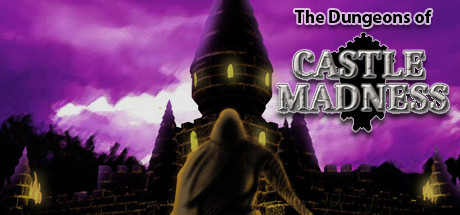
Rise to the challenge of overthrowing a power mad tyrant in this innovative action dungeon crawler RPG.
Modeled estimate, not a reported figure. How we estimate →
Media
About
Stats
All-time low is the lowest price we've recorded for this game since we started tracking it.
Languages: English
Engagement
Hours played at review time, across 40 reviews with recorded playtime.
Reviews
фигня
не играбельная ♥♥♥♥♥
Sorry I want to like this as I loved other games like this during the 90s; but it just sucks.
One of the more abstract titles to exist on Steam. I have always had a fascination with older-looking games and Castle Madness is no exception. The game has a significant nostalgia-value if you’re into that kind of thing, The Gameplay is a combination of mostly 3D world exploration with 2D Top-bottom battle mechanics. For me personally, it seems like a couple of the classes could be tweaked a little more, but the game itself appears to still be getting actively developed by the producer(s). This isn’t that much like the more well-known RPG’s, but it certainly has a different flavor and mechanics.
Сюжет: Вы просто пришли в замок, чтобы стать героем. А замок сказал: «Давай посмотрим, сколько ты выдержишь». И начал подкидывать сюрпризы. Графика: Пиксельная, ретро и немного грязноватая, как будто нарисована на коленке в перерыве между квестом и кофе. Но именно это создаёт атмосферу старой школы. Итог: The Dungeons of Castle Madness — это идеальный выбор для тех, кто любит бросать себя в огонь (в прямом и переносном смысле), не боится случайностей и готов смеяться над своими провалами. Оценка: 7 сумасшедших подземелий из 10. 🗡️🛡️🔥🕸️🕷️🧟♂️🧟♀️
bad
Не советую
The Dungeons of Castle Madness is an ambitious indie dungeon-crawling RPG developed and published by Third Impression, blending classic first-person exploration with real-time action combat in a way that attempts to bridge retro design and modern sensibilities. Set in a grim fantasy world dominated by the tyrannical Baron of Castle Madness, the game places you in the role of a hero determined to dismantle his rule by venturing deep into the castle’s sprawling underground labyrinths. The narrative framework is familiar—oppression, rebellion, and hidden power—but the game’s identity is defined less by story and more by its structural and mechanical experimentation. Exploration is rooted firmly in old-school dungeon crawler traditions. Movement through the castle’s depths is grid-based and presented from a first-person perspective, evoking the deliberate pacing of classic role-playing games from decades past. Corridors twist into tight intersections, hidden chambers conceal secrets, and environmental hazards demand cautious progression. The design encourages methodical navigation rather than frantic rushing, rewarding players who carefully map out areas and pay attention to subtle environmental details. On higher difficulty settings, the experience becomes even more demanding, limiting guidance systems and forcing players to rely on observation and memory, reinforcing the game’s retro inspirations. Where The Dungeons of Castle Madness diverges most sharply from tradition is in its combat system. Instead of resolving encounters directly within the first-person grid view, battles transition into a top-down, real-time action format. This shift introduces a faster tempo, emphasizing movement, positioning, and timing over turn-based calculation. Enemies attack in groups, spells cover areas, and reflexes become just as important as preparation. The contrast between slow-paced exploration and energetic combat gives the game a distinct rhythm. At times, this duality feels refreshing, preventing monotony. At other times, the abrupt shift in perspective can feel jarring, underscoring the experimental nature of the design. Character progression offers considerable flexibility. Rather than locking players into rigid classes, the game encourages hybrid builds and diverse playstyles. Whether focusing on melee combat, spellcasting, crafting, or more unconventional paths, the skill system allows for a degree of personalization. Equipment plays a meaningful role, with items that can be repaired, upgraded, and crafted to suit evolving needs. The inclusion of systems like durability and crafting adds depth to preparation and resource management, encouraging players to consider long-term strategy rather than relying solely on combat prowess. Level design spans nearly twenty stages, most of which are handcrafted to emphasize unique layouts and challenges. Some levels emphasize maze-like complexity, while others introduce environmental puzzles or more open spaces designed for larger combat encounters. Hidden artifacts and fragmented relics scattered throughout the castle add secondary objectives that reward thorough exploration. The game’s pacing, however, can fluctuate. Early sections may feel slow or sparse in action, while later areas introduce difficulty spikes that test both preparation and adaptability. Visually, The Dungeons of Castle Madness reflects its indie origins. The graphical presentation prioritizes function over spectacle, with straightforward textures and modest effects that recall older RPGs rather than contemporary high-budget productions. The environments are serviceable but not elaborate, and character models during combat are simple in design. While this may disappoint players seeking visual flair, it aligns with the game’s throwback sensibilities. Sound design follows a similar philosophy, offering atmospheric cues and combat effects without dramatic orchestration. Reception has been mixed, largely due to the game’s uneven polish and unconventional design choices. Some players appreciate its willingness to experiment with genre fusion and its dedication to old-school exploration mechanics. Others find the execution rough, citing clunky transitions, pacing inconsistencies, and technical limitations. The hybrid structure that makes the game unique also contributes to its divisiveness; not all players find the combination of grid-based crawling and action combat harmonious. Ultimately, The Dungeons of Castle Madness stands as a bold attempt to reinterpret classic dungeon-crawling within a more dynamic framework. It offers depth in character development and a genuine sense of exploration for players who enjoy retro-inspired design. While it may not achieve seamless cohesion between its systems, it provides a distinctive experience that rewards patience and curiosity. For those intrigued by genre experimentation and nostalgic RPG mechanics, it delivers a journey through dark corridors filled with both promise and imperfection. Rating: 5/10
+1
Related
Related
Trends
Concurrent players on Steam, sampled daily since tracking started.
Momentum
Pace estimated from the game's recent review growth (our daily snapshots) at its own sales-per-review ratio — a momentum signal, not booked sales.
Audience
Estimated from the language of this game's reviews — a proxy for where players are, not official Steam demographics.
Related
| Jump with Friends | $743.2 | 54 | 59% | $0.99 |
| 100 Cats Belgrade | $743.8 | 63 | 90% | $0.69 |
| Last Escape | $743.1 | 60 | 68% | $0.49 |
| Sexy Sniper | $743.1 | 60 | 73% | $0.49 |
| Nyasha Valkyrie | $742.7 | 116 | 75% | $0.99 |
| Tankex | $741.8 | 58 | 76% | $0.69 |