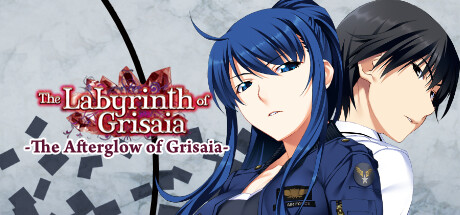
A side story to The Labyrinth of Grisaia, this game explores protagonist Kazami Yuuji's past, focusing on his life with Kusakabe Asako, the CIRS agent who rescued him at a young age from a terrorist organization. Secret passages of The Labyrinth of Grisaia are revealed within...
Modeled estimate, not a reported figure. How we estimate →
Media

About
Stats
All-time low is the lowest price we've recorded for this game since we started tracking it.
Languages: English, Japanese**languages with full audio support
Engagement
Hours played at review time, across 40 reviews with recorded playtime.
Reviews
Themes across 40 recent reviews and how positive each mention is. A keyword signal, not full sentiment analysis.
positive critical· bar length = how often the theme comes up
Reviews
能够轻易做到他人难以做到的事的人是天才,但能够通过自己的努力做到他人难以做到的事的人,也是天才。
Good game
Some nice backstory to the main games
i like
https://www.moyu.moe/resource/3647 汉化补丁 页面还是日语但是字幕有汉化
好评
神中神 我的asako
Испытываешь трудности потому что не знаешь английский? ->А вот это явно не моя проблема.
Muito bom!!
The Afterglow of Grisaia is a compact yet emotionally dense visual novel that functions as a reflective epilogue to key themes within the broader Grisaia series. Developed by Frontwing and published internationally by Frontwing USA, it is not designed to stand as a full-length sequel, but rather as an intimate character study that deepens the player’s understanding of Kazami Yuuji’s formative years. Intended to be experienced after The Labyrinth of Grisaia, the game assumes familiarity with the series’ world and characters, and rewards that familiarity with carefully written scenes that add emotional weight and narrative clarity to Yuuji’s past. The story centers on Yuuji’s life following his rescue from a terrorist organization, focusing heavily on his relationship with Kusakabe Asako, the CIRS operative who becomes his handler, guardian, and ideological anchor. Rather than dramatizing this period with large-scale action or espionage set pieces, The Afterglow of Grisaia takes a quieter, more introspective approach. It explores how Yuuji’s sense of morality, emotional detachment, and pragmatic worldview were shaped through prolonged exposure to Asako’s guidance and contradictions. Their interactions are written with a balance of dry humor, emotional restraint, and underlying tension, capturing a relationship that is neither conventionally nurturing nor purely transactional. Narrative pacing is deliberate and restrained, favoring reflection over escalation. Scenes often linger on conversations, internal monologue, and subtle emotional shifts, allowing players to absorb the psychological underpinnings of Yuuji’s character rather than rushing toward a dramatic climax. This makes the game feel less like a traditional story arc and more like a series of memories stitched together by theme and tone. The result is an experience that feels contemplative, even somber at times, reinforcing the idea that this is a story about emotional residue—what lingers after trauma, training, and loss—rather than about resolution or triumph. Visually, the game remains consistent with the established Grisaia aesthetic. Character sprites are expressive without exaggeration, conveying mood through posture and subtle facial changes rather than overt animation. Backgrounds and CG illustrations are used sparingly but effectively, highlighting emotionally significant moments rather than overwhelming the narrative flow. This visual restraint complements the writing, keeping attention focused on dialogue and character dynamics. The overall presentation feels familiar to long-time fans, reinforcing continuity while allowing the story itself to take center stage. Sound design and voice acting further support the game’s introspective tone. Voice performances, particularly during key exchanges between Yuuji and Asako, add nuance and emotional texture that text alone could not fully convey. Music is understated and atmospheric, often fading into the background to allow scenes to breathe rather than signaling emotional cues too aggressively. This subtle audio approach aligns with the game’s broader philosophy of emotional honesty over melodrama. In terms of structure and length, The Afterglow of Grisaia is notably brief, typically completed in a few hours. However, this brevity works in its favor, as the story never feels padded or overstretched. Instead, it delivers a focused narrative that enriches the larger series without attempting to redefine it. Players unfamiliar with the Grisaia universe may find the experience opaque or lacking context, but for those invested in the franchise, it serves as a meaningful connective piece that sharpens understanding of Yuuji’s motivations and emotional distance in later events. Ultimately, The Afterglow of Grisaia succeeds as a character-driven supplement that prioritizes emotional depth and narrative clarity over scope or spectacle. It is a visual novel that trusts its audience to appreciate quiet moments, moral ambiguity, and unresolved feelings. For fans of the Grisaia series and readers who value introspective storytelling, it offers a thoughtful and resonant glimpse into the experiences that shaped one of the franchise’s most complex characters, leaving a lasting impression through subtlety rather than excess. Rating: 8/10
Related
Related
Trends
Concurrent players on Steam, sampled daily since tracking started.
Audience
Estimated from the language of this game's reviews — a proxy for where players are, not official Steam demographics.
Related
| HYPERNOVA: Escape from Hadea | $21.5K | 82 | 80% | $9.99 |
| ReThink | Evolved | $21.5K | 82 | 89% | $9.99 |
| Oxytone | $21.5K | 135 | 93% | $6.99 |
| Dimension of Monster Girls | $21.5K | 151 | 88% | $4.99 |
| Loot Hero DX | $21.5K | 336 | 73% | $2.99 |
| 追曙 | $21.5K | 132 | 87% | $7.99 |