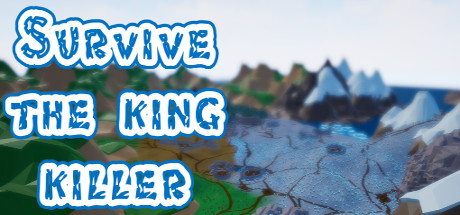
Survive: The king killer is a fiercely ambitious indie survival game that attempts to merge a wide array of systems—open-world exploration, hardcore survival mechanics, base building, crafting, faction warfare, and even army management—into a single, uncompromising experience. Developed by WhackAKey Games and published by Conglomerate 5, the game clearly reflects the vision of a small-scale or solo-driven project that aims high and refuses to simplify its ideas, even when doing so might have made for a smoother or more accessible experience.
At its foundation, the game casts players into a hostile medieval-flavored world where survival is not merely a means to an end, but the central challenge itself. Hunger, thirst, stamina, temperature, and health are all constantly in play, and neglecting any one of these systems can quickly spiral into failure. Resource gathering is essential from the very first moments, with players chopping trees, harvesting plants, mining rocks, and scavenging the environment to craft tools, weapons, and basic necessities. The world is open and largely unguided, placing the burden of learning and adaptation squarely on the player rather than providing structured onboarding or tutorials.
One of the game’s defining mechanics is its strict one-life rule. Death is permanent, and losing a character means losing all progress. This design choice dramatically raises the stakes of every encounter, reinforcing the game’s survival ethos and encouraging cautious, methodical play. In theory, this creates tension and emotional investment; in practice, it can also magnify frustration, particularly when deaths occur due to unclear mechanics, clumsy combat interactions, or technical hiccups rather than player error. The mechanic is bold, but it demands a level of polish and clarity that the game does not always consistently provide.
Base building is a significant pillar of the experience. Players can construct homes, fortifications, and functional structures using gathered materials, placing foundations, walls, roofs, doors, and furnishings to create a personal foothold in the world. This system offers a sense of ownership and progression, especially in a game where long-term survival depends heavily on preparation. However, construction interfaces and placement can feel awkward, and the lack of refinement sometimes turns building into a test of patience rather than creativity.
Beyond personal survival, the game expands outward into faction dynamics and large-scale conflict. Players can align with different teams, recruit mercenaries, and eventually build an army capable of assaulting rival strongholds. The ultimate objective—killing opposing kings—adds a macro-level goal that distinguishes the game from more purely sandbox survival titles. This blend of survival gameplay with strategic warfare is conceptually compelling, suggesting a journey from lone survivor to war leader. Unfortunately, AI behavior, combat depth, and feedback systems often fail to support this ambition, making large-scale encounters feel underwhelming or mechanically shallow.
Combat itself is functional but unsophisticated. Whether viewed in first-person or third-person, encounters tend to rely on basic attacks and movement rather than tactical depth or satisfying feedback. Enemy AI frequently lacks nuance, and fights can devolve into awkward exchanges that feel more tedious than tense. When combined with the permanent-death mechanic, these shortcomings can make combat feel risky in ways that are not always fair or engaging.
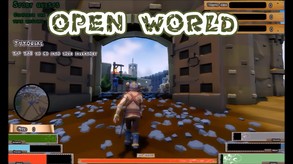
The game’s world design shows flashes of promise but is held back by technical limitations. Castles, forests, and open terrain create a sense of scale, yet textures, animations, and environmental detail often feel rough or unfinished. Performance issues and inconsistent polish further erode immersion, reminding players of the game’s indie roots at moments when the world should feel most convincing. Audio design is similarly modest, offering functional sound effects without contributing significantly to atmosphere or emotional tension.
Community reception reflects this gap between ambition and execution. Many players recognize the sheer scope of ideas packed into the game and respect the effort behind it, particularly given its apparent small-team development. However, frustration dominates much of the feedback, with criticism aimed at clunky controls, unclear systems, repetitive resource loops, and punishing mechanics that lack sufficient support. The survival systems often feel stacked against the player without offering the satisfaction that usually comes from mastering difficult mechanics.
Ultimately, Survive: The king killer is a game defined by its aspirations more than its results. It strives to be a harsh, uncompromising survival RPG where every decision matters and progress is earned through persistence and caution. For players willing to tolerate rough edges, experiment patiently, and approach the game as an unfinished or experimental sandbox, there may be moments of genuine intrigue and accomplishment. For most players, however, the lack of polish, clarity, and mechanical cohesion makes the experience more exhausting than rewarding.
As a result, the game stands as an example of how far ambition alone can carry a project—and where it falls short without refinement. It is not without ideas worth exploring, but those ideas rarely come together in a way that feels consistently engaging or fair. Survive: The king killer is best approached with tempered expectations, curiosity rather than commitment, and an appreciation for raw indie experimentation over polished survival design.
Rating: 4/10