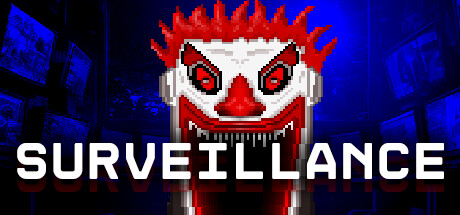
A spot the difference horror in which you have to prevent high paranormal activity In different places around the world. Identify suspicious changes in environment and take immediate action!
Modeled estimate, not a reported figure. How we estimate →
Media
About


Genres
Stats
All-time low is the lowest price we've recorded for this game since we started tracking it.
Languages: English, Russian, French, Italian, German, Spanish - Spain
Engagement
Reviews
У игры отличный визуальный стиль и музыкальная составляющая!) Довольно необычная идея) Все уровни уникальны каждый по своему. Игра отлично тренирует память) Наиболее интересно и сложно играть на уровне АД с прокаченной демонической головой! Всем рекомендую) 10/10
интересная идея добавить в IOD-лайк игру эквип как в фазме, неплохо разнообразит, как по мне за цену меньше пачки сиг очень неплохая игра
SPOILER - All anomalies here: https://youtu.be/phNmz2DJ7X4 Review: I’ve been utterly captivated by Surveillance since its release on May 3, 2024, by Crystal Bat Studio. This clever indie horror‑puzzle game nails an eerie atmosphere with its pixel‑art aesthetic and chilling sound design. The core gameplay—spotting subtle paranormal shifts across CCTV feeds in locations like an asylum, polar station, spaceship, backrooms, and even a creepy castle—is brilliantly executed. Armed with EMF detectors, sound sensors, and other gizmos, you must stay laser-focused to prevent escalating supernatural threats. The tension is real, and the unpredictable anomalies keep each session fresh. As someone who loves logic puzzles with a dash of horror, I found the device upgrade system especially satisfying—watching your toolkit evolve gives a real sense of progression. And with no two playthroughs the same, the replayability is surprisingly high for a compact indie title. Crystal Bat Studio has also done a stellar job supporting diverse players: the game offers full interface/subtitles in six languages (English, French, German, Italian, Spanish, Russian), with solid Steam Deck compatibility and family‑sharing support. In summary: – ✅ Atmospheric pixel‑art horror puzzle – ✅ Smart use of tech gadgets & upgrades – ✅ Unpredictable anomalies keep you on your toes – ✅ Great value—frequently discounted, now at \~£1.95–£2.99 – ✅ Universal praise: 100% positive player reviews on Steam If you’re into horror‑puzzle experiences that test your observation, memory, and nerves, Surveillance is a must‑play. Easy to pick up in short bursts, yet hard to put down—highly recommended! --- (Posted on Steam as a Fellow Observer 👁️)
Related
Related
Trends
Modeled estimate over time.
Hours played at review time, across 29 reviews with recorded playtime.
Могу сказать, что если вдаваться в мелочи неудобства, то можно критиковать. Но относительно проработки игровой концепции, локальных и детализированных моментов, могу поставить твердые 10/10.
Surveillance is an indie horror puzzle game developed and published by Crystal Bat Studio that transforms the simple act of monitoring security cameras into a tense and unsettling gameplay experience. Instead of relying on traditional horror mechanics such as exploration or combat, the game focuses on observation, memory, and attention to detail. Players take on the role of an investigator assigned to monitor various locations around the world that have recently become hotspots for unexplained paranormal disturbances. Through a network of security cameras and monitoring tools, the player must carefully watch for abnormalities and react quickly before the situation spirals out of control. The game’s central premise revolves around detecting anomalies within camera feeds that monitor different rooms in a location. Each stage presents a series of surveillance screens that display environments such as abandoned facilities, mysterious laboratories, polar research stations, eerie castles, and other unsettling areas. At first glance, everything appears normal, but as time passes subtle changes begin to occur within the rooms. Objects may shift position, furniture may disappear or reappear, lights may flicker, or doors may open unexpectedly. The player’s task is to identify these anomalies and report them before they accumulate and overwhelm the monitoring system. The gameplay relies heavily on pattern recognition and visual memory. At the beginning of a level, players must study each room carefully in order to memorize how it originally looks. Once the monitoring begins, the player cycles through the camera feeds and compares what they see with their memory of the room’s original state. Even the smallest change can signal the presence of an anomaly. Some anomalies are easy to detect, such as a missing object or a piece of furniture being moved. Others are far more subtle, requiring careful inspection of details that might otherwise go unnoticed. As the game progresses, the number and variety of anomalies increase, making the task of monitoring much more difficult. New types of disturbances appear that are not always immediately visible. Strange environmental effects, unnatural shadows, mysterious figures, and unsettling visual distortions begin to emerge in the rooms. These anomalies are designed to disrupt the player’s sense of familiarity with the environment, forcing them to constantly question whether what they are seeing is normal or something more sinister. The longer the player survives, the more intense and unpredictable the activity becomes. A key feature of the game is its unpredictable anomaly system. Instead of following a scripted sequence of events, anomalies appear randomly and vary from one play session to another. This procedural element prevents players from memorizing patterns or anticipating what will happen next. Even if a player becomes familiar with a particular level, the anomalies that appear during each attempt may be completely different. This unpredictability keeps the tension high and ensures that each session feels fresh and uncertain. To assist in managing the growing paranormal activity, the player has access to several investigative tools that enhance the monitoring process. Various detection devices can be used to analyze environmental disturbances, identify unusual electromagnetic signals, or pinpoint suspicious sounds within the rooms. As players progress through the game, these tools can be upgraded to improve their accuracy and range. The equipment adds a light progression system that rewards players for surviving longer and successfully reporting anomalies. The psychological tension of Surveillance is one of its most defining characteristics. Rather than relying on sudden scares or intense action sequences, the game builds fear through anticipation and uncertainty. The player spends most of their time quietly scanning camera feeds, knowing that something could change at any moment. This constant vigilance creates a sense of anxiety, as the player begins to question every object and shadow within the environment. When an anomaly finally appears, the realization that something has changed can be just as unsettling as a traditional horror jump scare. The visual style of the game contributes strongly to its atmosphere. The developers chose a pixel-art aesthetic that mimics the appearance of low-resolution surveillance footage. This style allows players to focus on the details of each room while maintaining a distinctive indie visual identity. The slightly distorted and grainy appearance of the camera feeds enhances the feeling that the player is observing events through imperfect security equipment, which makes the environments feel even more eerie and unpredictable. Each location in the game has its own visual theme and environmental design. Some areas feel abandoned and decaying, while others appear sterile and clinical, suggesting that something terrible may have occurred there in the past. These varied settings help prevent the gameplay from becoming repetitive and encourage players to adapt their observation strategies depending on the environment they are monitoring. Certain anomalies may be easier or harder to detect depending on the layout and lighting of each location. Sound design also plays an important role in maintaining the game’s unsettling atmosphere. Subtle background noises, faint mechanical sounds, and occasional audio distortions accompany the surveillance footage. These sounds often act as clues that something unusual is happening within a room, encouraging players to pay attention not only to what they see but also to what they hear. The ambient audio design helps create a feeling of isolation, as if the player is alone in a control room while strange events unfold in distant locations. The structure of the game encourages repeated attempts and improvement through practice. Because anomalies appear randomly and increase in complexity as time passes, players gradually develop sharper observational skills the more they play. Learning how to quickly scan each room and identify changes becomes essential for surviving longer sessions. The game rewards players who remain calm under pressure and maintain a methodical approach to monitoring the cameras. Despite its strong concept, the game’s simplicity may not appeal to every player. The gameplay loop remains largely consistent throughout the experience, focusing almost entirely on observation and anomaly detection. Players who prefer more varied mechanics or a strong narrative storyline may find the structure somewhat repetitive over time. However, for those who enjoy atmospheric horror and puzzle-like challenges, the focused gameplay can be highly engaging. Ultimately, Surveillance offers a unique take on the horror genre by turning the act of watching security cameras into a tense and immersive experience. Its emphasis on careful observation, psychological tension, and unpredictable paranormal events creates a game that is both simple in concept and surprisingly effective in execution. By combining eerie environments, subtle anomalies, and an ever-present sense of uncertainty, the game succeeds in delivering a haunting experience that reminds players how unsettling it can be to simply watch and wait for something to go wrong. Rating: 6/10
Классно, интересно, разнообразно, рекомендую
New Observation Duty-like game, I like it. Creepy!
一个有趣同时又令人毛骨悚然的游戏,物有所值。
[h1]Ryan George Style Pitch Meeting:[/h1] The Setting: Inside a high-tech, 2D pixel-art surveillance hub orbiting a tiny, blocky planet made entirely of corrupted save files. The room is filled with flickering, low-resolution monitors. The Publisher is sitting in a floating hover-chair, wearing a VR headset that is clearly just a cardboard box with two holes poked in it. (Anomaly: A large, framed painting on the wall behind the Game Designer silently rotates a full 180 degrees). Publisher: So, you have a "staring unblinkingly at low-resolution security monitors until the player gives up and goes home" simulator for me? Game Designer: Yes, sir, I do! It’s called Surveillance, and it’s a 2D anomaly-hunt horror game. Publisher: Oooooh, hunting things in 2D is tight! (Anomaly: The Publisher's cardboard VR headset briefly turns into a fully roasted turkey before instantly turning back into cardboard). Game Designer: It sure is! We put a lot of hard work into the pixel art. You’re looking at these different locations—an asylum, a spaceship, a polar station—and you have to spot anomalies before there are too many of them. (Anomaly: The Publisher's pen suddenly morphs into a glowing green, pixelated cylinder). Publisher: That sounds like it might be hard to keep track of. How do the players figure it out? Game Designer: Actually, it’s going to be super easy, barely an inconvenience. We’re giving the player gadgets! Like an EMF detector and sound sensors! Publisher: Oh, really? (Anomaly: A potted fern in the corner grows a pair of muscular legs and silently tap-dances out the door). Game Designer: Yeah, they help you find where the weird stuff is happening. Publisher: Well, okay then! So when you find something out of place, you just click on it to report it? Game Designer: No, no, no. That’s far too simple and intuitive. To report an anomaly, you have to open up a clunky drop-down menu, scroll through a list, select exactly which room it's in, and then pick what category of weirdness is occurring. (Anomaly: A duplicate Game Designer slowly materializes in the corner of the room, facing the wall, completely unmoving). Publisher: Does the drop-down menu work well? Game Designer: Sometimes it completely locks up and stops working, and you can't report anything anymore! Publisher: Whoops! Game Designer: Whoopsie! (Anomaly: The Game Designer's shirt instantly changes from a solid blue button-down to a loud, pixelated Hawaiian print). Publisher: Why would we make the interface freeze up in a game about using the interface? Game Designer: So the "clumsy desperation" can happen! Publisher: Fair enough. But what if the player gets confused? Do we have a tutorial to explain the gadgets and the menus? Game Designer: Absolutely not! We drop them in completely blind. Publisher: Oh my god. Game Designer: I know! We want them to just click around in a panic. And get this: the game has an anomaly counter that tells you there are, say, three anomalies currently active. Publisher: That’s helpful! Game Designer: Right? But then you look at all the cameras, and you see absolutely nothing. Publisher: Oh, so it’s a mystery? (Anomaly: The Publisher's floating hover-chair silently turns into a massive, pixelated block of Swiss cheese). Game Designer: It’s a mystery because they haven't rendered yet! You have to flip the camera away, and then flip it back, like you’re trying to surprise the game engine into doing its job. Publisher: A very lazy game engine! (Anomaly: The main blast doors shrink down until they are only two inches tall). Game Designer: Exactly! You’ll be on camera one, nothing. Camera two, nothing. Then you go back to camera one and suddenly there are two anomalies staring at you that weren't there five seconds ago. Publisher: Wow wow wow. Wow. So what happens if the player gets a report wrong? (Anomaly: The lighting in the room turns neon green, and a silent, 2D disco ball materializes out of thin air). Game Designer: They get a penalty! And sometimes, just for fun, the menu system gives them a double penalty for a single mistake! Publisher: Oooooh, getting punished twice for the exact same error is tight! Game Designer: It really is. (Suddenly, the two-inch blast doors are kicked completely off their tiny hinges with an explosive, entirely unnecessary amount of flair. Captain Buggy the Star Clown struts into the room, somehow normal size despite the door. A personal spotlight follows him, which is being held by his own detached, floating hand). Buggy the Star Clown: GYAHAHAHA! Make way for the genius! Flashily present and ready to judge! Publisher: Who is this? Game Designer: Oh, this is our lead Quality Assurance tester, Captain Buggy the Star Clown. Buggy: And don't you forget it! It is a complete insult to my flashy brilliance that my legendary talents are being wasted on testing this absolute garbage! The main menu is the worst! Publisher: The QA testing is the worst! Buggy: You imbeciles couldn't program a flashy menu if your miserable lives depended on it! The UI locks up if you click too fast, the drop-down menu cowers behind the EMF reader like it's Usopp or Mr 3 and the whole game is entirely lacking in treasure! (Anomaly: The floor tiles seamlessly rearrange themselves into a giant, non-functioning piano keyboard). Publisher: Treasure? Game Designer: He means the hardcoded typos. Buggy: I mean it says "Waring!" instead of "Warning!" What kind of un-flashy amateur hour is "Waring"?! Even my lowest-ranking pirate cronies know how to spell better than this! This game engine is making a mockery of my glorious red nose! Publisher: A very aggressive nose! Buggy: WHO ARE YOU CALLING A BIG RED NOSE?! I'LL DESTROY YOU! Game Designer: Hey, shut up! Publisher: That works. Buggy, do we at least tell the player what anomalies they missed when they get a Game Over? (Anomaly: The ceiling of the hub suddenly vanishes, revealing a swirling, infinite vortex of television static). Buggy: GYAHAHA! Of course not! We just boot them to the main menu! The failure screen is just a blank wall of absolute silence! It leaves them with absolutely nothing, which is exactly what they deserve for playing something so un-flashy! Publisher: Very considerate! We wouldn't want to overwhelm them with useful information. Game Designer: Thanks, Buggy. You can go back to QA now. (Anomaly: The security monitors behind them stop showing the game entirely and start displaying a 16-bit rendering of two medieval knights playing tennis). Buggy: Bah! I have an empire to run! I'm going to go fail the polar station level on purpose because this game is beneath me! GYAHAHAHA! (He strikes a magnificent, egotistical pose. His legs detach and run out the tiny door opening on their own, while his torso floats out smoothly after them). Publisher: What? Game Designer: What? Publisher: Well, okay then! Game Designer: Great! So, here is the best part. We are charging about ten dollars for this experience. (Anomaly: The entire room tilts 45 degrees, but neither the Publisher nor the Designer seem to notice or be affected by gravity). Publisher: That works. Game Designer: And we are removing it from the store almost immediately! It's going away forever! Publisher: Wait, why are we taking it down if we just put it up? Game Designer: I don't know! Publisher: Are we doing it to avoid fixing the "Waring" typo? Game Designer: Because! Publisher: Fair enough. It’s a bold strategy to sell a game where the main mechanic is a freezing menu, but those pixels really do look nice. Will there be other bugs? Game Designer: That's what we're going with! Publisher: I love the idea of charging ten dollars for a game where the user interface just completely gives up and locks itself! Game Designer: It's the ultimate horror experience, now let's just hope the drop-down menu lets us exit this meeting!
Momentum
Pace estimated from the game's recent review growth (our daily snapshots) at its own sales-per-review ratio — a momentum signal, not booked sales.
Audience
Estimated from the language of this game's reviews — a proxy for where players are, not official Steam demographics.