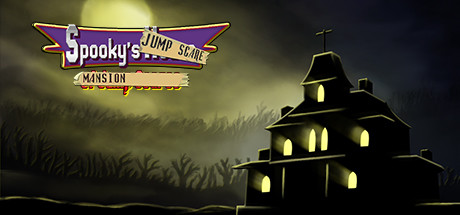
Can you survive 1000 rooms of cute terror? Or will you break once the cuteness starts to fade off and you're running for your life from the unspeakable hideous beings that shake and writhe in bowels of this house? They wait for you, they wait and hunger for meeting you.
Revenue comes from in-game items and microtransactions, which our price-based model doesn't estimate. Copies below reflect the player base, not paid sales.
Media

About
Stats
Languages: English**languages with full audio support
Engagement
Reviews
Themes across 70 recent reviews and how positive each mention is. A keyword signal, not full sentiment analysis.
Reviews
Creative
nunca olvidare este juego, es una parte de mi infancia y fanatismo que mantengo a dia de hoy. <3
Spoopy (Totally remember that I had this game hidden for like... 6 years...)
Related
Related
Trends
Concurrent players on Steam, sampled daily since tracking started.
Hours played at review time, across 70 reviews with recorded playtime.
positive critical· bar length = how often the theme comes up
de todos os bixos nesse jogo o unico q eu me assustei de verdade foi o specimen 1
GOOD
Recommended if you want a horror game that always keeps you on edge. I've personally really enjoyed it :D
slaba gra, w ogole sie balem
Прошел игру за часик. Прикольная игрушка, Единственный затуп поймал на 810 комнате . Можно наложить от внезапной деревяхи на стене, комната с помехами держит в напряге, ожидая скримака который может даже не появиться с первого раза. Жалко действий когда нужно задействовать топор маловато,как будто могли бы сунуть и больше. Игра на любителя, но я ничуть не пожалел потраченного часика,даже перепрошел бы,через годков 5)
Spooky's Jump Scare Mansion is a fascinating example of indie horror done with creativity rather than technical excess. Developed and published by Lag Studios, the game first appeared on Steam in 2015 after gaining attention as a freeware title under its original name, Spooky's House of Jump Scares. At first glance, it presents itself as a joke: a free-to-play horror experience starring an adorable ghost girl inviting players to traverse 1,000 rooms filled with cardboard cutout scares and childish artwork. However, beneath its deceptively cute exterior lies one of the most memorable psychological horror experiences of the indie scene. Lag Studios took a simple concept and transformed it into a commentary on horror itself, demonstrating how atmosphere, pacing, and player expectation can be more effective than photorealistic visuals or excessive gore. The premise is straightforward but surprisingly compelling. Players enter Spooky's mysterious mansion and are challenged to survive one thousand rooms. Early on, the game leans heavily into humor, presenting smiling ghosts, crudely drawn monsters, and harmless jump scares that feel more amusing than threatening. The Steam description asks whether players can survive "1000 rooms of cute terror," and that phrase perfectly encapsulates the game's identity. Yet, as the room count rises, the mansion gradually reveals its true nature. Hallways become darker and more oppressive, environmental storytelling begins to emerge through notes left behind by previous explorers, and the once-playful atmosphere transforms into something genuinely unsettling. The game's greatest achievement is its manipulation of expectations. By teaching players to laugh at its initial scares, it creates an environment where genuine horror can take hold when least expected. Gameplay is intentionally simple. Players move through procedurally arranged rooms, searching for exits while avoiding increasingly dangerous entities known as Specimens. There are no elaborate combat systems or skill trees; survival depends on maintaining momentum, learning enemy patterns, and preserving composure. Every hundred rooms serves as a milestone and a brief respite, creating a rhythm that encourages "just one more room" until players realize hours have passed. The procedural elements keep runs from becoming entirely predictable, while the gradual introduction of enemies ensures the experience remains fresh throughout its lengthy campaign. Despite being built with relatively modest technology, the game succeeds in creating tension through sound design, lighting, and uncertainty rather than visual fidelity. One of the game's strongest aspects is its understanding of psychological horror. The mansion itself feels alive, constantly shifting between absurd comedy and genuine menace. The cardboard ghosts that populate the opening rooms become symbolic of the player's growing paranoia. Eventually, players begin to fear every sound cue and every door, despite knowing that many encounters remain harmless. Lag Studios masterfully exploits this conditioned response, proving that horror is often more effective when it is earned. The various Specimens each introduce unique mechanics and visual designs, ranging from grotesque monsters to surreal manifestations that feel inspired by internet horror culture and classic survival horror alike. Even after more than a decade since its release, many of these encounters remain memorable because of how effectively they subvert player expectations. The game's presentation deserves considerable praise. Its cartoon-inspired art style initially appears simplistic, but that simplicity becomes a strength. The contrast between cute aesthetics and disturbing subject matter creates a sense of unease that permeates the entire experience. Audio design is equally effective, utilizing ambient noise, distant footsteps, and sudden musical shifts to maintain tension. Performance requirements are minimal, requiring only modest hardware and approximately 300 MB of storage, making it accessible to virtually any PC player. As a free-to-play title, it also offers tremendous value, particularly when considering its replayability and additional downloadable content such as Karamari Hospital, which expands the universe with new scenarios and gameplay elements. There are, however, some limitations. The repetitive nature of traversing hundreds of rooms may not appeal to everyone, particularly players who prefer tightly paced horror experiences. Certain sections can feel drawn out, and the procedural generation occasionally produces stretches that lack excitement. Additionally, while the simplistic visuals contribute to the game's charm, they may discourage players expecting a more traditionally polished horror title. The difficulty curve can also fluctuate unexpectedly, with some Specimens presenting a much greater challenge than others. Nevertheless, these issues rarely undermine the overall experience because the game's central hook remains consistently engaging. Spooky's Jump Scare Mansion succeeds because it understands that horror is as much about anticipation as it is about payoff. It begins as a parody of jump scare-heavy horror games before evolving into a surprisingly effective survival horror adventure that leaves a lasting impression. Few indie titles manage to balance comedy and terror so effortlessly, and even fewer maintain that balance across a thousand rooms. Lag Studios created a cult classic that continues to be remembered for its originality, proving that imagination and clever design can outperform expensive production values. For horror enthusiasts, especially those interested in indie games and unconventional experiences, Spooky's Jump Scare Mansion remains an essential title worth experiencing. Rating: 8/10
A wonderfully game with good frights and even better monsters
Audience
Estimated from the language of this game's reviews — a proxy for where players are, not official Steam demographics.
Audience
Games most often reviewed by the same players — an audience-affinity signal from our review sample, not full ownership data.