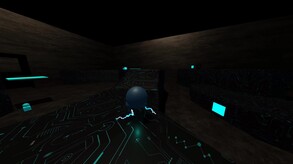
Spark is a small indie puzzle adventure created by Davis Cowper, Isabel Duaso, Wren Butts, Libby Schuchardt, and Caleb Krainman, and published by Davis Cowper. Designed as a short free-to-play experience, the game places players in control of a tiny sentient spark of electricity navigating the inner workings of a mysterious digital system. Instead of focusing on action or traditional storytelling, Spark centers on exploration and environmental puzzles within a stylized technological landscape. The concept is simple but creative: the player acts as a living current traveling through circuits, wires, and electronic components, gradually restoring energy and reconnecting parts of the system that have fallen into disrepair.
The premise gives the game a unique thematic identity. Spark represents a fragment of energy whose role is to restore life to a dormant network. As players guide the glowing character through the digital maze, they activate dormant circuits, reconnect broken pathways, and bring inactive machinery back online. The game frames this process as something larger than simple puzzle solving, presenting the spark as a small but meaningful force capable of restoring order within a larger system. The motto “Virtue Through Voltage” captures this theme well, suggesting that even the smallest piece of energy can have a transformative impact when it moves through the right channels.
Gameplay focuses primarily on environmental puzzles built around electricity and circuit logic. The player moves Spark through a network of interconnected pathways that resemble the internal architecture of a computer or electrical device. Along the way, various interactive elements must be manipulated in order to unlock new sections of the system. These puzzles frequently involve routing energy through wires, activating switches, and placing batteries into sockets to power machinery. In many cases, solving one puzzle will activate a previously dormant part of the environment, opening new routes or revealing additional mechanisms that must be understood and used correctly.
One of the strengths of the game is how naturally its puzzle mechanics are integrated into the environment. Rather than presenting puzzles as isolated challenges, the entire world functions as a giant circuit board that players must gradually bring back to life. Wires, nodes, switches, and batteries all exist within the world itself, creating the sense that every action contributes to repairing the system. The player is not just solving puzzles but effectively restoring a broken network one connection at a time. This integration helps maintain immersion and gives each puzzle a sense of purpose within the broader environment.
Exploration also plays an important role in the experience. The electronic maze is designed with interconnected pathways that require players to observe their surroundings and think carefully about how different components relate to one another. Some areas remain inaccessible until power is restored elsewhere, which encourages players to revisit earlier sections once new abilities or connections are discovered. While the game’s overall structure remains fairly linear, these moments of backtracking add a layer of spatial reasoning that makes the environment feel more cohesive.
Narrative elements are presented subtly through the player’s interactions with the system rather than through dialogue or cutscenes. As Spark moves through the digital environment, the gradual restoration of power suggests a broader theme of connectivity and renewal. The idea that a tiny spark can reawaken an entire network becomes a metaphor for the importance of small actions in maintaining larger systems. Although the story is never explained in explicit detail, the environmental progression allows players to interpret the meaning behind the experience in their own way.
Visually, Spark adopts a minimalist aesthetic built around glowing circuitry and metallic pathways. The environments resemble the interior of a machine or computer motherboard, with bright electrical currents illuminating the otherwise dark surroundings. Spark itself appears as a small animated cluster of energy that glows vividly against the darker background, making it easy to follow the character’s movement through the environment. The visual design is relatively simple but effective, using light and color to emphasize the theme of electricity flowing through a system.
The sound design contributes to the game’s atmosphere through subtle electronic tones and ambient background music. The soundtrack is calm and understated, complementing the relaxed pace of the puzzle-solving gameplay. Sound effects associated with activating switches, connecting circuits, and restoring power provide satisfying feedback that reinforces the sense of repairing a living system. The audio presentation remains minimal throughout the experience but works well in supporting the contemplative mood of the game.
One of the most appealing aspects of Spark is its accessibility. The controls are straightforward and the mechanics are introduced gradually through a short tutorial, allowing players to learn the systems naturally through interaction rather than complex explanations. Because the puzzles rely more on observation and logical thinking than on reflexes, the game can be enjoyed by players who prefer a slower and more thoughtful pace.
However, the game’s limited scope is also one of its most noticeable drawbacks. Spark is designed as a short experience, consisting of only a small number of levels beyond the introductory tutorial. Most players will likely complete the entire game within a relatively brief play session. While the puzzles are creative and well integrated into the environment, the overall length may leave some players wishing for additional stages or more complex mechanics that expand on the core ideas.
The puzzle difficulty also remains relatively moderate throughout the experience. Players familiar with logic-based puzzle games may find the challenges somewhat straightforward, as the game prioritizes accessibility and atmosphere over complexity. While this makes Spark approachable for a wide audience, it also means that experienced puzzle players may not find the gameplay particularly demanding.
Despite these limitations, Spark succeeds in delivering a charming and thoughtful puzzle adventure that stands out because of its concept and presentation. The idea of guiding a tiny spark through the internal circuitry of a digital system provides a fresh perspective for environmental puzzle design. Combined with its relaxing pace and clean visual style, the game offers a pleasant experience that emphasizes creativity and exploration rather than difficulty or competition.
Overall, Spark is a compact but memorable indie puzzle game that demonstrates how a simple idea can create an engaging and visually distinctive experience. Its combination of circuit-based puzzles, environmental storytelling, and minimalist design results in a short but satisfying journey through a digital world. While the limited content prevents it from becoming a deeply expansive puzzle adventure, the creativity of its concept and the clarity of its design make it an enjoyable experience for players who appreciate thoughtful and atmospheric indie games.
Rating: 6/10