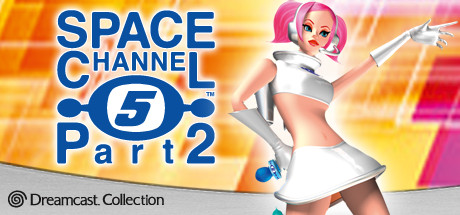
Space Channel 5: Part 2 is a vibrant, unapologetically eccentric rhythm game developed and published by SEGA, serving as a direct sequel to the cult classic that first introduced players to the intergalactic reporter Ulala. Originally released in the early 2000s and later brought to Steam as part of SEGA’s retro catalog, the game remains one of the company’s most distinctive experiments in blending music, style, and interactive spectacle. At its core, it is a rhythm-action experience built around call-and-response mechanics, but what truly defines it is its infectious personality, colorful sci-fi world, and unwavering commitment to theatrical flair.
The story resumes with Ulala once again reporting for Space Channel 5 in a futuristic 25th century where dance battles determine the fate of the galaxy. A mysterious group known as the Rhythm Rogues has begun abducting citizens by forcing them into hypnotic dance trances, and it is up to Ulala to outdance them, rescue victims, and restore order—all while maintaining high viewer ratings for her broadcast. The narrative is intentionally absurd and tongue-in-cheek, functioning more as a stage for musical set pieces than as a deeply layered plot. However, its campy tone, exaggerated villains, and dramatic news-report framing give the experience a sense of showmanship that few rhythm games attempt.
Gameplay follows a “Simon Says” structure in which enemies call out rhythmic patterns using directional inputs combined with Ulala’s signature vocal responses, “chu” and “hey.” Players must replicate these patterns precisely in time with the beat to succeed. While the concept is simple, the execution becomes increasingly demanding as sequences grow longer and more complex. Timing is everything; even slight missteps can break the flow and reduce your rating. Part 2 expands on the original formula by introducing new mechanics such as charge inputs and musical duels that add variation to the structure. The game’s adaptive soundtrack also responds to player performance, layering additional instrumentation and energy when you execute moves accurately, which enhances the feeling of participating in a live broadcast performance.
Visually, Space Channel 5: Part 2 embraces a retro-futuristic aesthetic inspired by 1960s space-age design. Bright colors, bold character silhouettes, and exaggerated choreography create a presentation that feels theatrical and surreal. The art direction leans heavily into stylization rather than realism, giving the game a timeless, almost dreamlike quality despite its aging polygonal models. Ulala herself remains an iconic figure, with her bright outfit and confident demeanor anchoring the spectacle. The animation work, particularly during dance sequences, still carries an infectious energy that makes each stage feel like a performance rather than a conventional level.
The soundtrack is one of the game’s greatest strengths. Drawing from jazz, pop, and electronic influences, the music is upbeat and rhythmically engaging, designed to keep players immersed in its tempo. The call-and-response vocal patterns become memorable earworms, reinforcing the game’s identity long after you stop playing. The sound design plays a critical role in gameplay clarity, as audio cues guide player timing. Because rhythm accuracy is central to progression, synchronization between sound and input is essential. While the original console versions delivered tight audio-visual cohesion, some players have noted that modern ports, including the Steam release, may present occasional timing inconsistencies depending on system configuration, which can impact precision gameplay.
Beyond the main story mode, the game offers additional challenges that extend replay value. An endurance-style mode presents increasingly difficult rhythm sequences for players seeking mastery, and unlockable costumes and cosmetic variations provide incentives for replaying stages with higher performance ratings. Cooperative play options allow two players to split directional and vocal inputs, transforming the experience into a collaborative dance routine. These extra features reinforce the game’s arcade spirit, encouraging repeated playthroughs to perfect sequences and improve rankings.
Despite its strengths, Space Channel 5: Part 2 occupies a niche space within the rhythm genre. Its reliance on memorization and strict timing may feel unforgiving to newcomers, especially those accustomed to modern rhythm games with more generous input windows. Additionally, its surreal humor and theatrical style may not resonate with every player. However, for those who appreciate retro SEGA experimentation and rhythm games that prioritize personality as much as mechanics, it stands as a uniquely charming experience.
Ultimately, Space Channel 5: Part 2 remains a bold and colorful relic of SEGA’s creative era, blending rhythm gameplay with an unmistakable sense of performance art. Its infectious music, campy narrative framing, and stylized presentation combine to create an experience that feels more like starring in an interstellar dance broadcast than simply playing a game. While its age and port-specific issues may require some patience, the core design remains energetic and imaginative. For rhythm enthusiasts and fans of distinctive, character-driven arcade titles, it continues to shine as one of SEGA’s most memorable cult classics.
Rating: 8/10