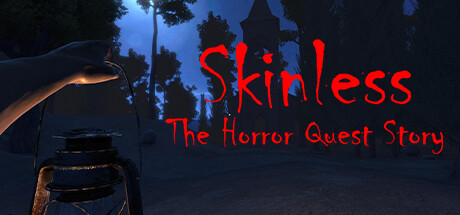
In "Skinless The Horror Story Quest," journey through a nightmarish blend of reality and hallucination. Wake up in a haunting hospital, face your fears in a post-apocalyptic world overrun by zombies, and confront the doctor behind the epidemic. Can you escape the darkness within and without?
Modeled estimate, not a reported figure. How we estimate →
Media

About
Stats
All-time low is the lowest price we've recorded for this game since we started tracking it.
Languages: English**languages with full audio support
Reviews
Skinless The Horror Story Quest, developed and published by Eclipse Interactive, is an ambitious indie horror title that tries to fuse psychological storytelling with survival gameplay, resulting in an experience that feels uneven but undeniably driven by a clear creative vision. Rather than relying purely on traditional horror tropes, it attempts to explore fear through disorientation, fragmented memory, and shifting realities, placing the player in a world where the line between internal and external threats is deliberately blurred. The game begins in a confined, clinical setting that immediately establishes a sense of unease. As the experience unfolds, the environment gradually expands into a devastated world shaped by a catastrophic outbreak, transitioning from intimate psychological horror into a broader survival scenario. This shift in scale is one of the game’s defining structural elements, as it moves from claustrophobic tension to more open, dangerous environments populated by hostile entities. The narrative itself is delivered in a fragmented manner, relying on environmental cues and scattered information rather than direct exposition. This approach creates a sense of mystery, but it can also make the story feel difficult to follow, particularly for players who prefer more structured storytelling. Gameplay is built around a combination of exploration, puzzle-solving, and encounters with enemies. Players move through environments searching for clues, unlocking pathways, and piecing together the events that led to the world’s collapse. At times, the game leans heavily into slow, deliberate exploration, allowing atmosphere to take center stage. In other moments, it shifts toward more action-oriented sequences involving combat or evasion. While this variety suggests an attempt to keep the experience dynamic, the transitions between these gameplay styles are not always smooth, and the systems themselves lack the refinement needed to feel fully cohesive. One of the more interesting ideas at the heart of Skinless The Horror Story Quest is its focus on psychological horror. The game frequently introduces surreal elements that challenge the player’s perception of reality, presenting threats that may or may not be tangible. This creates a sense of uncertainty that can be genuinely effective when executed well, as players are forced to question what is real and what is imagined. However, this concept is not consistently developed, and some moments that could have been deeply unsettling instead feel underexplored or disconnected from the broader experience. Visually, the game aims for a cinematic tone, using lighting and environmental design to create an oppressive atmosphere. Dark interiors, desolate landscapes, and decaying structures all contribute to a world that feels unstable and hostile. While the art direction supports the game’s themes, the technical execution is inconsistent. Some areas are effective in conveying mood, while others appear sparse or lacking in detail, breaking immersion. This inconsistency reflects the limitations of a small-scale production, where ambition occasionally outpaces available resources. The audio design is more consistently effective, using ambient sounds and subtle cues to build tension. Silence is often used strategically, allowing environmental noises to stand out and heighten the sense of isolation. When sound is introduced, it tends to be purposeful, signaling danger or reinforcing key moments. While the soundtrack itself is not particularly memorable, it complements the overall tone and helps sustain the atmosphere during quieter sections. The game’s biggest challenges lie in its lack of polish and depth. Many of its ideas—particularly the integration of psychological themes with survival mechanics—are compelling, but they are not fully realized. Gameplay systems can feel repetitive, enemy encounters lack variety, and progression does not introduce enough new elements to keep the experience consistently engaging. These issues become more apparent over time, as the initial sense of intrigue gives way to a more predictable loop. Despite these shortcomings, there is a clear sense of intention behind the design. The game is trying to do more than simply scare the player; it aims to create a layered experience that blends narrative, atmosphere, and gameplay into something more reflective and unsettling. While it does not always succeed, it offers moments that stand out, particularly when its psychological elements and environmental design align effectively. In the end, Skinless The Horror Story Quest is a game that feels caught between its aspirations and its limitations. It delivers flashes of creativity and tension, but struggles to maintain consistency across its systems and presentation. For players who enjoy experimental indie horror and are willing to overlook rough edges, it can provide an intriguing, if uneven, experience. For others seeking a more polished and cohesive game, it may fall short of expectations. Rating: 6/10
委婉的说,这游戏 不值26 退钱吧,让我们大家留在最初的美好印象之中
https://youtu.be/8XHEr3Cv1oI Игрушка сыровата на данный момент. Много багов с текстурами. Иной раз даже предмет утопает в текстурах такой, как кукла на столе в комнате отдыха. Зомбаки не бьются во время анимации крика, да и слабоватые они - нет чувства опасности. Один раз после перехода на следующий уровень у меня полностью исчезло всё из инвентаря. Если про это всё забыть - игрушка норм, буду ждать продолжения.
Related
Related
Trends
Modeled estimate over time, reconstructed from Steam's monthly review histogram.
Momentum
Pace estimated from the game's recent review growth (our daily snapshots) at its own sales-per-review ratio — a momentum signal, not booked sales.
Related
| Bongo Quest | $315.6 | 51 | 45% | $0.49 |
| Food and Girls | $315.6 | 51 | 86% | $0.99 |
| Glasses and Girls | $315.6 | 51 | 82% | $0.99 |
| Dances and Girls | $322 | 52 | 83% | $0.99 |
| Anime Sunset Ride | $334.4 | 54 | 67% | $0.49 |
| Carnival and Girls | $334.4 | 53 | 85% | $0.99 |