Join SirKwitz on another coding adventure in this edutainment puzzle game. Manage instructions, execute functions and loops, and navigate Booleans as you code this quirky robot through each challenge.
Modeled estimate, not a reported figure. How we estimate →
Media

About
Embark on a fun journey into the world of coding with ”SirKwitz 2”, the sequel to the beloved educational game that demystifies the fundamentals of coding – ”SirKwitz”.
Designed for beginners, “SirKwitz 2” combines logic-based puzzles with accessible mechanics, offering an entry point into programming for players of all ages - from kids taking their first steps into coding, to adults looking for a friendly introduction to the basics. The sequel builds on the original formula, refining and expanding it with more levels and a stronger focus on applying logic across a wider range of scenarios.
The Fun Path to Programming
“SirKwitz 2” is a beginner-friendly educational game that turns core programming concepts into fun puzzle gameplay, giving players a hands-on way to explore the fundamentals of coding in an approachable format.
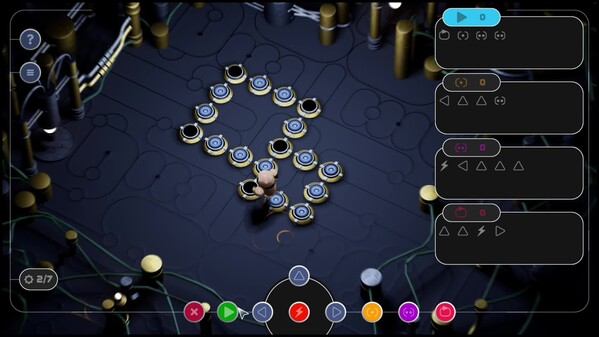
The game features an intuitive interface where players guide a robot through logic-based challenges, transforming instructions into immediate, visible outcomes. By completing 40 simple yet progressively engaging puzzles, players are introduced to key coding elements such as instructions, functions, loops, and Boolean logic.
Building on this interactive approach, the game supports the development of essential skills for aspiring programmers, including problem analysis, spatial reasoning, logic and computational thinking, while also encouraging focus and perseverance throughout the experience.
Especially tailored for those who think "programming" is a scary word
Simple yet engaging puzzles, teaching core programming concepts like instructions, functions, loops and Booleans.
Clean & intuitive user interface for easy steps-tracking
Genres
Stats
All-time low is the lowest price we've recorded for this game since we started tracking it.
Languages: English**languages with full audio support
Reviews
I was pretty excited to play this game because I’m currently learning programming, and it ended up being way more fun than I expected. The puzzles are satisfying, the level design is great, and the game does a really good job teaching programming logic without feeling intimidating. You play as a charming little robot, the UI is super clean, and the progression feels great, with puzzles gradually becoming more challenging without immediately overwhelming you. Some levels were definitely real head-scratchers, especially once functions got introduced, and that’s when the game became really fun and challenging for me. One thing I’d really love to see improved is the path editing. Right now, if you want to change something in the middle, you usually have to delete everything after it, so being able to directly move or slide arrows around would make experimenting feel way smoother. I also think the tutorial can feel a bit text-heavy at times. Since the game is all about interaction and learning by doing, more interactive tutorials or small animated demonstrations instead of static images would probably make onboarding feel more polished and easier to follow. Overall though, I genuinely enjoyed my time with it, and if you enjoy logic games or beginner-friendly coding puzzle games, this is definitely worth checking out!
I picked this up mostly out of curiosity, not expecting it to hold my attention for long. A couple of hours later, I was still working through puzzles and actually thinking about logic in a way that felt satisfying. The game introduces concepts one at a time, never throwing too much at you at once, which makes it genuinely beginner-friendly rather than just claiming to be. What works well: the interface is clean and readable, the feedback when you run your code is immediate and easy to understand, and SirKwitz's movement animations make it feel like your instructions actually come to life. There's something rewarding about watching the little robot navigate a tricky level after you figure out the right sequence. What could be better: there's no hint system for when you're truly stuck, which might frustrate younger or less experienced players. A gentle nudge option that doesn't just hand you the answer would go a long way. Also, Steam achievements are missing — they seem like an obvious fit for a game that's all about completing challenges and improving, and their absence is noticeable. The lack of a leaderboard or any competitive element also means there's little reason to revisit completed levels. Still, as an educational game and a low-stress puzzle experience, SirKwitz 2 delivers. It's accessible, well-made, and genuinely teaches you something.
I tried this game not expecting much, but it actually pulled me in. The first 10 levels feel like a smooth tutorial, then 10–20 start making you think a bit more, and after that it really challenges your brain in a good way. I liked the pacing a lot it never felt overwhelming, just gradually harder. The design is simple but unique, and everything is easy to understand. It’s a fun way to get into coding without it feeling scary. A leaderboard system would be great, especially for players who finish puzzles with fewer moves or faster time. It adds replay value and competition. Adding more background music would help keep the game fresh and less repetitive over time. Steam achievements would be a nice addition and give players extra goals to chase.
Clever Puzzles, Rough Edges, Real Potential This is the kind of game that makes you genuinely excited about learning, and that is no small thing. SirKwitz 2 takes coding concepts that would normally feel intimidating and wraps them in puzzles that are actually enjoyable to work through. The puzzle design is creative, the way each challenge presents its logic is well thought out, and the overall structure keeps you engaged. The sound design and music also deserve a specific mention here, because they do a lot of quiet work in making the experience feel polished and fun rather than dry and academic. The UI is clean, simple, and easy on the eyes, which matters a lot for a game targeting beginners. When a new player can look at the screen and immediately understand what they are working with, that is a real design win. That said, there are a few areas where the experience stumbles. The tutorial is the biggest one. Right now it relies on slides that the player reads through, and for a game built around hands-on learning, that feels like a missed opportunity. The core of SirKwitz 2 is doing, not reading, so the tutorial should reflect that. A much better approach would be to introduce one or two dedicated tutorial levels before the main content, something like a "Level 0" that walks players through the mechanics interactively, letting them actually move the robot and build the path themselves before any real challenge begins. This would give new players the foundation they need without breaking the game's momentum. Related to that, the way new mechanics are introduced needs some rethinking. Currently, new mechanics are shown to the player before the level that requires them, which disconnects the explanation from the actual moment of use. It would feel far more natural, and more effective as a teaching tool, if each new mechanic was introduced exactly when the player first encounters a situation that needs it. That way the lesson lands in context, and the player understands why it matters. On the gameplay side, one quality-of-life issue that stood out is the path editing system. If you want to change a single step in the middle of your sequence, you currently have to delete everything after that point just to reach it and make the change. The game should allow players to tap any step in the sequence and edit it directly in place, while keeping the rest of the path intact. This would make experimenting with solutions much less frustrating, especially in later levels where sequences get longer. A fast-forward button for the robot's execution would also go a long way. Watching the robot travel the full path at normal speed every single time you run a solution gets tedious, especially when you are iterating and testing repeatedly. Even a simple 2x speed option would make the whole loop feel much snappier. For post-game content, adding a Speedrun mode with a leaderboard showing the fastest solutions per level would give players a strong reason to return after finishing the game. It also naturally encourages a deeper kind of thinking, since optimizing for speed is a different challenge than just solving the puzzle. On top of that, an Endless mode with randomly generated puzzles, either with a failure condition or a timer, would give the game real replay value and keep players engaged well beyond the main levels. SirKwitz 2 has a genuinely strong foundation. The puzzle design works, the visual style is inviting, and the core idea of making coding approachable is executed with care. With some refinements to the onboarding experience, smarter mechanic introduction, and a few quality-of-life additions, this could be a standout title in the edutainment space.
Mechanics + smart puzzle progression – the game introduces coding mechanics step by step through increasingly complex challenges that help players absorb concepts naturally; + interactive learning segments – tutorials are easy to follow and help new players grasp the fundamentals quickly; - no points system, it does not matter if you manage to solve the puzzle in fewer steps than the maximum there; UI/UX + the interface is simple and well-organised, making it easy to move through levels and objectives; + visual cues – colour-based indicators make actions clearer and improve overall player engagement; Visuals + SirKwitz is a likeable robot character with smooth and believable movement; + nice animations; + well-designed environments; + overall, the game looks appealing and polished; Educational value + strong focus on programming fundamentals – the game does a great job teaching concepts such as logic, loops, sequencing etc. + encourages analytical thinking and problem-solving in a way that feels fun; Onboarding + useful support sections whenever a new mechanic is introduced; - certain stages may feel difficult for complete beginners – a softer difficulty ramp in a few areas could help; + dedicated help section available; - relying mostly on text during onboarding can make parts of the introduction feel less polished; Localization - only English so far, it would have been useful to have a few more languages as in the previous game; Technical performance + no technical issues or bugs encountered so far;
I'll be honest I came into SirKwitz 2 as someone who already knows how to code, mostly to see how well it handles the educational side. And I was pleasantly surprised. The way the game structures its puzzles mirrors how you actually think when writing real code: breaking a problem down into steps, identifying repetition, abstracting logic into reusable functions. It's not a dumbed-down simulation of programming it's the real thought process, just wrapped in a friendly package. What particularly stood out to me is how the game handles failure. When your sequence doesn't work, you see exactly what went wrong as SirKwitz acts out your instructions in real time. This immediate visual feedback is genuinely one of the best ways to teach debugging far more effective than just showing an error message. Watching the robot walk off in the wrong direction because you forgot to account for his orientation is both funny and instructive. On the downside, the game wraps up relatively quickly for anyone who picks up the concepts fast. There's no freeform sandbox or open-ended challenge mode where you can experiment beyond the given objectives. Once a puzzle is solved, there's nothing to bring you back to it no optional goals, no hidden paths, no "can you do it in fewer moves?" layer. For a game built around problem-solving, that feels like a missed opportunity to encourage creativity and deeper exploration. It would also be great to see some form of progression tracking something that shows which concepts you've mastered, how many puzzles you've completed efficiently, or even a simple visual map of your journey through the game. Right now the experience feels a little flat structurally, even when the individual puzzles are engaging. Despite those gaps, SirKwitz 2 is one of the more thoughtfully designed coding games I've come across. It respects the player's intelligence, teaches real concepts without sugarcoating them into meaninglessness, and does so with charm. A strong foundation hopefully future updates or a third entry will build on it.
SirKwitz 2 manages to thread a tricky needle: it's educational without being dry, and it's a game without pretending the learning part doesn't exist. The coding concepts woven into the puzzles — sequencing, functions, loops, conditional logic — are the actual mechanics, not just window dressing, and that makes the whole thing feel cohesive and purposeful. The visual design is clean and inviting. Levels are easy to read at a glance, the robot character has genuine personality, and the interface never gets in the way. For a game aimed at beginners, the UX is impressively well-thought-out. That said, there's room to grow. The game currently only supports English, which feels like a missed opportunity for something with such broad educational appeal — especially given that the first SirKwitz offered more language support. There's also no optional challenge layer for players who want to push themselves further: no move limits, no time-based bonuses, no star ratings. Players who finish a puzzle just move on, with no incentive to revisit or optimize. Adding voice-over narration during tutorials could also make a real difference for younger audiences or auditory learners. These are improvements, not deal-breakers. As it stands, SirKwitz 2 is a thoughtful, well-executed puzzle game that makes programming concepts genuinely accessible. Recommended for anyone curious about coding, regardless of age or background.
SirKwitz 2 gradually introduces players to core coding mechanics through puzzle-solving, while also serving as a brain-training experience for anyone who enjoys logic challenges. What stood out: • colourful visuals and polished art style; • smooth character animations; • clean and user-friendly interface; • simple to pick up, even for beginners; • well-balanced difficulty curve, starting with basic tasks and evolving into more demanding challenges; • strong educational potential – useful for teaching programming fundamentals such as sequencing, loops, direction/orientation logic, debugging, and problem-solving; Possible improvements: • adding voice-over elements could make the adventure feel even more immersive; • optional hints could help players who get stuck on harder puzzles without reducing the challenge; • more languages; Overall, the game can be seen as an engaging and creative educational puzzle game that makes learning coding concepts feel entertaining and accessible.
SirKwitz 2 surprised me a bit because at first I expected a fairly simple educational game focused mainly on teaching coding basics, but after spending more time with it, it feels closer to a proper puzzle game that happens to teach programming logic along the way. The strongest part of the game is how it introduces mechanics. It starts with very basic commands and gradually adds more complexity through loops, functions, sequencing and other logic-based systems. The learning curve feels natural in the beginning and the tutorial sections explain new mechanics clearly enough, even if you have no coding background. That said, the game definitely becomes much harder later on. Some of the later puzzles require quite a bit of trial, planning and patience, which I personally enjoyed, but I can also see newer players getting stuck at certain points. A small optional hint system could probably help here without making things too easy. Visually, the game is very pleasant. SirKwitz is a charming little robot, animations are smooth, and the environments are colourful and polished. The UI is also clean and easy to navigate, which matters a lot in a puzzle game where you spend most of your time focusing on commands and problem solving. There are still a few things that could improve. I would have liked some kind of scoring system, leaderboard, or achievements for solving levels more efficiently, because right now there is little incentive to replay completed puzzles. More language options would also help, especially since the first game had broader localisation. I also noticed a few minor UI issues, but nothing serious enough to ruin the experience. Overall, the game may look simple at first, but it becomes a surprisingly solid brain workout later on. If you enjoy logic games it is worth trying.
추천 (초보자 한정) SirKwitz 2는 기본적으로 “코딩 입문용 퍼즐 게임”인데, 설명만 보면 또 흔한 교육용 게임 같지만 구조는 꽤 괜찮은 편임. 명령어, 반복문, 함수 같은 걸 직접 조합해서 로봇 움직이는 방식이라 그냥 퍼즐 푸는 느낌보다 약간 ‘코드 짜는 느낌’이 있음. 퍼즐 자체는 복잡하다기보단 점점 개념 추가되는 식이라 코딩 처음 접하는 사람들한테는 진짜 괜찮아 보임. UI도 직관적으로 만든 느낌이고, “프로그래밍 어렵다”는 사람들 겨냥한 설계라는 것도 티남. 그리고 중요한 점: 한국어 없음 (영어만 지원) 이건 입문용 게임 치고는 좀 아쉬움.
Related
Related
Trends
Concurrent players on Steam, sampled daily since tracking started.
Momentum
Pace estimated from the game's recent review growth (our daily snapshots) at its own sales-per-review ratio — a momentum signal, not booked sales.
Related
| Eurofighter Typhoon | $5.2K | 76 | 36% | $2.99 |
| Volo Airsport | $5.2K | 153 | 67% | $0.99 |
| 汉武大帝传-经典策略战棋 | $5.2K | 229 | 70% | $0.95 |
| Meme Run 2 | $5.2K | 73 | 85% | $4.20 |
| Congo | $5.2K | 195 | 56% | $1.24 |
| Ctrl CV | $5.2K | 258 | 79% | $0.99 |