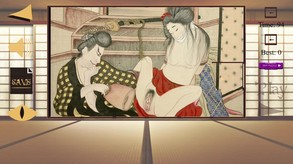
Immerse yourself in the world of traditional Japanese erotic art with Shunga Frame. Relaxing music, candid arts and atmosphere of ancient japan. Awesome for relax after a day at work.
Modeled estimate, not a reported figure. How we estimate →
Media

About

Genres
Stats
All-time low is the lowest price we've recorded for this game since we started tracking it.
Languages: English*, French*, Italian*, German*, Spanish - Spain*, Arabic*, Bulgarian*, Portuguese - Brazil*, Hungarian*, Vietnamese*, Greek*, Danish* +17 more
Engagement
Hours played at review time, across 40 reviews with recorded playtime.
Reviews
Themes across 40 recent reviews and how positive each mention is. A keyword signal, not full sentiment analysis.
positive critical· bar length = how often the theme comes up
Reviews
사람들 생각하고 사는건 다 똑같구만
56张日本春宫图,有观赏性,无可玩性。玩法是依靠记忆拼图,可以一键过关解锁成就。但是,说好的我的中文呢?
11111
気持ち悪かったです。普通に最初おもろいと思って買ったんですが、量が多すぎて15個やったあたりから気持ち悪くなってきました。 勃起とか全然しないので買うだけ無駄だと思います。 ギフトテロには向いている商品ですので、マジでエロいと送り付けるのはありだと思います。
Easy Achievements, 100% / 2min. (Just skip every level)
when i play this I pretend i'm a lonely samurai polishing my sword if you catch my drift
Shunga Frame, developed and published by Nimos Games, is a small, deliberately focused puzzle experience that blends traditional digital jigsaw mechanics with a distinctly niche artistic theme. Rather than competing for attention with complex systems or ambitious scope, the game positions itself as a relaxed, contemplative activity centered on assembling illustrated scenes inspired by shunga, a historical style of Japanese erotic art. Its design philosophy is rooted in simplicity and atmosphere, offering players a low-pressure space to engage with visual composition at their own pace. The gameplay is built around familiar jigsaw fundamentals. Players are presented with a scattered collection of image fragments and must drag, rotate, and place them correctly to complete the full picture. There are no timers, penalties, or score systems pushing performance; the emphasis is entirely on steady progress and visual satisfaction. This straightforward structure makes the game immediately accessible, requiring no tutorials or prior experience. It functions much like a digital tabletop puzzle, where patience and spatial reasoning are the only skills demanded. What sets Shunga Frame apart is its artistic focus. The puzzles are based on stylized illustrations that draw from traditional shunga aesthetics, presenting detailed compositions with careful line work and color balance. As the image gradually takes shape, the act of assembling the puzzle doubles as a slow reveal of the artwork itself. This creates a gentle sense of anticipation that rewards attention to detail rather than speed or efficiency. The game treats its art respectfully, framing it as something to be observed and assembled rather than gamified beyond recognition. The overall pacing reinforces a calm, almost meditative mood. Background music is subdued and unobtrusive, allowing players to focus on the tactile rhythm of placing pieces together. The interface is clean and functional, avoiding visual clutter so that the artwork remains the clear focal point. This minimalist presentation supports the idea that Shunga Frame is meant to be experienced in short, relaxed sessions, perhaps as a way to unwind rather than as a challenge to overcome. Because the mechanics remain intentionally simple, the game does not attempt to introduce escalating difficulty or layered systems over time. Each puzzle follows the same basic structure, which means that experienced puzzle players may find the challenge level modest. There is little in the way of progression beyond completing individual images, and the sense of accomplishment comes more from completion itself than from unlocking new mechanics or mastering deeper systems. For some players, this restraint will feel appropriate and refreshing; for others, it may feel limiting. The adult nature of the artwork inevitably shapes the game’s appeal. While the imagery is stylized and rooted in historical art traditions, it remains explicitly mature in theme, making the experience unsuitable for a general audience. This thematic focus narrows the game’s reach but also defines its identity clearly. Players drawn to art-focused puzzle games or interested in unconventional visual themes may appreciate the uniqueness, while those seeking neutral or family-friendly content are unlikely to engage with it. In terms of longevity, Shunga Frame is not designed for extended play or repeated mastery. Once the available puzzles are completed, there is little incentive to revisit them beyond personal enjoyment. There are no competitive elements, randomization systems, or creative modes to extend replay value. Instead, the game functions more like a compact digital art book combined with an interactive puzzle, offering a finite but self-contained experience. Ultimately, Shunga Frame succeeds on its own terms by committing fully to a narrow concept. It does not aspire to be a deep puzzle game or a narrative-driven experience, but rather a calm, visually oriented activity that blends art appreciation with gentle interactivity. For players who enjoy jigsaw puzzles, prefer relaxed pacing, and are comfortable with mature artistic themes, it offers a distinctive and quietly satisfying way to engage with digital art through play. Rating: 6/10
Bardzo interesująca lekcja historii sztuki.
100%の道、play押す、puzzle押す、この繰り返しだけ、安いから買っといていいと
Непогана гра але досягнення зламані
Related
Related
Trends
Concurrent players on Steam, sampled daily since tracking started.
Audience
Estimated from the language of this game's reviews — a proxy for where players are, not official Steam demographics.
Related
| Chinese Brush Simulator | $2.6K | 102 | 92% | $0.99 |
| SkyTime | $2.6K | 229 | 61% | $0.99 |
| SEARCH ALL - CHRISTMAS | $2.6K | 61 | 90% | $2.99 |
| Balls Gone Wild | $2.6K | 118 | 82% | $0.99 |
| The Great Fusion | $2.5K | 50 | 58% | $2.99 |
| Cum Clicker | $2.5K | 92 | 88% | $0.99 |