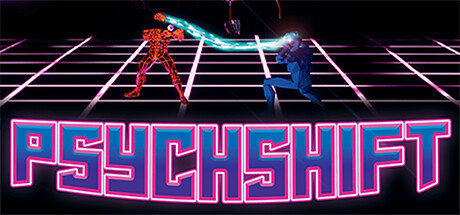
PsychShift is an experimental indie first-person action game developed and published by BrainBlast Studios that attempts to push the boundaries of traditional shooter mechanics through a distinctive mind-swapping gameplay system. Rather than relying solely on gunplay and reflexes, the game introduces a central mechanic that allows players to instantly exchange consciousness with enemies on the battlefield. This unusual concept forms the core of the experience, turning combat encounters into fast-paced strategic puzzles where positioning and timing are often more important than raw firepower.
The game takes place inside a mysterious research facility known as the NeuroHive, a complex technological environment where experiments involving consciousness and advanced neural technology appear to have gone terribly wrong. The story unfolds gradually as players progress through the facility’s labyrinthine corridors, laboratories, and containment zones. Instead of relying heavily on cinematic storytelling, the narrative is presented through environmental clues, scattered messages, and the strange atmosphere that permeates the facility. The deeper the player travels into the NeuroHive, the more unsettling the environment becomes, hinting at the dangerous experiments that once took place there.
At the center of PsychShift lies the MindSwap mechanic, which gives players the ability to instantly transfer their consciousness into the body of a targeted enemy. When activated, the swap places the player in the enemy’s exact location while abandoning their previous body. This power dramatically changes the structure of combat encounters. Instead of simply fighting enemies head-on, players must constantly evaluate the battlefield to determine which opponent offers the best tactical advantage. Swapping into a stronger enemy can provide access to better weapons or abilities, while jumping into a distant target can allow players to reposition instantly across the arena.
Because of this mechanic, combat often feels more like solving a tactical puzzle than participating in a straightforward firefight. Enemies appear in carefully designed formations that encourage players to experiment with different swap strategies. A heavily armed enemy might be positioned in a vulnerable location, while a weaker opponent may occupy a strategically valuable position near an exit or high ground. Learning how to manipulate these scenarios through well-timed swaps becomes one of the most satisfying aspects of the gameplay.
Movement also plays a major role in shaping the experience. The game incorporates parkour-inspired traversal systems that allow players to move quickly through the environment. Sprinting, jumping across platforms, and maintaining momentum are essential skills when navigating the NeuroHive’s vertical spaces and complex corridors. These movement mechanics work in tandem with the MindSwap ability, enabling players to chain together rapid repositioning maneuvers that create fluid and dynamic combat encounters.
The level design supports this gameplay philosophy by presenting arenas that offer multiple paths and approaches. Rather than forcing players through narrow corridors, many sections of the facility are designed as open combat spaces filled with enemies positioned in different strategic locations. This design encourages experimentation, allowing players to approach each encounter in a variety of ways. Some players may prefer aggressive tactics, rapidly swapping between enemies while firing weapons, while others may adopt a more calculated approach, carefully selecting targets to gain positional advantages.
Puzzle elements occasionally appear between combat sections, offering moments where the MindSwap mechanic must be used in non-combat situations. Certain areas require players to control specific enemy types in order to activate switches, access restricted zones, or bypass environmental hazards. These sequences help break up the action and reinforce the versatility of the game’s central mechanic.
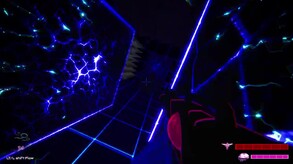
Visually, PsychShift adopts a futuristic aesthetic inspired by cyberpunk and retro-style shooters. The environments of the NeuroHive are filled with metallic surfaces, glowing technological devices, and experimental machinery that create a cold, clinical atmosphere. While the graphical fidelity is relatively modest compared to large-scale shooters, the stylized presentation focuses on clarity and readability. Enemies, hazards, and interactive elements are easy to identify, which is essential during the fast-paced combat sequences.
The sound design contributes to the tension and rhythm of the gameplay. Weapons produce sharp and impactful audio effects, while the MindSwap ability is accompanied by a distinct sound that signals the dramatic shift in perspective. Electronic music and ambient audio reinforce the futuristic setting, creating a sense of urgency as players move deeper into the facility.
One interesting aspect of the game is the presence of multiple endings influenced by the player’s decisions throughout the story. While the narrative is not the primary focus of the experience, these alternate outcomes encourage players to replay the game and explore different choices. This branching structure adds a small but meaningful layer of replayability beyond the core action mechanics.
Despite its creativity, PsychShift does show some limitations that reflect its indie development scope. The campaign is relatively short compared to larger first-person shooters, and the number of enemy types and environments is somewhat limited. After extended play sessions, some encounters may begin to feel repetitive as players become familiar with the available enemy patterns.
The MindSwap mechanic itself can also present a learning curve for new players. Early encounters may feel disorienting as players adjust to the idea of constantly switching bodies and repositioning across the battlefield. However, once the system becomes intuitive, it reveals a level of strategic depth that sets the game apart from more conventional shooters.
Ultimately, PsychShift stands out as a creative attempt to reinvent aspects of the first-person shooter genre. Its unique mind-swapping mechanic transforms combat into a dynamic tactical challenge, rewarding players who think creatively about positioning and enemy abilities. Although the game may lack the scale and polish of larger titles, its originality and fast-paced design make it a memorable experience for players interested in unconventional gameplay ideas.
Rating: 6/10