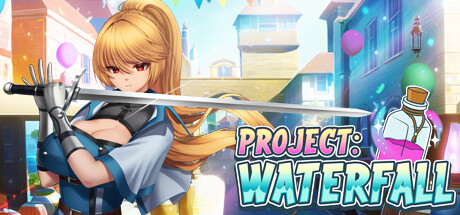
Welcome to the game Project: WATERFALL! Here you are the protagonist who draws lines to the heart of cute and beautiful girls in a fantasy world. Pass a lot of levels and get a hundred achievements. Have fun playing!
Modeled estimate, not a reported figure. How we estimate →
Media

About


Genres
Stats
All-time low is the lowest price we've recorded for this game since we started tracking it.
Languages: English, Simplified Chinese, Korean, Russian, Japanese
Engagement
Hours played at review time, across 40 reviews with recorded playtime.
Reviews
Themes across 40 recent reviews and how positive each mention is. A keyword signal, not full sentiment analysis.
positive critical· bar length = how often the theme comes up
Reviews
Dull
очередной кал
Проще чем Geometry Dash
굳
还好
I generally like water puzzle games, but the art is not great on this one.
Фигня игра благо мне её подарили , кст а если вы хотите чтоб вам тоже подобные игры но хорошие дарили то заходите на дискорд сервер Elysium и вставайте на staf роль Control и тогда вам обязательно за хороший ворк подарят нормальные хент игры
退款了,对于我这种30分的作品也可以进库收藏的玩家,这作品的图还不如小红车的壁纸
Project: WATERFALL is a casual physics-based puzzle game developed by Cream Team and published by 430Games, designed around a simple idea that gradually expands into a satisfying exercise in observation and problem-solving. Rather than overwhelming players with complicated mechanics or demanding reaction speed, the game focuses on calm experimentation and logical thinking. It embraces simplicity as its greatest strength, creating an approachable puzzle experience that feels easy to understand but capable of offering increasingly thoughtful challenges as progression continues. The gameplay centers around directing water toward a designated target by drawing lines and shaping paths that influence movement. Water behaves according to physical rules, forcing players to think carefully about positioning, angles, and how drawn objects interact with flow patterns. The concept immediately feels accessible because the objective remains clear from the beginning. However, while the basic premise is easy to understand, later stages reveal greater complexity as obstacles and environmental arrangements become more demanding. One of the game’s most effective qualities lies in how naturally it introduces challenge progression. Early levels function almost like interactive lessons, teaching core mechanics without relying on intrusive tutorials or complicated explanations. Players quickly develop familiarity with how water responds to drawn structures, allowing later puzzles to build upon that understanding. Instead of introducing overwhelming complexity immediately, Project: WATERFALL gradually expands expectations, creating a smoother learning curve that feels welcoming without becoming overly simplistic. Experimentation becomes a major part of the experience. Puzzle solutions often emerge through observation and adjustment rather than finding a single obvious answer immediately. Players may redraw paths multiple times, test different approaches, and slowly refine strategies until water reaches its destination successfully. This trial-and-improvement structure creates satisfying moments where small adjustments suddenly transform failure into success. The drawing mechanic itself adds personality to the gameplay. Rather than pressing switches or manipulating predefined puzzle objects exclusively, players directly influence outcomes through their own input. The ability to physically create pathways gives solutions a more personal feeling. Watching water follow a carefully planned route creates a satisfying sense of accomplishment that reinforces progression effectively. The game’s presentation supports its design philosophy well. Visuals remain clean and functional without unnecessary distractions pulling attention away from puzzle-solving. The interface prioritizes clarity, ensuring players can focus entirely on understanding mechanics and planning solutions. This minimalist approach benefits gameplay because information remains readable even as stages become more complicated. Pacing also contributes positively to the overall experience. Individual levels generally remain compact enough to support shorter play sessions, making the game easy to enjoy in smaller bursts of time. At the same time, the growing challenge curve provides enough motivation to continue progressing through additional stages without feeling repetitive too quickly. The relaxed structure becomes another important strength. Project: WATERFALL avoids creating pressure through timers or punishing failure systems. Mistakes rarely feel frustrating because experimentation naturally becomes part of progression. Players are encouraged to test ideas freely rather than worrying about penalties for incorrect solutions. This creates a calmer atmosphere that fits the game’s broader design goals effectively. However, the focused design naturally introduces limitations. Players looking for extensive narrative content or major gameplay variation may discover a narrower experience than expected. Project: WATERFALL commits heavily to its central mechanic, building progression through puzzle evolution rather than introducing dramatically different systems over time. The experience succeeds primarily because of refinement rather than expansion. Puzzle veterans may also find earlier sections somewhat easier than expected. The challenge escalates steadily but rarely aims to create extremely punishing difficulty spikes. The game prioritizes accessibility and relaxing progression over intense mental strain, which aligns well with its overall identity but may leave some players wanting greater complexity. Still, the game benefits greatly from understanding its purpose clearly. Cream Team and 430Games avoid unnecessary additions that could distract from the core appeal. The result feels focused rather than limited. Every system exists to strengthen the puzzle-solving experience instead of competing with it. Project: WATERFALL succeeds because it respects simplicity without becoming shallow. The combination of physics interaction, thoughtful progression, and approachable puzzle design creates an experience that remains engaging through careful refinement rather than excessive ambition. For players who enjoy casual puzzle games built around experimentation, relaxed pacing, and satisfying problem-solving mechanics, Project: WATERFALL delivers a pleasant and well-constructed experience that turns a straightforward concept into something consistently enjoyable. Rating: 6/10
6/10
Related
Related
Trends
Concurrent players on Steam, sampled daily since tracking started.
Audience
Estimated from the language of this game's reviews — a proxy for where players are, not official Steam demographics.
Related
| A Lonely Cabin Trip | $1.1K | 76 | 70% | $0.99 |
| Nude In The Castle | $1.1K | 76 | 84% | $0.99 |
| Dragon Boar and Lady Rabbit | $1.1K | 66 | 76% | $0.79 |
| Zombie Solitaire 2 Chapter 3 | $1.1K | 65 | 83% | $1.07 |
| My Bike | $1.1K | 55 | 73% | $0.69 |
| Most Correct Football Simulator | $1K | 77 | 74% | $0.49 |