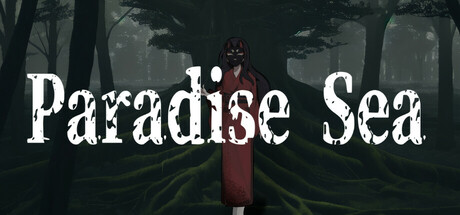
Paradise Sea is a short psychological horror visual novel that focuses heavily on atmosphere, symbolism, and emotional uncertainty rather than traditional gameplay mechanics. Developed and published by mokosoft, the game places players inside a surreal world filled with fragmented memories, unsettling imagery, and cryptic dialogue that slowly reveals the emotional and psychological state of its protagonist. Rather than relying on jump scares or action-heavy horror, Paradise Sea builds tension through isolation, ambiguity, and a constant sense of emotional discomfort that lingers throughout the entire experience.
The story begins with the protagonist awakening inside a mysterious “sea of trees” with little understanding of who they are or why they are there. From that point onward, the game unfolds through fragmented conversations, symbolic encounters, and introspective narration that slowly pieces together themes involving memory, guilt, identity, and emotional escape. The narrative intentionally avoids providing immediate clarity, forcing players to interpret the world and its meaning through subtle details rather than direct exposition. This dreamlike storytelling approach creates a haunting atmosphere that becomes increasingly effective as the game progresses.
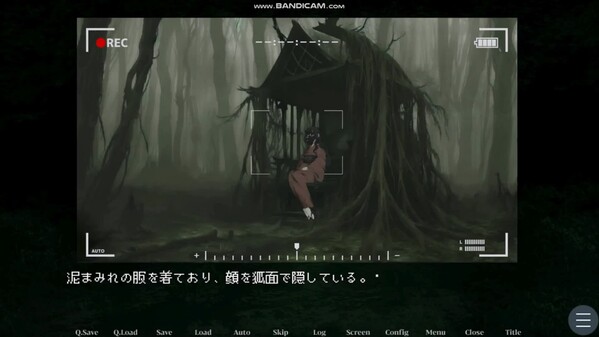
One of Paradise Sea’s greatest strengths is its atmosphere. The game immediately establishes a quiet and oppressive tone through its minimalistic environments, eerie pacing, and emotionally detached narration. The forest setting feels isolated and strangely unreal, almost as though the player is wandering through someone’s subconscious mind rather than a physical place. Silence is used extremely effectively throughout the experience, allowing small sounds, music changes, and environmental details to create psychological tension without relying on loud horror clichés.
The visual presentation complements the story remarkably well. Paradise Sea uses anime-inspired character artwork alongside static backgrounds and surreal environmental imagery to create a world that feels simultaneously beautiful and unsettling. Fog-filled landscapes, dim lighting, abandoned spaces, and distorted scenery all contribute to the sensation that reality itself is unstable. The visuals are not technically advanced, but the art direction succeeds because it constantly reinforces the game’s emotional and psychological themes.
The soundtrack plays a major role in maintaining immersion. Ambient music and soft atmospheric tracks quietly accompany exploration and dialogue while occasionally giving way to near silence during more emotionally intense moments. The audio design understands that restraint can often create stronger tension than constant dramatic effects. Instead of overwhelming players with loud horror music, the soundtrack quietly amplifies the loneliness and uncertainty present within the world.
The writing itself leans heavily into symbolism and emotional interpretation. Conversations often feel fragmented or abstract, with characters speaking in ways that hint at deeper psychological meaning rather than straightforward narrative progression. Players who enjoy interpretive storytelling and psychological horror will likely appreciate how the game trusts them to draw conclusions independently. Themes involving self-reflection, emotional suffering, and inner conflict slowly emerge through the fragmented dialogue and environmental storytelling.
One interesting aspect of Paradise Sea is its fully linear structure. Unlike many visual novels that rely on branching paths and multiple endings, this game offers a single narrative route with no major player choices. While that may initially seem restrictive, it actually helps maintain the story’s pacing and emotional focus. The experience feels closer to an interactive psychological novella than a traditional choice-driven visual novel, allowing the game to build atmosphere and tension with greater consistency.
The short runtime also works surprisingly well for the type of story being told. Paradise Sea can be completed in roughly an hour, which prevents the slow pacing and heavy symbolism from becoming repetitive. The game remains tightly focused on its emotional themes and never overstays its welcome. At the same time, the brief length may leave some players wanting more development, especially since several ideas and narrative elements feel interesting enough to support a larger experience.
However, the game does have noticeable weaknesses. The English localization is one of the most obvious issues. Some dialogue appears awkwardly translated, occasionally making emotional scenes less effective than they likely were intended to be. Since Paradise Sea depends almost entirely on writing and atmosphere, inconsistencies in translation quality become far more noticeable than they would in gameplay-heavy titles.
The lack of interactivity may also disappoint certain players. Outside of progressing through dialogue and observing the story unfold, there is very little actual gameplay involved. There are no major puzzles, branching decisions, or mechanics beyond basic visual novel progression. Players looking for meaningful player agency or more active gameplay systems may find the experience too passive.
The intentionally vague storytelling will also divide audiences. While some players will appreciate the symbolic and interpretive narrative style, others may become frustrated by the lack of direct answers or clearer explanations. Paradise Sea prioritizes emotional ambiguity over narrative clarity, and whether that approach works will depend heavily on personal preference.
Despite these limitations, Paradise Sea succeeds because it remains fully committed to its psychological atmosphere and emotional themes. It does not attempt to become a traditional horror game or an action-focused visual novel. Instead, it focuses entirely on creating a surreal and introspective experience built around loneliness, uncertainty, and emotional fragmentation. The game’s quiet confidence in its atmosphere helps it leave a stronger impression than its small scope might initially suggest.
For players who enjoy psychological horror, symbolic storytelling, and slow atmospheric visual novels focused more on mood than gameplay complexity, Paradise Sea offers a short but memorable experience. While its rough localization and limited interactivity prevent it from reaching the heights of stronger visual novels in the genre, its haunting atmosphere and emotionally unsettling presentation still make it an intriguing indie horror experience.
Rating: 6/10