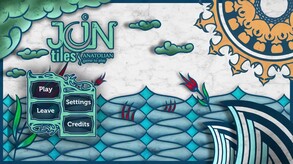
JOIN tiles is a calm, art-driven puzzle experience developed by Emin Kağan KAYAK and published by PiKa Game Studio that focuses on the quiet satisfaction of assembling fragmented images into cohesive, visually pleasing wholes. Rather than chasing complexity or competitive pressure, the game positions itself as a mindful pastime, inviting players to slow down and engage with pattern recognition, spatial awareness, and aesthetic appreciation. From the outset, it is clear that the intent is not to overwhelm with mechanics, but to provide a soothing, focused puzzle loop that rewards patience and attention to detail.
The core gameplay is built around reconstructing broken tile images by correctly placing individual pieces into their proper positions. Each puzzle presents a fragmented plate that must be carefully reassembled, and while the concept is immediately intuitive, it requires steady concentration to complete efficiently. There are no timers, penalties, or fail states pushing the player forward, which allows the experience to unfold at a comfortable pace. This design choice makes the game approachable for players of all skill levels, while still offering enough challenge to remain engaging as puzzles grow more intricate and visually dense.
What gives JOIN tiles its distinct personality is the variety and presentation of its artwork. The game features multiple thematic collections, including plates inspired by traditional Anatolian tile art alongside more playful or modern themes such as animals and cyber-influenced designs. These categories ensure that progression feels varied rather than monotonous, as each completed puzzle reveals a different visual style and mood. The Anatolian sets in particular add a cultural and artistic identity that sets the game apart from more generic jigsaw-style offerings, grounding the puzzles in recognizable patterns and historical motifs that feel deliberate rather than decorative.
Mechanically, the interaction is straightforward but thoughtfully implemented. Dragging and positioning tiles feels responsive, and correctly placed pieces naturally lock into position, reinforcing a sense of progress without excessive hand-holding. The challenge comes from identifying where shapes, colors, and patterns align, rather than from mastering complex controls. While the game does not introduce new mechanics over time, the increasing intricacy of the artwork itself provides a natural difficulty curve, demanding closer observation and more deliberate placement as players advance through the puzzle sets.
The audiovisual presentation complements the gameplay’s relaxed tone. The interface is clean and unobtrusive, keeping attention centered on the artwork rather than menus or overlays. Background music and ambient sounds are subtle, designed to enhance focus rather than distract from it, which helps maintain a calm atmosphere during longer sessions. Visually, the clarity of the tile art is crucial, and the game succeeds in presenting its images sharply enough to make subtle details readable without straining the eye.
In terms of scope, JOIN tiles is not a sprawling puzzle collection, but it makes effective use of its content. With dozens of handcrafted puzzles spread across its themed categories, the game offers enough variety to justify repeated play without padding its runtime. Replay value comes less from mechanical variation and more from the simple pleasure of revisiting favorite designs or completing sets at a more relaxed pace. Steam achievements and basic platform features add a small layer of motivation for completion-focused players without disrupting the game’s laid-back nature.
Community reception reflects this focused approach. Players who appreciate relaxed puzzle games and artistic presentation tend to respond positively, praising the game for its calming design and visual charm. Criticisms most often center on minor interface quirks or the desire for additional quality-of-life options, such as more flexible piece handling or expanded content. These concerns do little to undermine the core experience, but they do highlight how much the game relies on polish and presentation to sustain engagement.
Ultimately, JOIN tiles succeeds by embracing simplicity and clarity of purpose. It does not attempt to redefine the puzzle genre or compete with more mechanically dense titles, instead offering a carefully curated experience centered on visual harmony and quiet problem-solving. For players seeking a low-stress puzzle game that values art, patience, and focus over speed or complexity, it provides a satisfying and thoughtfully assembled experience that feels well suited to short breaks or extended, meditative play sessions.
Rating: 7/10