Island Diary is a gentle, character-focused visual novel developed by watakubi and published by Sekai Project that leans heavily into atmosphere, interpersonal drama, and relaxed pacing rather than branching choices or mechanical complexity. Set on a remote tropical island, the story opens with the protagonist Ryou awakening with no memories of how he arrived there, immediately establishing a quiet sense of mystery that frames the narrative without dominating it. This initial hook quickly gives way to a more intimate story about people learning to coexist, reconnect, and heal emotional rifts while sharing an isolated environment that forces them into close proximity.
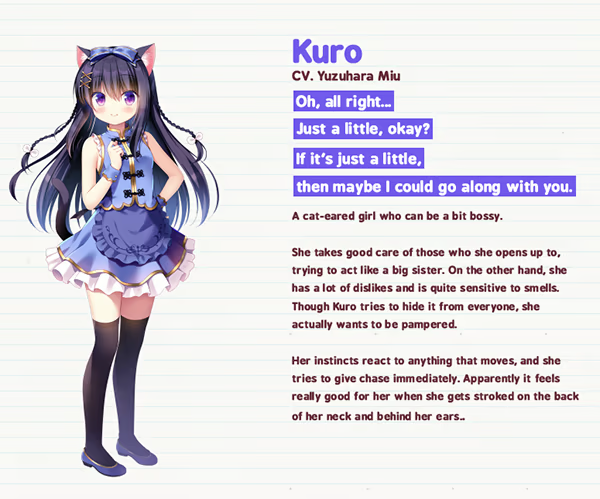
The structure of Island Diary is deliberately linear, embracing the kinetic visual novel format to tell a single, cohesive story from beginning to end. Rather than asking the player to shape outcomes through decisions, the game invites them to observe and absorb the evolving relationships between its cast. Ryou soon encounters three girls already living on the island—Momo, Kuro, and Moca—each with distinct personalities and unresolved tensions between them. While survival on the island is a background concern, the true narrative focus lies in the emotional distance that has grown between the girls and how Ryou’s presence gradually influences their attempts to reconnect. This approach gives the story a calm, reflective tone, emphasizing conversation and shared moments over dramatic plot twists.
Character writing is where Island Diary finds most of its strength. Each member of the cast is introduced through familiar visual novel archetypes, but their interactions add nuance that prevents them from feeling one-dimensional. Momo’s cheerful energy contrasts with Kuro’s prickly defensiveness and Moca’s timid reserve, creating natural friction that drives many of the story’s quieter conflicts. Ryou functions less as a dominant protagonist and more as a listener and mediator, allowing the girls’ perspectives and emotions to take center stage. Much of the narrative’s charm comes from small, everyday exchanges—casual conversations, misunderstandings, and reconciliations that feel earned through repetition and patience rather than sudden revelations.
Visually, Island Diary adopts a clean, colorful anime art style that complements its relaxed island setting. Character sprites are expressive and well-drawn, conveying emotion clearly even during understated scenes. Backgrounds depict beaches, greenery, and simple living spaces that reinforce the sense of isolation while remaining inviting rather than threatening. While the number of locations is limited, this repetition helps establish familiarity, making the island feel like a lived-in space rather than a temporary stage. The CG illustrations punctuate key moments in the story, rewarding emotional buildup with visual highlights that reinforce character development rather than spectacle.
The game’s pacing is intentionally unhurried, which will strongly appeal to players who enjoy soaking in dialogue and atmosphere. Island Diary allows scenes to linger, giving conversations room to breathe and emotions time to settle. This slower rhythm supports the themes of reconciliation and emotional healing, though it may feel uneventful to players seeking constant narrative escalation. The soundtrack mirrors this pacing with soft, gentle tracks that underscore the laid-back mood, though extended play sessions may make the limited music selection feel repetitive. Still, the audio generally succeeds in maintaining a cohesive, calming tone throughout the experience.
In terms of features, Island Diary includes quality-of-life elements typical of modern visual novels, such as a CG gallery, music playback, and Steam achievements, all of which encourage revisiting favorite moments after completing the story. Its accessibility and straightforward structure make it easy to approach even for players new to the genre, while its emotional focus gives it enough substance to remain engaging over its runtime. The absence of branching routes or multiple endings reinforces the feeling that this is a story meant to be read like a novel, not optimized or replayed for alternative outcomes.
Ultimately, Island Diary is a visual novel that succeeds by knowing exactly what it wants to be. It does not attempt to reinvent the genre or overwhelm the player with systems and choices. Instead, it offers a warm, introspective experience centered on character interaction and emotional resolution within a tranquil but isolating setting. For fans of slice-of-life visual novels who value mood, dialogue, and gentle storytelling over mechanical depth or narrative complexity, Island Diary delivers a quietly satisfying journey that lingers through its sincerity rather than its spectacle.
Rating: 8/10