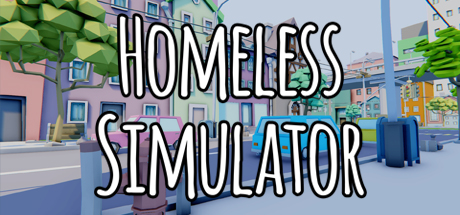
Homeless Simulator is a homeless person simulator. Homeless persons are those who find themselves living on the streets because of family conflicts, somebody’s fraud, loss of the job or health problems. They are those who need help.
Modeled estimate, not a reported figure. How we estimate →
Discounts
Every price cut of more than 20% we have observed, in each market that quoted one, with this game's chart position on either side of it. These are episodes, not a model: a sale is one event, and one event cannot tell you what the next one will do.
Reviews, worldwide (the counter carries no country): 0/day in the week to Sep 1 → 0/day in the week after.
Reviews, worldwide (the counter carries no country): 6.71/day in the week to Jul 19 → 0/day in the week after.
For scale, across Steam · Top Sellers · Brazil over the last 30 days: the 26 chart moves that followed a price cut of more than 20% went a median of 7 places towards #1, and the 2,400 moves with no price cut behind them went 2 away. One store, one chart, one country — it is the only place we have enough observations to say even that.
Prices outside the United States have been collected since 6 August 2026 and chart positions since 19 July 2026, so a cut older than that has no market to compare and a market that joined later has no history yet. Nothing here is converted between currencies.
About
Genres
Engagement
Reviews
Themes across 41 recent reviews and how positive each mention is. A keyword signal, not full sentiment analysis.
Reviews
Homeless Simulator, developed and published by Kiddy, is a stark and unflinching take on the survival genre that strips away the usual comforts of progression and power in favor of raw endurance. Instead of playing as a hero or a survivor in a post-apocalyptic wasteland, you inhabit the life of a person living on the streets, fighting the cold, hunger, thirst, and isolation. The game opens without fanfare or exposition, placing you directly into a bleak, snow-covered town where the only goal is to survive as long as you can. From the first moment, the tone is clear—this is not a power fantasy or a traditional simulation filled with upgrades and rewards. It is an exercise in persistence, vulnerability, and quiet despair. The developer’s intent is not to entertain in the traditional sense, but to evoke empathy and reflection through struggle, repetition, and scarcity. The gameplay is deliberately minimalistic. You wander the streets searching through trash bins, scavenging for scraps of food, discarded bottles, and broken tools while trying to keep your vital stats—hunger, thirst, and body temperature—above fatal levels. The interface is barebones, and the controls are simple: you interact, collect, sleep, and occasionally drag objects to create makeshift shelters. There is no inventory micromanagement, no crafting tree, and no sense of advancement. Every day is the same battle against the elements, and every night is a gamble on whether you will make it to morning. This repetition is not a flaw by accident but a deliberate design choice that mirrors the monotony and helplessness of a life reduced to survival. Yet, this very authenticity makes it both an intriguing and difficult experience to recommend. It’s an uncomfortable game, not because it’s poorly made, but because it challenges the player to sit with the kind of discomfort most games strive to avoid. Visually, Homeless Simulator is unpolished but effective in tone. The world is bleak, quiet, and cold, dominated by muted colors and heavy snowfall that blur the boundaries of the town. The lack of detailed textures or animated crowds adds to the feeling of emptiness. You feel small within this frozen environment, and that sense of insignificance perfectly complements the theme. The game’s technical simplicity also reinforces its mood—there are no flashy effects or dynamic weather systems, just the endless chill of winter and the crunch of snow beneath your feet. The sound design, though minimal, adds to the atmosphere. The wind howls through the streets, footsteps echo against empty buildings, and the occasional creak of an old door or rustling of garbage fills the silence. It’s an environment designed not to impress but to immerse you in the quiet, crushing weight of survival. The greatest strength of Homeless Simulator lies in its concept. There’s a sincerity to how it handles its theme; it doesn’t romanticize or dramatize homelessness, nor does it reduce it to a cartoonish parody. Instead, it offers a mechanical representation of desperation, where every small success—a piece of bread found in a bin, a moment of warmth near a fire—feels meaningful because of how precarious it is. The game does not reward skill in the traditional sense but endurance and awareness. You don’t grow stronger or smarter as you play; you simply learn to manage risk and adapt to the randomness of scarcity. The fragility of your situation is constant, and even small mistakes—staying outside too long, sleeping without enough warmth, or mismanaging your hunger—can end your run abruptly. It’s a harsh design philosophy, but it succeeds in conveying the sense of hopelessness that defines its subject. However, while the concept is admirable, the execution can feel limited. Once you’ve spent a few hours scavenging, finding shelter, and managing your vitals, the loop begins to show its simplicity. There’s little in the way of narrative development or evolving gameplay. The world does not change, new mechanics are not introduced, and the player’s routine becomes predictable. For some, this repetition will feel authentic to the theme; for others, it will simply feel monotonous. The game’s difficulty also borders on punishing—not because of skill-based challenges, but because of random scarcity. Sometimes, survival feels less about strategy and more about luck, as critical resources can fail to appear in time. This can make the experience frustrating, especially for players seeking balance between realism and playability. The lack of clear feedback on certain mechanics, such as how temperature affects your health over time, adds to this frustration. Despite its shortcomings, Homeless Simulator carries a quiet emotional weight that sets it apart from most indie survival games. It doesn’t sensationalize the topic but instead uses gameplay mechanics to evoke empathy through discomfort. The loneliness of wandering an empty town, the anxiety of finding a safe place to sleep, and the relief of discovering something edible—all of these small moments combine to create a genuinely human experience. The game may not have the polish or complexity of higher-budget survival titles, but its minimalism serves its message. It feels more like an experiment in empathy than a traditional game—a somber reflection on how survival, stripped of progression and purpose, becomes an act of sheer endurance. In the end, Homeless Simulator is not an easy game to enjoy, but it is an easy game to respect. It asks players to confront a reality that is often ignored or oversimplified, and it does so with unflinching honesty. Its simplicity, while a limitation mechanically, also reinforces its theme of scarcity and helplessness. It’s not designed for those looking for entertainment or challenge, but for those willing to engage with a quiet, sobering experience that forces them to think about what survival means when there is nothing left to strive for but another day. For all its rough edges, Homeless Simulator achieves something rare—it turns discomfort into reflection, and silence into understanding. Rating: 5/10
Media

Related
Related
Price dynamics, follower growth, revenue and sales trajectories with interactive tooltips
This and every other Pro feature is free until October 20, 2026. A free account is all it takes.
Stats
All-time low is the lowest price we've recorded for this game since we started tracking it.
Languages: English**languages with full audio support
Hours played at review time, across 41 reviews with recorded playtime.
positive critical· bar length = how often the theme comes up
While usually I very heavily discriminate against homeless people on the regular by throwing banana peels at them and constantly dehumanizing them (There is an average of 1.47 homeless people per square mile within a 10 mile radius of my house, so i do not have plenty of bullying options, not like there are any kids to bully in the area) I decided to give this game a try to see what it's like. As soon as I started this game, I was cold, hungry, thirsty and tired. Just like the people near me that live underneath the bridge! So I started scrounging through the trash (again, just like the people near me underneath the bridge, quite a realistic game) when all of the sudden I found a beer and matches. Just what I needed. I got drunk, then lit some matches to stay warm. I continued to scrounge through trash like the animal I am and then realized, I HAVE HANDS THAT CAN MOVE STUFF! Just like a real homeless person!!!! So I decided to move a banana that I found in a trash can. I jumped on top of this banana and what happened next changed my views on the world. I broke physics. I was flying on a banana. I flew off into the sky and never came back, and died in the air and my body stayed in the air. If I knew that homeless people could do this then I would have stopped wondering why homeless people in my area keep disappearing to never be seen again. Perhaps if I knew that I could come back down completely guaranteed I would become a homeless person irl too! But alas, I enjoy how realistic this game is. I never knew homeless people could break physics until now. Because of this I have decided to start a project that I call the "HHPPSMM" project, or the "Homeless Heathens People Per Square Mile Map" project, in this project, annually I shall travel the world and on a 1:1 sized map of the world label each square mile of the world's homeless population within it, that way you, a normal citizen, can potentially avoid these areas where they perform potentially dangerous anomalies such as break physics. Please check out the map at hhppsmm.com so that way you can know whether you are safe from these dangerous time and space breaking homeless people. However, I digress, this game really opened my eyes even more to how much of an animal they are. I will now throw more bananas at them.
Sound meter bar thing does not kill piano. i hate the damn piano. Tried to press options and game crashed. spent 10 minutes trying to find out how to find matches due to lack of tutorial. Died cold, lonely and unhappy on the streets of new york. 10/10 Would suggest buying. Its on discount right now! Discount ends 21 March so be fast and purchase! ;)
just dont, the video literally showcased 100% of what you do in the game. see for yourself.
absolute banger
Прямо как в жизни
When I first saw this game I decided it would be fun to see how people richer than me lived. When I went digging through the trash cans it made me feel like I was going to find my life's purpose. The purpose I found was to just keep digging and that's what I did, until, my heat went out and I drifted to sleep in the street. Overall: 4 out of 24 hours survived out of 10
Ogólnie strata pieniędzy
**Rezension zu „Homeless Simulator“** „Homeless Simulator“ ist ein außergewöhnliches, mutiges und tiefgründiges Spiel, das die Lebensrealität von Obdachlosen auf eine eindrucksvolle, authentische und manchmal erschütternde Weise widerspiegelt. Es ist ein Spiel, das uns in die Perspektive von Menschen versetzt, die in einer von vielen oft übersehenen Gesellschaftsschicht leben. Das Spiel schafft es, auf eine fesselnde Weise zu vermitteln, wie es sich anfühlt, ohne ein Zuhause, ohne Sicherheit und ohne soziale Unterstützung zu leben. **Spielmechanik und Gameplay:** Das Gameplay von „Homeless Simulator“ ist einfach und dennoch fesselnd. Der Spieler übernimmt die Rolle eines Obdachlosen in einer urbanen Umgebung und muss durch die Straßen navigieren, um zu überleben. Das Spiel simuliert nicht nur die physischen Herausforderungen des Überlebens – wie Hunger, Durst und Schlafmangel –, sondern auch die psychologischen und emotionalen Aspekte, die mit einem Leben auf der Straße verbunden sind. Dazu gehören Einsamkeit, Scham, die ständige Bedrohung durch Gewalt und das ständige Gefühl der Unsichtbarkeit. Ein wesentliches Element des Spiels ist die Notwendigkeit, soziale Beziehungen aufzubauen, um zu überleben. Der Spieler kann mit anderen Obdachlosen, aber auch mit Passanten und potenziellen Helfern interagieren. Diese Interaktionen sind nicht immer freundlich oder hilfreich, was das Gefühl der Unsicherheit und der ständigen Bedrohung verstärkt. Die Begegnungen im Spiel sind vielfältig, von freundlichen Gesten bis hin zu feindseligen Reaktionen, was ein realistisches Bild der menschlichen Natur vermittelt. Die Mechanik, Obdachlosigkeit zu simulieren, ist von einer beeindruckenden Detailtreue. Der Spieler muss regelmäßig nach Zuflucht suchen, Müll durchwühlen, um etwas Essbares zu finden, und versuchen, mit wenig Ressourcen zu überleben. Die verschiedenen Umgebungen – von den städtischen Straßen bis zu den U-Bahn-Schächten und verlassenen Gebäuden – werden detailreich und atmosphärisch dargestellt. Jede Entscheidung, sei es, ob man um Hilfe bittet oder in eine dunkle Ecke schlüpft, kann den Verlauf des Spiels beeinflussen. **Grafik und Atmosphäre:** Die Grafik von „Homeless Simulator“ ist nicht nur funktional, sondern auch künstlerisch durchdacht. Die städtische Umgebung ist trist und überwältigend, was perfekt zum Thema des Spiels passt. Die düsteren, grauen Farben und die schmutzigen Straßen lassen den Spieler die Kälte und Verlassenheit der Obdachlosigkeit spüren. Auch die Architektur der Stadt ist so gestaltet, dass sie eine gewisse Kälte und Anonymität vermittelt, die die Entfremdung und Isolation von Obdachlosen widerspiegeln. Die Atmosphäre ist dicht und oft beunruhigend. Die Soundkulisse trägt maßgeblich zur intensiven Erfahrung bei: das Rauschen des Verkehrs, das Murmeln der Passanten, das Rufen von Bettlern und das Gefühl der ständigen Bedrohung im Hintergrund – all dies verstärkt das Gefühl, wirklich „mittendrin“ zu sein. Diese akustische Gestaltung sorgt dafür, dass der Spieler in eine Welt eintaucht, die sowohl realistisch als auch emotional aufgeladen ist. **Themen und emotionale Wirkung:** Was „Homeless Simulator“ wirklich auszeichnet, ist die Art und Weise, wie es tiefere soziale und gesellschaftliche Themen anspricht. Das Spiel ist keine bloße Überlebenssimulation, sondern eine kraftvolle Auseinandersetzung mit Obdachlosigkeit, Armut und sozialer Ausgrenzung. Es regt den Spieler dazu an, über die Systemfehler nachzudenken, die dazu führen, dass Menschen in den Straßen landen, und über die oft ignorierten psychologischen und sozialen Barrieren, die den Weg zurück in die Gesellschaft erschweren. Der emotionale Kern des Spiels ist nicht nur das Überleben, sondern auch der Kampf um Würde und Menschlichkeit. Der Spieler wird immer wieder mit der Frage konfrontiert, wie er seine Menschlichkeit bewahren kann, wenn er in einem System lebt, das ihn ignoriert, entmenschlicht und häufig zurückstößt. Das Spiel schafft es, eine tiefere emotionale Verbindung zu seiner Hauptfigur aufzubauen, sodass man mitfühlt und mitkämpft, während man von Tag zu Tag überlebt. Es geht nicht nur um den physischen Akt des Überlebens – es geht darum, die Hoffnung nicht zu verlieren, trotz der harten Umstände, denen man ausgesetzt ist. Der Spieler muss Entscheidungen treffen, die das Leben der Hauptfigur beeinflussen, und dies führt zu einer Vielzahl von emotionalen Reaktionen. Manchmal geht es darum, sich für das kleinere Übel zu entscheiden, und manchmal stellt sich die Frage, ob es sich lohnt, für das eigene Wohl oder das Wohl anderer zu kämpfen. **Fazit:** „Homeless Simulator“ ist ein bemerkenswertes Spiel, das weit über das hinausgeht, was man von einer klassischen Simulation erwarten würde. Es ist eine zutiefst humanistische Erfahrung, die die Komplexität und die Herausforderungen von Obdachlosigkeit auf eine eindrucksvolle Weise darstellt. Es fordert den Spieler nicht nur auf, zu überleben, sondern auch zu reflektieren, wie wir als Gesellschaft mit den verletzlichsten unter uns umgehen. Es ist ein Spiel, das mit einem klaren Ziel arbeitet: Bewusstsein zu schaffen und zum Nachdenken anzuregen. Wer sich auf diese Reise einlässt, wird mit einer Fülle von Gefühlen und Erkenntnissen konfrontiert, die weit über das Spiel hinausgehen. „Homeless Simulator“ ist nicht nur ein Spiel – es ist eine Lektion in Empathie und Mitgefühl, die lange nach dem Spielende im Gedächtnis bleibt.
BY FAR MY FAVORITE GAME OF ALL TIME 10/10 WOULD HIGHLY RECOMMEND
Selling now
See how fast this game is selling right now — estimated copies and revenue per day from recent review growth.
Players by region
Where this game's players are, estimated from review languages.
Related
| Game | Estimated lifetime revenue | Reviews | Review score | Price |
|---|---|---|---|---|
| $295K | 2.1K | 62% | $4.99 | |
| $5.2M | 5.9K | 92% | $19.99 | |
| $57.1K | 158 | 64% | $11.99 | |
| $287.8K | 2K | 57% | $4.99 | |
| $9.4K | 68 | 49% | $4.99 | |
| $2.1K | 82 | 41% | $0.99 |
Related
| Game | Estimated lifetime revenue | Reviews | Review score | Price |
|---|---|---|---|---|
| $6.2K | 130 | 84% | $2.99 | |
| $6.2K | 53 | 32% | $4.99 | |
| $6.2K | 53 | 42% | $4.99 | |
| $6.2K | 50 | 96% | $2.99 | |
| $6.2K | 165 | 78% | $1.99 | |
| $6.2K | 110 | 80% | $1.99 |