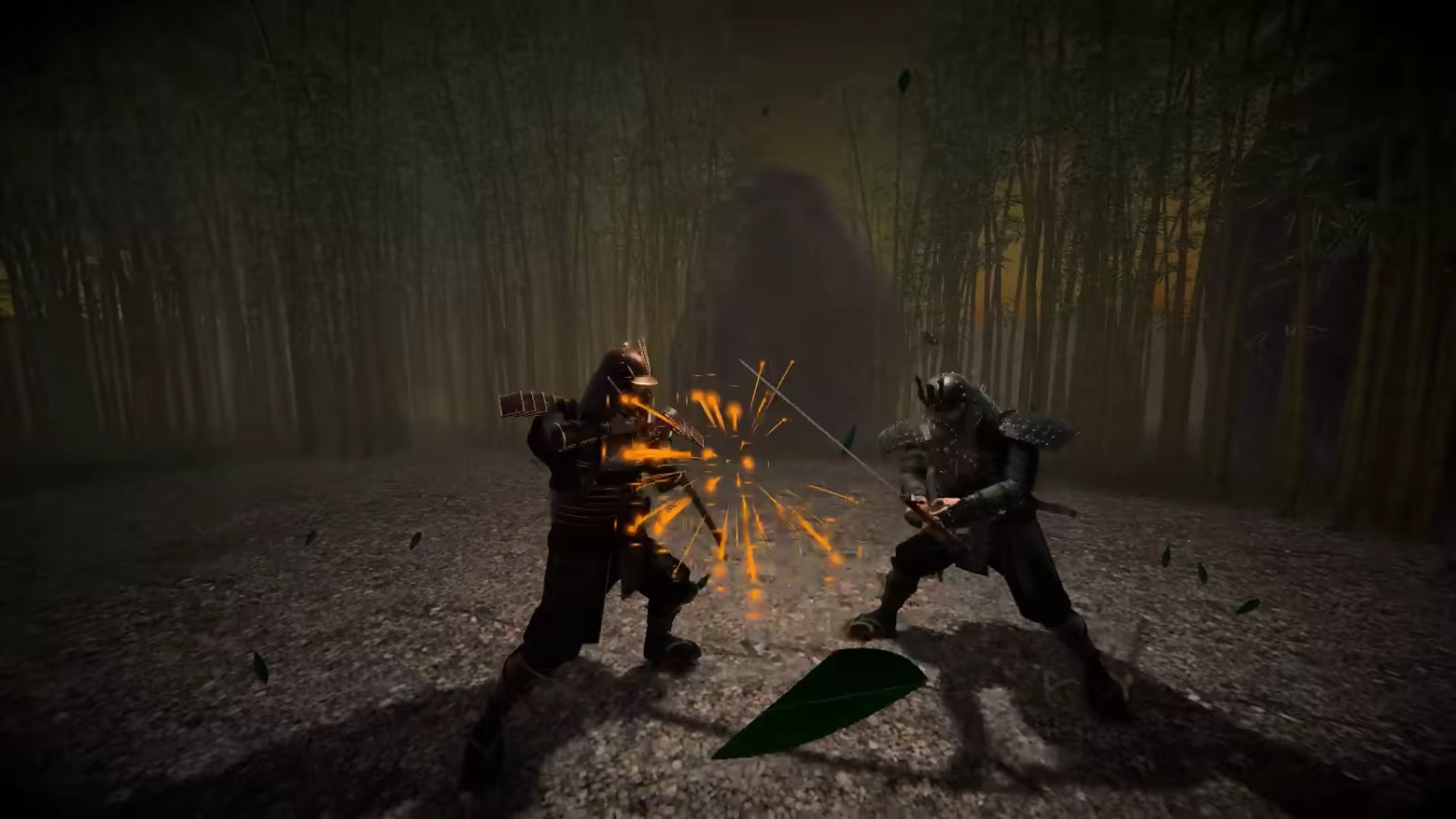
Pure parry action. Just tilt your right stick or mouse to deflect attacks. A simple yet intense samurai duel where timing and focus decide everything. Sharpen your reflexes, enter the flow, and master the art of Hajiki.
Modeled estimate, not a reported figure. How we estimate →
Media

About

Have you ever wanted to parry—purely, endlessly, beautifully?
Hajiki is a minimalist samurai duel game built entirely around the art of the parry.
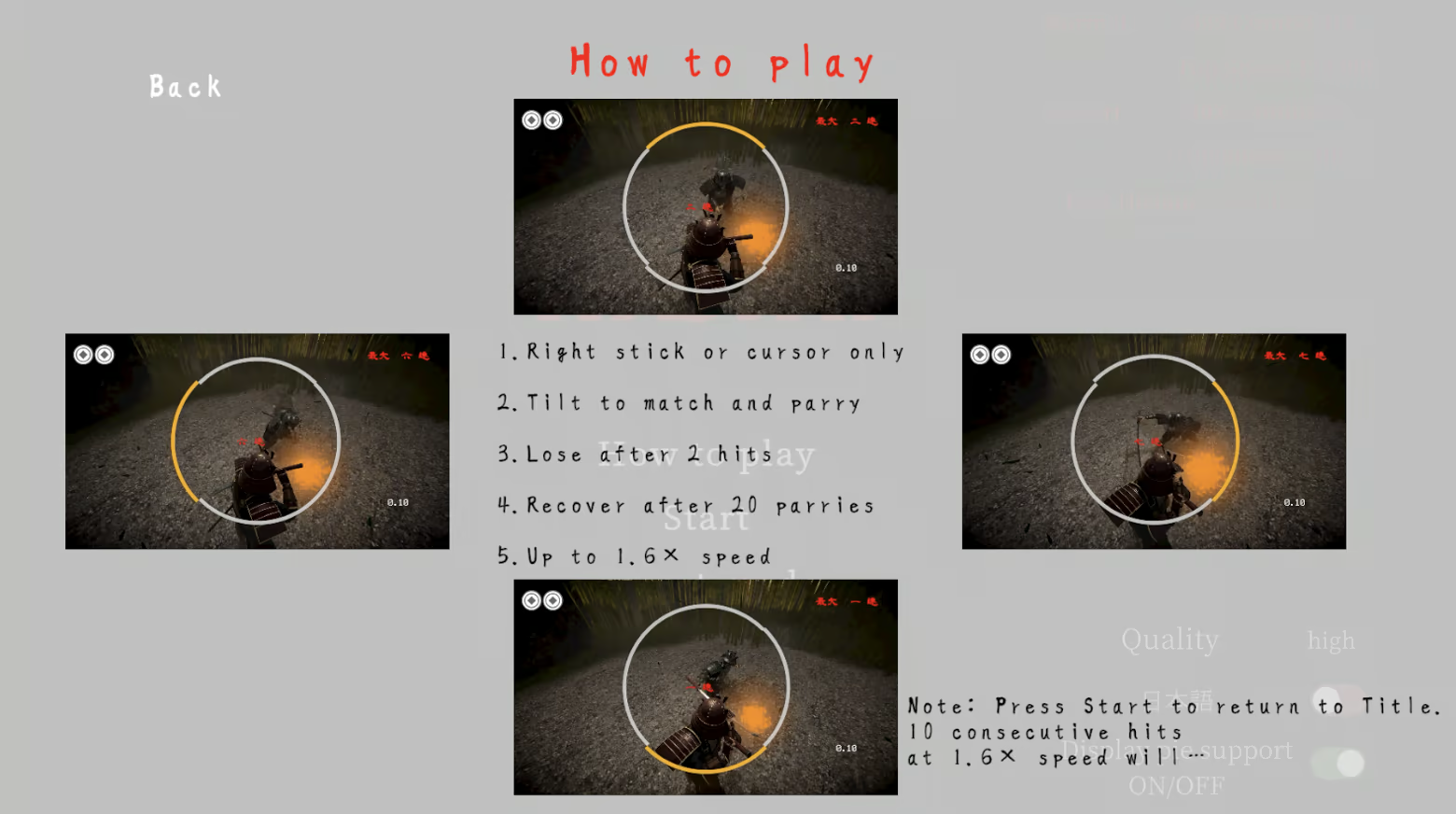
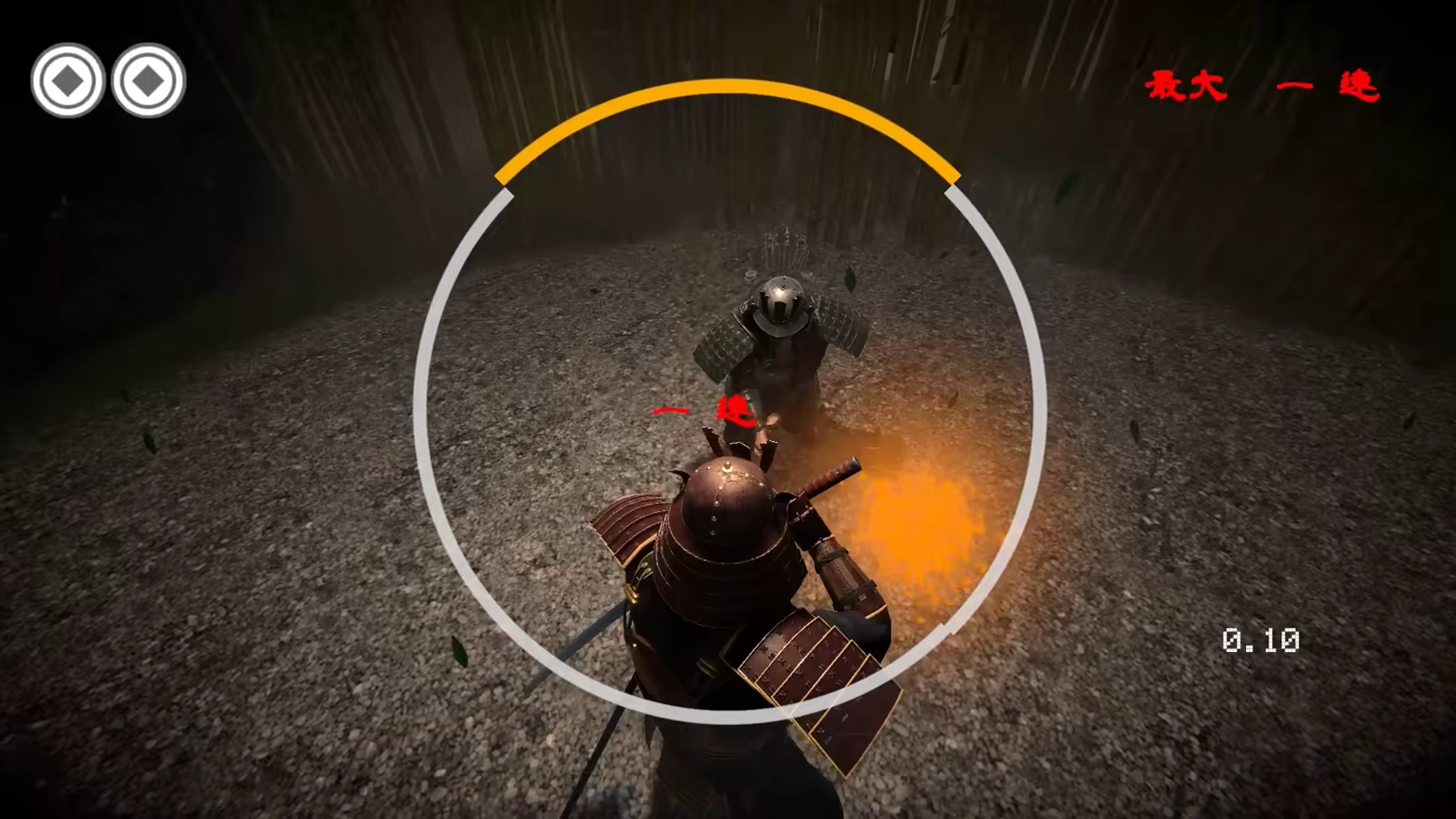
Simply tilt your right stick or move your mouse to block incoming strikes.
Simple to play, but incredibly hard to master — a perfect test of timing and focus.
Each successful parry sharpens your senses, pulling you deeper into a meditative flow.
Set in Japan’s warring states era, two warriors face each other in a life-or-death duel.
No combos. No attacks. Only perfect defense.
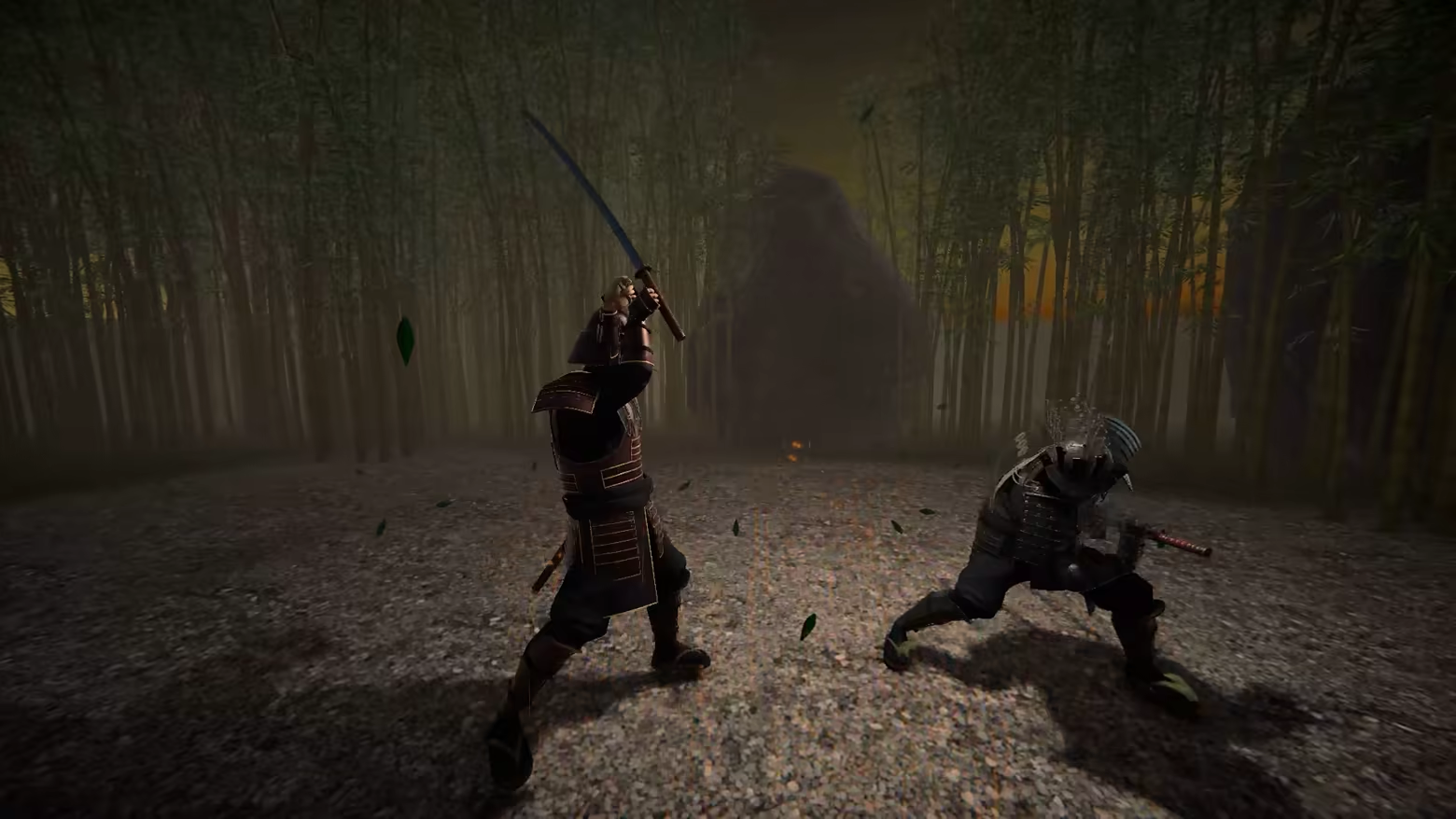
Keep parrying to earn titles of mastery — from “Expert” to “Demon” to “Shura.”
Can you reach the ultimate flow state?
🕹 Stick …… Parry Input (Up / Down / Left / Right)
🖱 Mouse …… Parry Input (Up / Down / Left / Right)
🔁O key / ⭘(PS) …… Retry
🏠 Start Button …… Return to Title
👁 C key / □(PS) …… Switch View Mode
Stats
All-time low is the lowest price we've recorded for this game since we started tracking it.
Languages: English, Japanese
Reviews
ジャンルとしてはアクションに入るのかな。グラフィックはキャラクターデザインと背景の竹林がマッチしていて和のテイストが好きな人にはとても世界観に没入できる。設定で挙動を軽くすることもできその場合は画質の解像度が下がる。windows11にアップグレードできるギリギリの性能のPCで、グラボ非搭載・GPUはCPUオンボードのタブレットPCでは設定、「低」、「中」でカクつくことなく操作できた。その分画質の解像度は荒くはなるものの、その荒さがPS2を彷彿とさせるグラフィックでそれはそれで逆に懐かしさすら感じる。個人的にはこのエモい荒さがとても好き。操作性は上下左右を選択するだけなので操作自体は難しくないのだが中盤以降の相手の動き出す速さがなかなかの速さでその分タイミングもシビアになっていく。ミスできる回数も2回しかないため難易度は操作性の簡単さに対しかなり高い。特に1回ミスしたあとの復帰して受け流しの流れに戻るのが相手の動きがスローになり復帰しやすいなどもなくその時の速さとタイミングで切りかかってくるので、一瞬でも気を抜くと2連ミスで失敗になってしまう。この辺りはやりこみゲーとして慣れが必要だ。単純操作でそう簡単にはクリアできないひりついた緊張感を体験できる。一瞬も目を離せず緊張感の中プレイするのが好きな人にはかなりオススメ。まだクリアはできていないでクリア後の展開は見れていないが、早くクリアしてどのような演出があるのか楽しみだ。
HAJIKI: Samurai Reflex Action, developed and published by 電脳鈴木組, is a tightly focused action game built around a single, uncompromising idea: mastery through timing. Instead of offering a broad combat system filled with attacks, combos, and abilities, it reduces everything to the act of deflection. Every encounter becomes a test of reaction speed and precision, where survival depends entirely on reading incoming strikes and responding with exact directional inputs. It’s a design that feels almost minimalist to an extreme, but that simplicity is exactly what gives the game its identity. The gameplay loop is deceptively straightforward. Enemies attack, and the player must parry in the correct direction at the right moment to survive. There are no offensive moves to fall back on, no alternative strategies to rely on—just a constant stream of incoming threats that must be answered correctly. This creates a relentless sense of pressure, as every second demands full attention. The lack of complexity in controls makes the game immediately accessible, but the execution quickly reveals how demanding it is. Timing windows are tight, and consistency becomes the real challenge, turning each session into a test of focus rather than mechanical variety. As players continue, the experience shifts from learning the mechanics to refining them. The game builds intensity not by introducing new systems, but by increasing the speed, frequency, and unpredictability of attacks. Over time, successful play begins to feel rhythmic, almost like following a pattern in music, where instinct and reaction start to merge. This creates a satisfying “flow” state when everything aligns, where actions become automatic and the player is fully absorbed in the moment. It’s in these stretches that the game feels most rewarding, offering a sense of mastery that comes purely from repetition and improvement. Progression is minimal but purposeful. Instead of unlocking new abilities or expanding the gameplay, players earn ranks and titles based on performance, reinforcing the idea that advancement is tied to skill rather than upgrades. This approach keeps the experience focused, but it also limits its variety. Without additional systems or evolving mechanics, the game relies entirely on its core loop to maintain engagement. For players who enjoy honing a specific skill, this can be deeply satisfying; for others, it may feel restrictive over time. Visually, the game adopts a clean and understated style that prioritizes clarity. Character movements and attack directions are easy to read, which is essential for a game built around precise reactions. However, the simplicity of the presentation also means that there is little variation in environments or visual elements, which can make extended play sessions feel somewhat repetitive. The same can be said for the audio design, which supports the gameplay effectively but does not offer much diversity, reinforcing the game’s overall minimalistic approach. The difficulty is a defining feature, and it does not attempt to accommodate players looking for a gradual learning curve. From early on, the game demands concentration and accuracy, offering little room for error. This makes it highly rewarding for players who enjoy skill-based challenges, but it can also be frustrating for those who prefer more forgiving systems or a sense of progression beyond personal improvement. The experience is uncompromising, and it expects players to meet it on its own terms. Ultimately, HAJIKI: Samurai Reflex Action is a game that succeeds by fully committing to its concept. It transforms a single mechanic into a complete experience, delivering a focused and intense challenge that stands out through its simplicity. While its lack of variety and depth may limit its long-term appeal, it offers a unique and satisfying test of reflex and concentration for those willing to engage with it. It is less about exploration or progression and more about discipline, precision, and the pursuit of mastery. Rating: 6/10
This is a great idea for a game, mixing quicktime reaction events with combat, where you attempt to parry incoming blows from an opponent. Its still very rough at this stage, with repetitive audio cues, limited vfx and a lack of detail in the environments. Hopefully the developer will continue to polish the game and add more features.
Related
Related
Trends
Concurrent players on Steam, sampled daily since tracking started.
Momentum
Pace estimated from the game's recent review growth (our daily snapshots) at its own sales-per-review ratio — a momentum signal, not booked sales.
Related
| Glasses and Girls | $315.6 | 51 | 82% | $0.99 |
| Dances and Girls | $322 | 52 | 83% | $0.99 |
| Bongo Quest | $322 | 52 | 46% | $0.99 |
| Anime Sunset Ride | $334.4 | 54 | 67% | $0.49 |
| Cosmic Journey PC Live Wallpaper | $336.3 | 52 | 71% | $0.99 |
| Girls and Dragons | $340.5 | 55 | 76% | $0.99 |