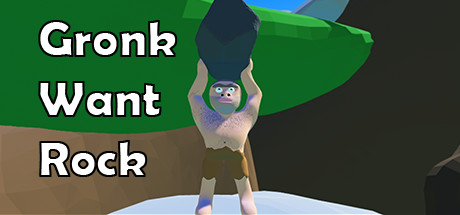
Gronk Want Rock is a bizarre indie platformer that takes an intentionally absurd concept and turns it into a surprisingly tense and memorable experience. Developed by Gronk and published by Gronk, Want, Rock, the game revolves around one extremely simple objective: retrieve a rock from deep within a dangerous cavern and carry it all the way back to Gronk’s home. While the premise initially sounds like a joke designed around internet humor, the game quickly reveals itself to be a punishing physics-driven climbing challenge filled with frustration, tension, and oddly immersive atmosphere.
The gameplay structure is deceptively simple. Players descend into a cavern, locate the rock, and begin the difficult process of transporting it upward through dangerous vertical environments filled with narrow ledges, awkward jumps, and devastating drops. There are no enemies, combat systems, or complicated mechanics distracting from the central challenge. Everything revolves around movement, positioning, and carefully controlling both the player and the heavy rock during the climb back to safety. The simplicity of the design works surprisingly well because every small movement carries consequences once the ascent truly begins.
What makes Gronk Want Rock stand out is how heavily it relies on physics-based tension. The rock feels awkward, heavy, and unpredictable, forcing players to constantly think about balance and momentum during even the simplest platforming sections. A single mistake can send the rock crashing back down into the cavern, instantly destroying several minutes of hard-earned progress. The game thrives on this risk-reward structure because every successful climb feels fragile. Progress becomes emotionally valuable simply because failure is always close enough to feel threatening.
The game clearly shares DNA with rage-focused platformers such as Getting Over It with Bennett Foddy, but it develops its own personality through its primitive caveman theme and unusual atmosphere. At first, the experience feels comedic and intentionally ridiculous, but the longer players spend climbing through the cavern, the stranger the overall mood becomes. The isolation, repetitive movement, and constant pressure slowly create an oddly uncomfortable psychological atmosphere hiding beneath the humor. The game never fully transforms into horror, but there is a lingering sense of unease that grows stronger over time.
One of the most effective aspects of the game is how it manipulates player emotions through progress loss. Carrying the rock upward creates an emotional attachment to the object itself because players understand exactly how much effort is tied to every section of the climb. Watching the rock bounce violently down the cavern after a small mistake creates immediate frustration and panic, but it also motivates players to continue. The game understands how powerful emotional investment becomes when progress feels difficult to maintain.
Visually, Gronk Want Rock embraces a rough and primitive style that fits the caveman-inspired concept perfectly. The environments are simple but distinct, using exaggerated colors and awkward geometry to create a strange and hostile world. The cavern itself becomes the game’s primary character, constantly threatening to undo progress through dangerous layouts and unpredictable terrain. The graphics are intentionally low-budget, but the unusual presentation helps the game maintain its bizarre identity rather than feeling generic.
Sound design also contributes heavily to the atmosphere. Environmental audio, subtle ambient effects, and occasional music create a strange combination of comedy and tension. There are moments where the game becomes surprisingly quiet, allowing players to focus entirely on the stressful process of climbing while carrying the rock. This use of silence makes certain sections feel far more intense than expected, especially after losing significant progress.
The physics system is both the game’s greatest achievement and its biggest weakness. Successfully mastering movement and controlling the rock feels genuinely rewarding because the game demands patience and precision. However, the unpredictable behavior of the physics occasionally causes failures that feel frustrating rather than fair. The rock can bounce awkwardly, slip unexpectedly, or react inconsistently to movement, creating moments where players lose progress in ways that feel difficult to fully control. Some players will appreciate this chaos as part of the experience, while others may simply find it irritating.
Difficulty is another aspect that will strongly divide audiences. Gronk Want Rock is intentionally unforgiving and offers very little mercy. Losing progress is common, and repeated failure is built directly into the gameplay loop. Players who enjoy punishing platformers and challenge-focused games will likely appreciate the intense tension and sense of accomplishment tied to overcoming difficult sections. Others may quickly lose patience with the repetitive nature of recovering lost progress.
The game’s smaller scale is also noticeable throughout the experience. Nearly everything revolves around the single climbing mechanic, and there is limited gameplay variety outside of mastering movement and surviving difficult terrain. The entire experience depends heavily on whether players connect with the core concept and enjoy the emotional challenge created by the physics system.
Despite these limitations, Gronk Want Rock succeeds because it fully commits to its strange identity. It transforms an intentionally ridiculous idea into a surprisingly immersive experience built around tension, persistence, and emotional frustration. The game constantly balances absurd humor with genuine stress in a way that makes it far more memorable than many larger indie platformers.
For players who enjoy physics-based challenge games, experimental indie projects, and platformers focused on endurance and persistence, Gronk Want Rock offers a uniquely strange and emotionally demanding journey. It is not polished, forgiving, or accessible, but its commitment to chaotic physics and punishing progression gives it a personality that remains difficult to forget long after the climb is over.
Rating: 6/10