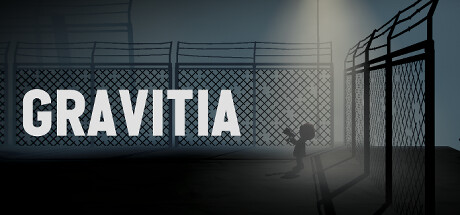
Gravitia is a first-person puzzle adventure developed by Vuzzle and published by Jungle Game Lab that centers entirely around the manipulation of gravity and environmental physics. Built on a mysterious science-fiction premise filled with abandoned structures, impossible architecture, and strange machinery, the game challenges players to solve increasingly complex puzzles using a gravity-altering device capable of reshaping the world around them. Rather than relying on traditional combat or fast-paced action, Gravitia focuses on experimentation, exploration, and careful observation, creating a thoughtful and atmospheric experience driven by curiosity and environmental interaction.
The core gameplay mechanic revolves around a specialized gravity gun that allows players to generate localized gravity fields on walls, objects, and structures throughout the environment. Instead of functioning like a conventional weapon, the device becomes a tool for manipulating space itself. Players use it to move platforms, redirect objects, alter pathways, and interact with the environment in creative ways. The physics-based interactions feel satisfying because the world reacts dynamically to gravity changes, turning every puzzle into an exercise in experimentation and spatial reasoning.
One of the game’s strongest qualities is how naturally its mechanics evolve over time. Early puzzles are relatively simple and designed to teach players the fundamentals of gravity manipulation, but the challenges gradually become more elaborate as new environmental interactions and mechanics are introduced. Later sections combine moving structures, floating platforms, environmental hazards, and shifting pathways into increasingly layered puzzles that require both logic and careful timing. The game consistently introduces new situations that encourage players to rethink how gravity can be used, preventing the core mechanic from feeling repetitive.
The environmental design contributes heavily to the game’s atmosphere. Gravitia takes place in a strange and isolated world filled with enormous industrial structures, abandoned facilities, fog-covered landscapes, and surreal architectural spaces that seem disconnected from reality. The environments rarely explain themselves directly, allowing mystery and visual storytelling to drive exploration. This sense of uncertainty gives the game a dreamlike quality where players constantly feel as though they are uncovering fragments of a forgotten experiment or lost civilization.
Atmosphere is one of the game’s greatest strengths. The world feels quiet, lonely, and slightly unsettling without relying on overt horror elements. Large empty rooms, distant mechanical sounds, and slowly shifting structures create an immersive sense of isolation. The restrained storytelling works surprisingly well because the game allows players to interpret the world through exploration rather than overwhelming them with direct exposition. Every new area feels mysterious, encouraging curiosity about both the environment and the purpose behind the strange technology scattered throughout the world.
Visually, Gravitia embraces a minimalist art direction that prioritizes readability and environmental clarity. Puzzle elements are easy to identify without excessive visual clutter interfering with gameplay, while lighting and fog effects help create a surreal atmosphere throughout the adventure. The simplified presentation may initially appear modest, but it effectively supports the gravity mechanics by keeping the player focused on movement, structure, and environmental interaction rather than unnecessary detail.
The gravity-based physics interactions are especially satisfying because they make the world feel responsive and tangible. Platforms rotate unexpectedly, walls shift position, and objects move dynamically depending on the placement of gravity fields. Solving puzzles rarely feels like activating static switches in predetermined ways. Instead, players are constantly experimenting with how the environment physically reacts to altered gravitational forces. This gives the puzzles a more organic and interactive quality than many traditional logic-focused puzzle games.
The pacing is also handled well. Gravitia introduces mechanics steadily enough that players rarely feel overwhelmed, while the relatively focused structure prevents the experience from overstaying its welcome. Exploration and puzzle-solving are balanced carefully, allowing quieter moments of environmental observation between more mentally demanding sequences. This slower and more deliberate pacing creates a relaxing rhythm that suits the atmospheric design very well.
Sound design further strengthens immersion throughout the game. Mechanical ambience, distant echoes, and subtle environmental audio help reinforce the mysterious tone of the world. The soundtrack remains understated for much of the experience, allowing environmental sounds and silence to dominate the atmosphere. This quieter approach makes exploration feel meditative while maintaining a constant sense of mystery and isolation.
However, the game is not without weaknesses. Some later puzzles can occasionally feel overly dependent on trial and error, especially when environmental physics become more complicated. Certain interactions may initially seem unclear, forcing players to experiment repeatedly before fully understanding how specific mechanics function. Players unfamiliar with physics-based puzzle games may find some sequences frustrating because of the lack of direct guidance.
The minimalist storytelling may also divide players. While the environmental approach to narrative strengthens the atmosphere, players looking for stronger character development or detailed lore may find the experience emotionally distant. The game focuses far more heavily on mood and puzzle-solving than on traditional narrative progression.
Additionally, the gameplay remains heavily centered on its single gravity mechanic throughout the adventure. Although the game introduces variations and increasingly complex applications of the system, players expecting dramatic gameplay shifts or action-oriented sequences may eventually wish for greater mechanical variety. The slower pace and contemplative structure will likely appeal more to puzzle enthusiasts than to players seeking constant excitement or cinematic spectacle.
Despite these limitations, Gravitia succeeds because of how effectively it builds an entire experience around one well-designed concept. The game transforms gravity manipulation into a creative and satisfying gameplay system while surrounding it with an atmospheric and visually memorable world. Its strongest moments come from the simple pleasure of experimentation and the gradual understanding of how the environment can be reshaped through clever use of physics.
Gravitia ultimately stands out as a thoughtful and atmospheric puzzle adventure that combines creative gravity mechanics with immersive environmental design and satisfying exploration. Its physics-based interactions, mysterious setting, and steadily evolving puzzles create a rewarding experience for players who enjoy experimentation-driven gameplay and slow-burning science-fiction atmosphere. While its minimalist storytelling and deliberate pacing may not appeal to everyone, fans of atmospheric puzzle games will likely find Gravitia to be an engaging and memorable journey filled with creativity and quiet wonder.
Rating: 8/10