# Graveyard Keeper — 7/10, maybe 7.5
Graveyard Keeper is a strange game to rate, because for about two thirds of it I was having a genuinely great time.
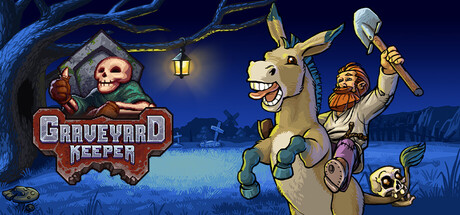
It is beautiful. The pixel art is great, but what impressed me even more is the ridiculous amount of small animations, effects and details everywhere. Despite the whole aesthetic being about corpses, autopsies and graveyards, the game somehow manages to feel genuinely cozy. Who said graveyards can't be cute?
And the main gameplay loop works extremely well for a long time. You are constantly running around like a madman because there is always something else to do. A corpse arrived, crops are ready, you need iron, an NPC only appears today, something finished crafting, you forgot to bring one material for a building... There were many moments where I genuinely wished the days were longer because I had too much I *wanted* to do.
Then you unlock automation, [spoiler]zombies start farming, cutting wood and moving resources for you,[/spoiler] and that also feels great. You slowly turn this small medieval graveyard into something that almost starts resembling a tiny Factorio factory.
And this is where the game's problems become much more obvious.
The amount of systems, resources and production zones keeps growing, but the tools the player gets to manage them really don't. You can't pin a building recipe to see its materials while running around. You can't properly configure zombie logistics between arbitrary areas. Storage and construction are restricted to weird predetermined zones even when there is obviously empty space. There are multiple production chains where you end up being the conveyor belt yourself.
Alchemy is probably the worst example. I like discovering recipes in principle, but there is very little actual logic given to the player. No proper recipe book to work from, barely any principles to deduce recipes with, and many combinations just feel random enough that experimentation becomes wasting resources until something works.
The late game also loses a lot of the great pacing the first part had. Eventually I had unlocked basically every technology, automated most of my production and had more resources than I knew what to do with. At that point the story was still being stretched by "thanks, come back next week" quest gates and NPCs appearing on specific days. Sometimes you get the next part of a quest immediately after that NPC's day has already passed, so your reward is simply waiting another week.
Once automation removes most of your daily work, this stops being relaxing downtime and starts feeling like padding.
I ended up rebuilding my entire graveyard with 12+ skull corpses and elaborate decorations mostly because I needed *something* to do while waiting for the story to continue.
There are also lots of smaller design decisions that are just bizarre. Higher-quality items sometimes cannot replace lower-quality ones in recipes. Mass-producing high-quality wine is easy, but actually selling it in meaningful quantities in the base game is not. Some late-game resources are bottlenecked by systems you cannot really scale. None of these things ruin the game individually, but together they create a lot of unnecessary friction.
I played without the DLC, and from what I understand some of it expands the late game considerably. Maybe the complete experience is smoother. But I can only judge the base game I played.
And despite everything I just complained about, I still liked it a lot.
For most of the game, Graveyard Keeper has an excellent loop of exploration, crafting, optimization and gradual automation. It has a ton of personality, looks fantastic, and somehow turns managing a cemetery full of mutilated corpses into one of the coziest management games I've played.
The last third just needed either more things to actually do, or much better tools to manage everything you had already built.
**7/10, maybe 7.5. Very flawed, very charming, and definitely worth playing.**