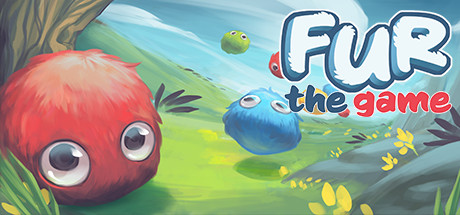
Fur the Game is a small independent puzzle adventure developed and published by the Fur Dev Team, a group of developers who created the project with a clear focus on creativity, charm, and experimental design. Built as a lighthearted first-person puzzle experience, the game introduces players to a whimsical world populated by strange, fluffy creatures known simply as “Furs.” Rather than presenting an elaborate narrative or a sprawling open world, the game concentrates on a playful core concept: using these living balls of fur as tools to solve environmental puzzles. This unusual idea gives the game a distinct personality and helps it stand out as a charming indie project that prioritizes imagination and accessibility over scale.
The story itself is minimal and primarily serves to frame the player’s exploration of the world. Players enter a colorful environment where these mysterious Fur creatures are scattered across various puzzle-filled locations. The main objective involves discovering and rescuing them while learning how each type of Fur interacts with the environment. Although the game does not rely heavily on narrative storytelling, its world carries a subtle sense of wonder, encouraging players to explore their surroundings and uncover the roles these creatures play within the environment.
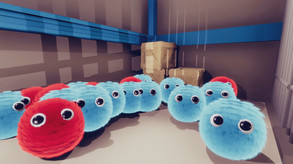
Gameplay is presented from a first-person perspective, allowing players to interact directly with objects, mechanisms, and the Fur creatures themselves. The puzzles are built around the idea that each Fur has unique properties that can influence the environment. Some may activate switches or trigger mechanisms, while others might interact with physics elements or help the player reach otherwise inaccessible areas. Players must carefully position, throw, or place these creatures in specific locations to activate devices, open pathways, or manipulate objects that block progress. This mechanic becomes the foundation of the game’s puzzle design and encourages players to experiment with different solutions.
As players progress through the game, new types of Fur creatures are introduced, each bringing additional puzzle mechanics into the mix. The gradual introduction of these new elements allows the game to slowly expand its puzzle complexity without overwhelming players. Early challenges focus on simple placement and interaction, while later puzzles require a greater level of planning and experimentation. Although the mechanics remain relatively straightforward compared to larger puzzle titles, the steady introduction of new ideas keeps the gameplay engaging throughout the experience.
One of the game’s strongest qualities is its atmosphere. Fur the Game leans heavily into a warm and friendly aesthetic that makes the entire experience feel approachable. The Fur creatures themselves are intentionally designed to be adorable, appearing as small bouncing balls of colorful fluff with expressive animations. Their playful design gives them a personality that goes beyond being simple puzzle tools, making them feel more like companions that assist the player during exploration. This sense of charm adds emotional appeal to the gameplay and reinforces the game’s relaxed tone.
The environments also contribute to this inviting atmosphere. Levels are designed with bright colors and simple shapes that emphasize clarity and exploration. While the environments are not vast, they are constructed in a way that encourages curiosity, often rewarding players who search carefully for hidden creatures or alternative puzzle solutions. Each area introduces new visual themes while maintaining the game’s overall lighthearted aesthetic, making exploration feel rewarding even when the puzzles themselves are relatively straightforward.
Another strength of the game lies in its accessibility. The mechanics are easy to understand, making the experience approachable even for players who may not typically play puzzle games. The controls are simple and intuitive, allowing players to focus on experimenting with the environment rather than learning complicated systems. Because of this design philosophy, the game functions well as a relaxing puzzle adventure that players can enjoy at a comfortable pace.
However, the game’s simplicity also represents its main limitation. Compared to larger puzzle games that introduce complex systems or extensive level design, Fur the Game remains relatively modest in scope. The number of puzzles and environments is limited, and experienced players may find that the challenges do not reach a particularly high level of difficulty. As a result, the overall playtime is fairly short, and some players may feel that the game ends just as they begin to fully understand its mechanics.
Visually, the game reflects its indie origins with a stylized but minimalistic presentation. The graphics are not technically advanced, but they serve the game’s purpose well by maintaining a clean and readable environment where players can clearly interact with objects and creatures. The bright colors and soft textures help reinforce the cheerful tone, creating a visually pleasant world that complements the game’s playful design.
Sound design follows a similar philosophy of simplicity. Soft background music accompanies the player’s exploration, providing a calm and relaxing atmosphere while solving puzzles. Sound effects for interactions with the Fur creatures and environmental objects add feedback that helps players understand how their actions influence the world. Although the audio design remains subtle, it effectively supports the game’s relaxed pacing and overall mood.
Despite its modest size, Fur the Game succeeds in delivering an experience that feels creative and heartfelt. The combination of adorable creature design, light puzzle mechanics, and a cheerful atmosphere creates a game that is easy to enjoy. It does not attempt to compete with large-scale puzzle adventures in terms of complexity or length, but it succeeds in offering a charming and imaginative experience that reflects the passion of its developers.
Ultimately, Fur the Game feels like a small but sincere indie experiment that focuses on creativity and personality rather than ambition. Its puzzles are approachable, its world is welcoming, and its unusual mechanics give it a memorable identity. While it may not provide the depth or replay value of larger puzzle titles, it delivers a short but enjoyable adventure that showcases the charm and inventiveness often found in independent game development.
Rating: 7/10