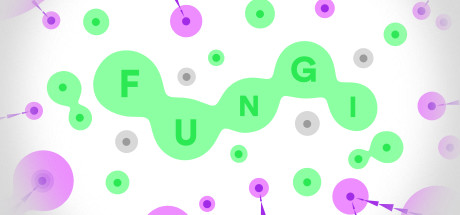
FUNGI
FUNGI is a strategic online multiplayer game. Grow from a single cell into a multicellular fungus by leeching mass from other players. With the right strategy even smaller fungi can be a threat, so watch out! Play classic Free For All or hold your own in the exciting Battle Royale.
Estimated lifetime revenue
Free-to-play
Revenue comes from in-game items and microtransactions, which our price-based model doesn't estimate. Copies below reflect the player base, not paid sales.
Est. copies sold
2.3K
mid estimate
Reviews
63
Review score
65%
6.5/10
Playing now
0
live
Media
Screenshots & trailer

About
About the game
FUNGI is a strategic online multiplayer game in which you battle the rest of the world. Grow from a single cell into a multicellular fungus by leeching mass from other players. You move around by placing new links and transfer energy from cell to cell. Fend off attacks and try to conquer the map whilst keeping your network intact. There are multiple ways to defend, attack or avoid others and there are a couple of powerups to help you along the way. With the right strategy even smaller fungi can be a threat, so watch out!
Game modes:
CLASSIC
Be the biggest fungus in the room with this free for all feed fest. Grow, challenge, chase, survive, take over and win. Make friends or enemies by trying different strategies. Or make it into the hall of fame and become the biggest fungus ever to claim that first place.
BATTLE ROYALE
The latest addition to Fungi which ads new meaning to fast food. This exciting new mode has a an ever resigning map edge, forcing all fungi closer and closer together until there is one survivor. Do you have what it takes to keep your species from going extinct?
How to play:
1. Move around by dragging and dropping new cells.
2. Click on a link to invert the direction of transport.
3. Grow larger by leeching mass from either food or other fungi.
4. Once you reach a certain mass, you can upgrade you reach.
5. Transport mass fast by using the burst button or right mouse click on the cell core.
6. Use block to protect yourself.
7. Grab and transport powerups to a cell by moving them along your links. Use the powerup by dragging the powerup from the cell.
Powerups:
Speed > Speed up the transfer of mass by dropping on food or a player.
Cut > Cut through links or blocks by dropping on the opposite side.
Auto > Automatically leeches any food or player in range.
Range > Drop a new cell as far as you can see without crossing links or terrain.
Multi > Multiplies leeched mass by dropping on food or a player.
Scout > Crawls ahead until it finds something or you stop it.
Features:
* Classic free for all game mode
* Battle royale game mode
* 100+ Achievements
* Skins
* Burst, block and upgrade shortcuts
* Customizable controls
* Newly generated maps every day
* Live leaderboards
* Hall of fame
* Invite friends to join
* Unlimited amounts of challenges opposed by other players from around the world
Game modes:
CLASSIC
Be the biggest fungus in the room with this free for all feed fest. Grow, challenge, chase, survive, take over and win. Make friends or enemies by trying different strategies. Or make it into the hall of fame and become the biggest fungus ever to claim that first place.
BATTLE ROYALE
The latest addition to Fungi which ads new meaning to fast food. This exciting new mode has a an ever resigning map edge, forcing all fungi closer and closer together until there is one survivor. Do you have what it takes to keep your species from going extinct?
How to play:
1. Move around by dragging and dropping new cells.
2. Click on a link to invert the direction of transport.
3. Grow larger by leeching mass from either food or other fungi.
4. Once you reach a certain mass, you can upgrade you reach.
5. Transport mass fast by using the burst button or right mouse click on the cell core.
6. Use block to protect yourself.
7. Grab and transport powerups to a cell by moving them along your links. Use the powerup by dragging the powerup from the cell.
Powerups:
Speed > Speed up the transfer of mass by dropping on food or a player.
Cut > Cut through links or blocks by dropping on the opposite side.
Auto > Automatically leeches any food or player in range.
Range > Drop a new cell as far as you can see without crossing links or terrain.
Multi > Multiplies leeched mass by dropping on food or a player.
Scout > Crawls ahead until it finds something or you stop it.
Features:
* Classic free for all game mode
* Battle royale game mode
* 100+ Achievements
* Skins
* Burst, block and upgrade shortcuts
* Customizable controls
* Newly generated maps every day
* Live leaderboards
* Hall of fame
* Invite friends to join
* Unlimited amounts of challenges opposed by other players from around the world