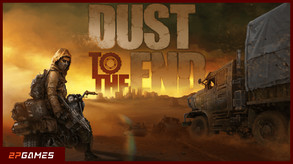
Nuclear war ended human civilization, but it could never uproot the evil within our hearts. Fight, trade, negotiate, raid– do whatever it takes to survive in the wasteland. You will have to be as clever as ruthless to thrive in a broken world, torn by war, cruelty, hunger and slavery.
Modeled estimate, not a reported figure. How we estimate →
About

Genres
Stats
All-time low is the lowest price we've recorded for this game since we started tracking it.
Languages: English, Simplified Chinese, Russian, Spanish - Spain, Spanish - Latin America, Japanese
Engagement
Hours played at review time, across 43 reviews with recorded playtime.
Reviews
Themes across 43 recent reviews and how positive each mention is. A keyword signal, not full sentiment analysis.
positive critical· bar length = how often the theme comes up
Reviews
Dust to the End is a rough but interesting post-apocalyptic strategy RPG with a lot of freedom. You’re basically managing a caravan, making tough choices, trading, fighting, and trying to survive in a brutal wasteland. It’s a bit janky at times, but the world and decision-making keep it engaging. If you like sandbox survival games with strategy elements, it’s definitely worth a try.
First off, writing is atrocious and everyone it feels like an AI wrote it. There is no personality or interaction, quests and NPCs lead to nowhere, and it's a pure linear grind. Trading is not intuitive in that it's just buy A go to B and then C. It's clearly a developers first game but it has many rough edges that are fundamental to it that can't be fixed. I can't recommend it.
I really like the concept of this game. However, the base building system is pointless once you move to a new region. There simply is no reason to go back when it is more profitable (with much better XP) to stay in your current region or move to the next more challenging region. This game had so much potential but it feels scatter brained and needlessly "busy" in the base building, crafting, upgrading, etc. I do enjoy upgrading my weapons, armor and vehicles to carry more and move faster. But, once I "beat" the game, I probably won't replay it. 7.5/10
不推荐,冲着末日废土+回合制来的,结果玩得全程没一点乐趣。 战斗设计极度不合理,全队共用行动点,前期一轮下来基本只能一个人放技能,其他人全程罚站平A,体验极差。数值更是离谱,99%命中率打0%闪避,连续三下全空,纯纯虚假概率。 升级经验设计得非常不合理,3级升4级就要几百经验,打一只怪才二三十,升级极慢。加点更是敷衍,加一点力量只加1点伤害,完全感受不到成长。 跑商内容枯燥到浪费时间,赚点钱只有一点点微不足道的快感,剩下全是无聊。基地建设、商会、产业升级这些玩法又正好踩我雷点,完全喜欢不起来。 画风也很一般,剧情就是纯纯踢皮球,A让找B,B让找C,全程无限跑腿,毫无意义。 整体玩下来既不爽也不沉浸,完全不值得购买。
[h1] 正規価格では100%買わなくてよいです。半額ならギリあり。[/h1] プレイ時間は長めですが、これはボーダレスウィンドウかつ、ほかのことをするとウィンドウが強制格納されるので終了したつもりでバックグラウンドで起動し続けていたために長くなっています。 実際のところは半分もプレイしていないため、実質10時間程度でクリアできるボリュームでしょうか。 公平に言って終末後の世界で大航海時代風に楽しもうぜという感じは出ています。 日本語も多少壊れている点がありますが、まあまあプレイに支障はない程度ですが、ストーリーの本筋は依頼欄から確認するのが楽です。 このゲームのダメな点は以下の2点に尽きます。 ・レベルデザインが雑過ぎる 終盤で特に顕著ですが「とりあえず敵に自キャラの2倍のHP盛って、そのほかはそのまま攻撃力増加!マップはとにかく後半ほど広く!」という形でしかバランス調整ができない人がデザインしています。 ・UIがかなり洗練されておらず情報がとっ散らかっていて操作が煩雑 途中でUIデザイナーが逃げたような感じで必要最低限の情報はゲーム内で確認できるものの、タブA・B・Cで情報が散らばっているた目かなり無駄なプレイ時間が多いです。 所謂フリーゲームなら味があるという感じですが、正規の価格では不便さでプレイ時間を水増ししているタイプのゲームです。
Dust to the End is a post-apocalyptic strategy RPG developed by Haojoy Game and Zjoy Game and published by 2P Games. Released on Steam in 2021, the game combines several gameplay systems—trading simulation, turn-based combat, caravan management, and open-world exploration—into a single survival-focused experience set in a devastated wasteland. Rather than following the structure of a typical role-playing game that emphasizes combat and character progression, the title centers heavily on economics and survival logistics. Players must build a trading caravan, travel across dangerous desert territories, and navigate a fractured world where resources are scarce and every decision can have serious consequences. The game takes place in a bleak future following a global nuclear war that has destroyed most modern civilization. Humanity survives in scattered settlements across an enormous desert wasteland where law and order have largely collapsed. The player begins as a young survivor who grew up in an underground shelter, isolated from the outside world. When raiders attack the shelter and enslave many of its inhabitants, the protagonist escapes into the hostile wasteland and is eventually rescued by a merchant caravan. This moment becomes the starting point of the player’s journey. Joining the caravan introduces the character to the harsh realities of life beyond the shelter, where survival depends on trade, alliances, and the ability to defend oneself from bandits and rival factions. Unlike many RPGs that revolve around heroic quests, Dust to the End focuses on the practical challenges of leading a caravan through a dangerous world. The central gameplay loop revolves around traveling between settlements, purchasing goods where they are abundant, and selling them where they are scarce in order to make a profit. Supply and demand influence the prices of goods in each town, encouraging players to study trade routes and market conditions. Learning which settlements produce specific resources and which areas are desperate for them becomes an important part of mastering the economic system. Over time, players can build profitable trade networks that allow them to expand their caravan and accumulate wealth. Travel across the wasteland is rarely peaceful. The desert is filled with threats including bandit gangs, hostile tribes, mutated creatures, and rival caravans competing for resources. When conflicts arise, the game transitions into turn-based tactical combat. Battles take place on small grid-based maps where positioning, weapon choice, and character abilities determine the outcome. Players recruit companions and mercenaries who can fight alongside them, each with their own equipment and combat strengths. Although the combat mechanics are not extremely complex, they require careful planning, particularly because losing a battle can result in the loss of valuable supplies or even the destruction of the caravan itself. Survival elements are another important component of the gameplay. Traveling across long distances requires careful management of essential resources such as food, water, and medicine. If supplies run low, caravan members may suffer from exhaustion, illness, or low morale. Weather conditions and environmental hazards can further complicate travel, forcing players to plan routes carefully and avoid unnecessary risks. These survival mechanics help reinforce the harsh atmosphere of the world, constantly reminding players that the wasteland is an unforgiving place where poor planning can lead to disaster. As the caravan grows stronger and wealthier, the player gains opportunities to expand their influence beyond simple trading. Certain settlements can be developed or controlled, allowing players to establish small production industries such as farms, mines, or workshops. These facilities generate goods that can be used for trade or sold for profit. Managing these economic assets adds a strategic layer to the game, as players must decide how to balance caravan expansion, resource production, and military strength. Over time, the player’s humble caravan can grow into a powerful economic force capable of shaping the balance of power across the wasteland. The world of Dust to the End is populated by numerous factions, each with its own goals and interests. Players will encounter merchants, warlords, smugglers, and struggling communities trying to survive in the aftermath of civilization’s collapse. Dialogue choices and decisions can influence relationships with these factions, sometimes opening new trade opportunities or triggering conflicts. The game allows players a degree of freedom in shaping their path, whether they choose to focus on honest trade, aggressive expansion, or morally questionable activities such as raiding and exploitation. These choices contribute to the game’s multiple possible endings and encourage experimentation across different playthroughs. Visually, the game adopts a stylized but gritty art style that captures the bleakness of its post-apocalyptic setting. The desert landscapes are filled with ruined structures, scattered settlements, and harsh environments that reflect the devastation of nuclear war. Character portraits and interface elements emphasize the rugged survival theme, portraying traders, mercenaries, and survivors who have adapted to life in a hostile world. Although the graphics are not particularly advanced compared to large-scale RPGs, the presentation effectively supports the game’s atmosphere and thematic tone. Despite its ambitious blend of systems, the game does have several weaknesses that may affect player enjoyment. Some of the mechanics feel somewhat unpolished, particularly in the interface and pacing of certain activities. The trading system, while interesting, can become repetitive over long play sessions as players repeat similar trade routes to maximize profits. Combat also lacks the depth and variety found in dedicated tactical strategy games. These limitations can occasionally make the experience feel slower or less refined than its concept suggests. However, the game’s unique focus on economic strategy within a post-apocalyptic setting helps it stand out among RPGs. Instead of portraying the player as a heroic warrior saving the world, Dust to the End presents a more grounded perspective where survival depends on business decisions, negotiation, and resource management. This emphasis on trade and caravan leadership creates a different type of role-playing experience, one that rewards patience, planning, and strategic thinking rather than pure combat skill. Ultimately, Dust to the End offers an unusual blend of strategy, survival, and role-playing elements set in a harsh desert wasteland. While the game’s systems occasionally feel rough around the edges, its economic gameplay and open-ended approach to progression provide a distinctive experience for players who enjoy slower, strategy-driven adventures. Those willing to engage with its trading mechanics and long-term planning will find a surprisingly deep simulation of survival and commerce in a broken world. Rating: 8/10
挺无聊的,
6/10. Excessively grindy, with gameplay that came out 20 years too late. This game would have done well in a previous era, when your parents only bought you a few games a year if any, and the games had to last. That was also a time when simply being able to play as a character was enough to immerse you. But this is the internet era. Simply playing as a post-apocalypse merchant doesn't mean much if the gameplay itself is dull. Let's start with the combat. It's standard turn-based, non-maneuvering combat where both sides just stand there and trade damage. That, in and of itself, can be fine if the attacks are fun/varied. But they're not. Everything that isn't "basic attack" consumes SP charge, and that takes a while to build up, and when the "special" move hits, it's very basic stuff. Even the tournament prize weapons or boss-fight reward weapons are the same. So fights are basically a bunch of basic attacks, and a few slightly less basica attacks interspersed between. Even Poke'mon had a 4 move roster with dozens of moves per Poke'mon and that game came out in friggin 1996. The merchanting is nothing special. Goods are produced cheaply in some places, and sold for good mark-up in other places. That's about it. It's not bad, per se, but it doesn't feel especially rewarding either, unlike merchanting games where you really have to actually put some thought/effort into extracting as much profit as you can. The "hunt for rare stuff" part reminds me of WoW, and not in a good way, but in the "game developers are trying to make you sink tonnes of time into this game for the sake of sinking time into this game" kind of way. You have to set up expeditions into radioactive areas, and then hope to find rare enemies while you're there, and hope that those rare enemies drop the rare loot you're looking for. It's very grindy, and for a single-player, offline game, that belongs in a previous era. Then there's the minigames. Oh god, the minigames. Why is it that when I explore a newly opened shelter, I can only take the stuff on one of the "paths" and I can't just ransack everything? Why is it that if I fail to exterminate a bugbeast in my newly colonized shelter, I have to wait one week before trying again? Why do I get no loot or exp from killing enemies I encounter in a shelter, or enemies I fight in the arena. (I can understand not getting loot from arena fights, but still) And on, and on, and on. And again, having mini games isn't inherently bad, but the mini games have to be fun, and as it is, they're just... more grind. The minigames feel like a baby developer adding features to an application not because those features would improve the user experience, but because the developer could.
游戏做的可以,通过这一作的经验,下一部作品会更好。
The game is just too unpolished to be recommended. It has such a good concept, some decent art, but that is where it ends. The interface has flaws throughout, and so much of what you do is micromanaging water and food between sites, and the lack of water is absolutely punishing. Combat is extremely basic and lacks depth with lackluster flash style animations. I don't even normally take the time to write reviews, but I'm hoping to save some folks the trouble. Just pass on this one.
Related
Related
Trends
Modeled estimate over time, reconstructed from Steam's monthly review histogram.
Audience
Estimated from the language of this game's reviews — a proxy for where players are, not official Steam demographics.
Related
| Automachef | $397.8K | 915 | 72% | $14.99 |
| LOST EPIC | $397.6K | 1.1K | 72% | $17.99 |
| Serious Sam Classic: The First Encounter | $397.6K | 3.4K | 96% | $5.99 |
| Sex Formula | $397.5K | 458 | 77% | $39.99 |
| Halcyon 6: Starbase Commander (LIGHTSPEED EDITION) | $398.4K | 839 | 79% | $14.99 |
| Accounting+ | $398.4K | 986 | 73% | $11.99 |
Related
| Dust to the End | — | 14 | 62% | $3.09 |
| Sheltered 2 | $1.2M | 2.2K | 45% | $19.99 |
| Horizon's Gate | $514.2K | 1.3K | 95% | $19.99 |
| 7 Days to Die | $425.3M | 403.5K | 87% | $44.99 |
| Kenshi | $32.7M | 114.7K | 96% | $11.99 |
| Eastern Era | $2.5M | 2.8K | 65% | $24.99 |