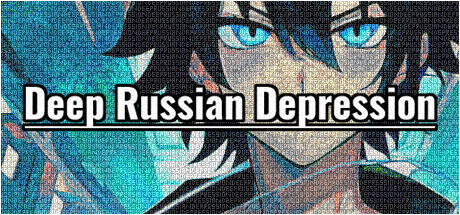
Deep Russian Depression is one of the most emotionally oppressive and strangely fascinating indie visual novel projects currently available on Steam, presenting a bleak mixture of psychological horror, post-Soviet social commentary, philosophical introspection, and existential despair wrapped inside an experimental narrative framework that feels deeply personal and intentionally uncomfortable. Developed and published by Pyconcux, the game does not attempt to entertain in the traditional sense. Instead, it immerses players in a world shaped by hopelessness, emotional exhaustion, economic uncertainty, and social decay, creating an atmosphere where even ordinary conversations feel heavy with anxiety and resignation. Rather than relying on romance, escapism, or dramatic fantasy like many visual novels, Deep Russian Depression focuses almost entirely on emotional suffering and psychological deterioration. The result is a project that often feels less like a game and more like an interactive expression of cultural frustration, loneliness, and existential collapse.
The setting revolves around life somewhere within post-Soviet Russia during the early years of the twenty-first century, though the game rarely explains its world in direct or conventional ways. Players experience the story through the perspective of a young protagonist struggling to navigate a deeply unstable emotional and social environment where opportunities feel limited and optimism seems almost nonexistent. Instead of heroic adventures or high-stakes action, the narrative focuses on small moments of psychological tension, failed human connections, social alienation, financial instability, and internal emotional decay. The world constantly feels cold and emotionally distant, populated by characters carrying their own frustrations, fears, and unresolved psychological burdens. Even ordinary interactions often contain an undercurrent of despair, as though everyone in the game exists under the weight of invisible exhaustion that they can neither escape nor fully explain.
One of the most striking qualities of Deep Russian Depression is how effectively it captures emotional stagnation. Many visual novels attempt to create emotional engagement through dramatic plot twists or exaggerated character conflicts, but this game approaches emotion differently. The sadness here feels mundane and persistent rather than explosive. Conversations frequently drift into philosophical uncertainty, uncomfortable silence, pessimistic reflections, or emotionally detached observations about life and society. The horror elements rarely rely on traditional scares because the game’s real source of discomfort comes from emotional realism and psychological suffocation. Loneliness, failed ambitions, emotional numbness, and hopelessness become recurring themes throughout the experience, creating an atmosphere where the world itself feels psychologically hostile even when nothing explicitly frightening is happening.
The writing is easily the strongest and most divisive aspect of the game. Deep Russian Depression constantly leans into existential despair, social pessimism, and emotional discomfort without attempting to soften its themes for accessibility. The dialogue often feels intentionally awkward and emotionally raw, reflecting people who are unable to communicate properly because of their own emotional damage or social isolation. This writing style may frustrate players expecting polished cinematic storytelling or clean narrative structure, but it also gives the game a sense of authenticity that many visual novels lack. The characters feel emotionally damaged in believable ways rather than exaggerated for dramatic effect. Their conversations often resemble real discussions between deeply unhappy people trying to survive within an environment where emotional connection feels increasingly impossible.
What makes the game especially interesting is how deeply rooted its atmosphere feels within post-Soviet cultural identity. The world constantly reflects economic anxiety, distrust toward institutions, social stagnation, and emotional fatigue connected to life within collapsing or unstable systems. Even when the game avoids directly discussing politics or history, those influences remain visible throughout the environment and character interactions. The title itself functions almost like a thematic summary of the experience. The depression explored here is not simply personal sadness but something broader and more societal, reflecting generational hopelessness and psychological exhaustion tied to cultural uncertainty and failed promises. This gives the game a distinct identity compared to many Western indie horror projects focused primarily on individual trauma or supernatural horror.
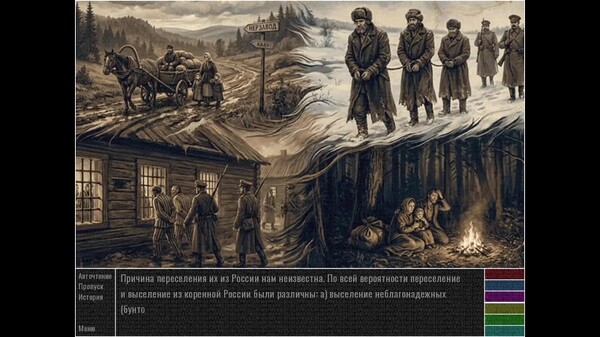
Visually, Deep Russian Depression embraces an intentionally unstable aesthetic blending anime-inspired character designs, pixel-art influences, AI-generated imagery, retro visual techniques, and surreal symbolic elements. The presentation constantly feels caught somewhere between sincerity and emotional breakdown. Some scenes appear visually beautiful in a melancholic way, while others intentionally feel strange, fragmented, or emotionally detached. This inconsistency is clearly deliberate and contributes to the dreamlike psychological atmosphere dominating much of the experience. The anime-inspired style initially feels unusual given the game’s heavy subject matter, but over time it becomes part of the project’s surreal emotional identity. The contrast between stylized visuals and brutally pessimistic writing creates a strange emotional dissonance that helps the game feel psychologically unstable in ways traditional visual novels rarely attempt.
The game also stands out because of its unusual anthology structure. Rather than existing as a completely fixed narrative, Deep Russian Depression functions partly as an evolving platform where both the developer and community creators can potentially contribute new stories and visual novel experiences. Steam Workshop support allows users to create their own scenarios and narratives using the game’s framework, transforming the project into something closer to a collaborative storytelling ecosystem than a single contained visual novel. This experimental structure gives the game an unpredictable quality because its future content depends heavily on community participation and ongoing development. The current release only contains a pilot chapter and foundational systems, making the project feel more like the beginning of a larger creative experiment than a completed narrative experience.
For players interested in experimental narrative games, philosophical visual novels, psychological horror, and emotionally oppressive storytelling, Deep Russian Depression offers something genuinely unusual within the indie scene. Its unfinished structure, inconsistent presentation, and emotionally exhausting pacing prevent it from becoming a fully realized masterpiece, but the atmosphere, writing, and raw sincerity behind the project still create an experience that feels hauntingly personal. The game ultimately succeeds less as a traditional visual novel and more as an interactive emotional document exploring hopelessness, alienation, and the crushing psychological weight of existing inside unstable social and emotional systems.
Rating: 6/10