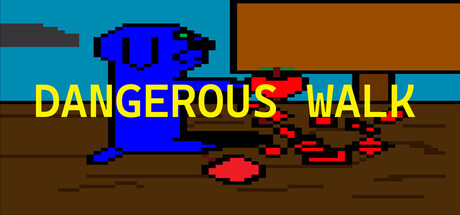
A platform game about a dog fled from a laboratory where he was turned blue. He escaped, but now he must go back there to find a hidden treasure. During the game, the dog must travel through different environments, flee from many enemies and face some challenges. There are Easter eggs and minigames.
Modeled estimate, not a reported figure. How we estimate →
Media

About
Take on the role of a dog who, as a puppy, was the victim of scientific experiments that extended his life but turned him blue. Years have passed since the dog managed to escape from the laboratory, and he now is trying to move on by traveling the world.
He learns from his dog friend, Frank, that the laboratory has now become an advanced robotics lab, and that a treasure is hidden there. So, the blue dog decides to face his fears and return to the lab to steal this mysterious treasure.
You must help him carry out this wild journey through a lab full of ferocious animals, deadly objects and plants, and
challenges to overcome.
The game includes 10+ platform levels decided in a retro 2D graphics, Easter eggs, hidden minigames (some in 3D), and more!
Info on credits are detailed in the game.
Trailer soundtrack: New York Cyberpunk - Synth Analogue Drums Bass Dance Retro Atmo Ambience Pad Drone
Cinematic Action Music Surround.wav by szegvari -- -- License: Creative Commons 0
Trailer sound effects: walking through snow 1.m4a by EpicAllay -- -- License: Creative Commons 0;
Early_morning_birds_03.mp3 by aladar -- -- License: Attribution 3.0
Other sound effects are from Pixabay.
Stats
All-time low is the lowest price we've recorded for this game since we started tracking it.
Languages: English
Reviews
The game is really fun and engaging. Some levels are pretty challenging, so you need to think it through and react quickly to get through them. It makes the whole experience more exciting. Overall, it's a cool game - definitely recommend!
This game is a great way to spend some free time. It's fun, but it gets quite challenging in the later levels. The story is fun to follow, and I like that the drawings are hand-drawn.
Dangerous Walk is a slow-burning indie horror game that relies heavily on atmosphere, vulnerability, and psychological tension rather than constant action or elaborate mechanics. Developed and published by Stray Dog Studios, the game places players inside dark and isolated environments where every step forward feels uncertain and dangerous. Instead of relying on nonstop jump scares or combat-heavy encounters, the experience builds fear through silence, environmental storytelling, and the uncomfortable sensation that something may be watching from the darkness. From the opening moments, the game establishes a bleak and oppressive tone that immediately separates it from more action-oriented horror titles. The gameplay centers around exploration and survival within unsettling locations filled with hidden threats and environmental hazards. Players spend most of their time cautiously navigating abandoned spaces, dim corridors, and eerie pathways while trying to understand what dangers might be waiting ahead. The pacing is deliberately slow, allowing tension to build naturally rather than constantly overwhelming players with scripted horror sequences. This approach creates a more psychological form of fear where uncertainty becomes more frightening than the actual threats themselves. The game often feels at its strongest during quiet moments when very little is happening because the atmosphere constantly suggests that something terrible could appear at any time. One of the most effective elements of Dangerous Walk is its use of atmosphere. The environments feel cold, empty, and deeply uncomfortable, creating a persistent sense of isolation throughout the experience. Lighting is used carefully to limit visibility and encourage paranoia, while environmental details help make each location feel abandoned and hostile. The game understands that horror becomes far more effective when players are left alone with their own imagination. Rather than showing every danger directly, it frequently allows tension to grow through suggestion and ambiguity. This restraint helps maintain suspense even during slower sections where the gameplay itself remains fairly simple. The visual presentation may not be technically advanced, but it succeeds because it prioritizes mood over realism. The dark environments, shadow-heavy design, and rough textures all contribute to the unsettling tone of the game. While some areas clearly reveal the limitations of the game’s indie budget, the overall art direction still manages to create a convincing sense of dread. The simplicity of the visuals occasionally works in the game’s favor because the lack of excessive detail allows players to focus more on atmosphere and tension. The world feels raw and uncomfortable in a way that suits the horror theme well. Sound design plays a major role in making the experience effective. Ambient noises, distant sounds, and unsettling environmental audio constantly create the impression that danger may be nearby even when nothing is visible. The soundtrack is used sparingly, which makes silence itself become part of the horror. Every creaking sound, distant noise, or sudden shift in atmosphere adds to the tension because players are never completely sure whether an actual threat is approaching or if the game is simply manipulating their expectations. This careful use of sound creates several moments where the fear feels genuine despite the game’s relatively minimalist structure. Another strength of Dangerous Walk is how committed it remains to maintaining vulnerability. Unlike many horror games that eventually empower players with strong weapons or combat systems, this game keeps players feeling exposed and fragile for most of the experience. The lack of control over dangerous situations helps preserve tension throughout the adventure because survival often depends more on caution and awareness than fighting back. This sense of helplessness reinforces the psychological horror elements and keeps the atmosphere oppressive from beginning to end. At the same time, the game’s minimalist design does create some weaknesses. The gameplay systems are fairly limited, and there are stretches where players may feel as though they are simply walking through dark environments without enough meaningful interaction. While the atmosphere remains strong, the lack of gameplay variety can make the experience feel repetitive during longer sessions. Players expecting deep puzzle mechanics, combat encounters, or more dynamic gameplay systems may eventually lose interest because the game focuses almost entirely on maintaining tension rather than evolving mechanically. The indie nature of the project is also noticeable in certain areas. Animations can feel stiff, some environmental sections lack variety, and a few scares rely more on sudden audio spikes than carefully constructed horror buildup. There are moments where the game’s ambition clearly exceeds its resources, especially when compared to more polished horror releases. However, despite these rough edges, the atmosphere remains compelling enough to keep the experience engaging for players who enjoy slower and more psychological horror experiences. What ultimately makes Dangerous Walk memorable is its dedication to creating fear through isolation and discomfort rather than spectacle. The game succeeds best when players fully immerse themselves in its oppressive atmosphere and allow the tension to build gradually over time. It may not offer the depth or polish of larger horror titles, but it captures the feeling of vulnerability remarkably well. The constant uncertainty about what lies ahead gives the experience a lingering sense of dread that stays effective throughout much of the adventure. In the end, Dangerous Walk is a focused atmospheric horror game that prioritizes mood, tension, and psychological discomfort above everything else. Its oppressive environments, strong sound design, and commitment to vulnerability create an unsettling experience that horror fans may find genuinely effective. While the limited gameplay mechanics and rough indie presentation prevent it from standing among the genre’s best, the game still succeeds as a memorable slow-paced horror experience for players who appreciate fear built through atmosphere rather than nonstop action. Rating: 5/10
Dangerous Walk continues to challenge the mind as I sit here wondering what on God's green earth I have to do to get past the bison on level six. If there are any Dangerous Walk experts out there reading the comments, please let me know how to defeat the bison. That stupid dirty animal is making me incredibly angry and my violent outbursts have begun to make me lose the respect of my friends and family. Please xxadonisxx, if you are reading this review please give me your advice for defeating the bison because I recognize that you are the GAME MASTER and only you can help me get to level seven. I really want to see what the future areas have to offer and I need help. I want you to help xxadonisxx, I am willing to give you my body for the bison-beating tech. Edit: I figured it out without you xxadonisxx, you are a faker and a bad gamer
Related
Related
Trends
Modeled estimate over time, reconstructed from Steam's monthly review histogram.
Momentum
Pace estimated from the game's recent review growth (our daily snapshots) at its own sales-per-review ratio — a momentum signal, not booked sales.
Related
| Glasses and Girls | $316 | 51 | 82% | $0.99 |
| Bongo Quest | $322 | 52 | 46% | $4.99 |
| Dances and Girls | $322 | 52 | 83% | $0.99 |
| Cosmic Journey PC Live Wallpaper | $336 | 52 | 71% | $0.99 |
| Forest and Girls | $340 | 55 | 82% | $0.99 |
| Work And Girls | $347 | 56 | 86% | $0.99 |
Related
| No Man's Sky | $636.2M | 412.8K | 85% | $59.99 |
| 7 Days to Die | $425.3M | 398.5K | 87% | $44.99 |
| Palworld | $415M | 463.2K | 94% | $29.99 |
| Mount & Blade II: Bannerlord | $309.8M | 294.6K | 88% | $49.99 |
| The Forest | $254.8M | 679.3K | 96% | $19.99 |
| Ready or Not | $238.1M | 340.1K | 78% | $49.99 |