Pick your fighter, then strap in for an action packed nostalgia trip beat-down in this fast-paced 2D retro fighting game!
Modeled estimate, not a reported figure. How we estimate →
Media

About


Genres
Stats
All-time low is the lowest price we've recorded for this game since we started tracking it.
Languages: English, Japanese
Reviews
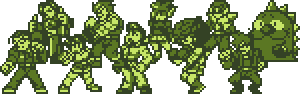
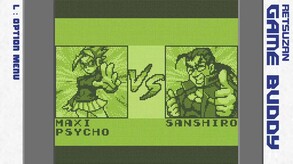
DANDAN Z is a deliberately throwback fighting game that embraces the limitations and personality of early handheld-era design while filtering it through modern indie sensibilities. Developed by RETSUZAN and published by Henteko Doujin, the game positions itself not as a competitive, feature-heavy fighter, but as a compact, character-driven experience meant to evoke the feeling of discovering a strange, forgotten fighting game cartridge from another timeline. Its identity is rooted in nostalgia, simplicity, and local play, and nearly every design decision reinforces that intent. The game’s roster consists of a modest but colorful selection of fighters, each built around exaggerated archetypes and playful backstories. These characters range from martial artists and delinquents to psychics and oddball combatants, giving the cast a quirky charm that fits the game’s retro tone. While the lore is light and mostly decorative, it adds personality and humor, helping the fighters feel distinct despite the game’s limited visual and mechanical scope. The focus is clearly on flavor and immediacy rather than deep narrative development. Mechanically, DANDAN Z strips fighting game controls down to their essentials. Attacks are built around simple inputs, with light and heavy strikes, throws, and special moves forming the backbone of combat. Combos are accessible and intentionally aggressive, encouraging players to stay on the offensive and chain attacks together to build momentum. A dedicated gauge rewards successful play and allows for powerful techniques, giving matches a rhythmic flow where bursts of intensity are followed by brief resets. This simplicity makes the game easy to pick up, especially for players unfamiliar with more complex fighters. That accessibility, however, comes with trade-offs. While controls are responsive and functional, the lack of deeper mechanics such as advanced cancels, defensive systems, or complex movement options limits long-term mastery. Matches tend to resolve quickly once a player gains momentum, which reinforces the arcade-like pacing but can also make outcomes feel abrupt. For casual play, this design works well, but players seeking layered strategy or competitive depth may find the systems too shallow to sustain extended engagement. The available modes reinforce the game’s old-school sensibilities. Story and arcade-style modes provide short bursts of single-player content, primarily serving as a way to familiarize players with the roster. A training option allows for practice, but the AI offers limited challenge once basic patterns are learned. The real strength of DANDAN Z lies in its local versus play, where two players share a screen and engage in fast, chaotic matches that emphasize fun over balance. The absence of online multiplayer is a significant limitation, effectively positioning the game as a couch-focused experience rather than a long-term competitive platform. Visually, the game fully commits to its retro aesthetic. Pixel art is chunky and stylized, with limited animation frames that mimic the feel of early handheld fighters. Characters are expressive despite their simplicity, and stages provide enough visual contrast to keep fights readable. The presentation feels intentionally constrained, not unfinished, reinforcing the sense that the game is recreating a specific era rather than modernizing it. This choice will strongly appeal to players who enjoy authentic retro presentation, while others may find it too sparse compared to contemporary indie fighters. Audio design follows a similar philosophy. Chiptune-inspired music and sharp, minimal sound effects give fights an arcade-like energy without overwhelming the player. Tracks are catchy but loop frequently, functioning more as mood-setters than dynamic compositions. Sound cues are clear and readable, which supports gameplay clarity, even if the overall audio package lacks variety. Community reception reflects the game’s narrow but defined appeal. Players who enjoy retro fighters and local multiplayer tend to praise its charm, accessible mechanics, and character personality. Criticism often centers on controller handling quirks, limited customization options, and the lack of online functionality, all of which reduce the game’s longevity for solo players. These shortcomings don’t undermine the core experience, but they do highlight how tightly scoped the project is. Ultimately, DANDAN Z succeeds by knowing exactly what it wants to be. It is not trying to rival modern competitive fighters or offer endless progression systems. Instead, it delivers a compact, nostalgic fighting game experience built around quick matches, expressive characters, and couch-friendly fun. For players who appreciate retro aesthetics, straightforward mechanics, and the social energy of local versus play, it offers a charming and distinctive experience. For those seeking depth, online competition, or long-term mastery, it may feel more like a novelty than a mainstay—but as a focused indie homage, it delivers its vision with confidence and personality. Rating: 6/10
Related
Related
Trends
Concurrent players on Steam, sampled daily since tracking started.
[h1]向日葵游戏评分【7/10】[/h1] 《DANDAN Z》是一款GB风格的格斗游戏,游戏对画面、音效和手感的还原度都不错,包含故事模式、2P对战、CPU对战和练习模式,十个可选角色,每个角色有三种必杀技和两种超必杀。 [h1]欢迎大家关注我们的鉴赏家:https://store.steampowered.com/curator/28763059[/h1] [h1]和你一起寻找好玩的游戏,快来关注我们吧~微信公众号“向日葵游戏”、官方微博“向日葵游戏评测”[/h1]
Retsuzan has a long history making games in 2d fighter maker, and now with Pixel Maker, they've created a whole series of gameboy styled titles. Dandan z is a neat little package full of fantastic characters thet you might recognize from retsuzana previous works. It's very well animated, the combat is responsive and they kake the nost out of 2 buttons and the small gameboy form factor.
I actually really like what I've messed with in this game, but both my qanba arcade stick and my ps4 controller cause both player 1 and player 2 to be controlled at the same time, and there's no options screen to assign controllers, so I'm kind of out of luck to both do training mode and play with a friend offline. It's really a shame because I think there's some really good ideas in this simple game and it'd be the easiest recommend if I could... like, play it.
同人格闘ゲーム伝説の作品、弾断打駄々DANZが令和の世にゲームボーイ風アレンジで復活!!! 拙者、初めて所持したコンシューマー格闘ゲームが熱闘サムライスピリッツだったこともあり、熱闘シリーズには非常に思い入れがあり、このゲームはそのゲームボーイらしさの再現度がまず素晴らしい!サウンド、グラフィック、挙動、余すところなくゲームボーイである。さらに、熱闘シリーズではなかなか難しかった自由度の高いコンボの組み立てができてしまうという現代的アレンジも加わり、さらにさらにオリジナル作品自体の魅力も合わさり(キャラクターも魅力的でストーリーも笑えます)、非常に味わい深い作品となっています。オススメ!
自分だけかも知れませんが、英語仕様になってて直せない場合はキーボードのF1押して設定メニューを出せば日本語にできます。ついでにキーボードやコントローラーの設定変更も可。 昔からここのゲーム好きで、いろいろ思い出しながら楽しませていただきました。
I want to make it clear that I am not a fighting game guy. I'm bad at them, but I do very much enjoy the spectacle of the genre and the visceral thrill of just beating the crap out of opponents. With that said, I love this! I can't be sure, but it very much seems like this game could actually run on GameBoy hardware, as opposed to just apeing the color scheme. The game is [i]very[/i] basic (I don't even think there's a difficulty select), but it does a lot with a little and it really captures the charm of GameBoy gaming. There are ten characters, and I was impressed to see that each one has a unique stance and attack style, making them very visually unique. While it would have been easy (and arguably understandable) to copy-paste a body and just put a new head on it to fill out the character roster without consuming too many limited resources, everybody has their own personality reflected in how they look and move. There aren't a ton of frames of animation, but they are used very effectively to make each character interesting (Afro Joe has hand-drawn afro jiggle physics!). It's a great roster, and while their motivations are paper-thin (each character gets an intro and an ending), that works to the game's advantage of being a bite-sized experience that doesn't require a heavy investment of time and patience to enjoy. This simplicity working to the game's benefit extends to the fighting mechanics. There are only 2 action buttons, and everyone's special moves can be done with quarter-circle (and occasionally shoryuken-like) attacks, and each has a couple of super moves that can be done like a special move but with both buttons at once. You can throw with a direction and both buttons, do basic combos by pressing "weak attack" consecutively, interrupt super moves before they hit, and chain combos into specials or supers. I [i]love[/i] that I don't have to memorize a ton of special move inputs (although they are accessible through a 3-page manual that can be accessed while playing) and that I can play any character and figure out their moves within a few minutes. I love that the mechanics offer just enough complexity to seem "deep" to a fighting game schlub like me. I love that I can play as Hikaru and go from a basic combo to a shoryuken and then pull off a mid-air super shoryuken (they're not called "shoryukens", understand, but I can't be bothered to look up the move's actual name) which feels awesome. It's simple, but it's fun BECAUSE it's simple. Oh, and the chiptunes (although limited) are great, too. As someone who loves GameBoy games and simple fighting games with fun characters, DANDAN Z is right up my alley. My only complaint is that there are no achievements. Recommended!
Starting this review with useful info. You can't reassign or change buttons. There's also issue where one controller controls both p1 and p2. Might make it hard to play offline. Also when I had my fightstick set to DPAD mode I couldn't do down left diagonal. weird controls stuff going on with this game. but otherwiese it's a fun fighting game for a fake GB system. I like it for my single player purposes. It's only two button for light and heavy attacks, but there's a bit of depth to this game.
For context, I'm more of a Capcom fighting game sort of player, and not a particularly good one. I also played way more Killer Instinct on Game Boy than that game deserved. I'd like to think I have some idea what that old handheld was capable of. With DANDAN Z, it is mostly there. The graphics are actually pretty good for something pretending to be like something that was on the old Nintendo handheld. And I like the sort of yanki and superhero late 1980s/early 1990s vibe. The controls feel pretty good. I'm grading on the curve of Game Boy, and even Game Boy Advanced, Fighting games. But I certainly played much stiffer fighters on those than DANDAN Z. But pulling off classic Capcom fighting moves worked pretty well here. While it is still early into my play time, each of the fighters seem to have a decent move set. My issue with the game is largely with the computer. With the one difficulty, the computer feels very same-y during each fight. Meaning that once a player finally cracks how to defeat the first dude, rest aren't going to nearly as much effort. This is bad. Both that the opening fight should be on the easier side, if the game doesn't have difficulty settings, to allow the player to figure out how to play. Sure, there is a practice mode, but I want to figure my combos while actually playing. Then adjust fighting tougher opponents. Practice is for perfecting how to pull of special moves, etc. But just as important, is that each fight ramps of the challenge. Which I never felt here. Once I formulated my cheese combo (the classic Ryu/Ken shoryuken spam) I basically waltzed through the game. Which brings me to another issue. Fortunately, DANDAN Z isn't overly aggressive or input reads as best as I can tell. But it is kinda tough to figure out what it wants to play more honest. There is a sort of block and counter-attack it likes. But blocking is so effective, it is tough to figure out if there are regular attack combos that can be relied upon. Which is why I leaned on my trusty spam special attacks. Which when block still powered up my ultimate attack meter to use if enemy character managed to get in close. So, really the biggest drawback of DANDAN Z is the computer opponent doesn't seem to allow for much exploration of the game. At least not in any fun way. The player either hits their head on a wall with the first enemy to develop a winning strategy for the rest, they spend tons of time in practice or play two player mode. Which two player mode, might be a lot of fun. But with the single difficulty that doesn't really ramp up the more wins the player gets, the game feels a little flat. What I really think the game could use to improve it is difficulty settings, random order of fights and each win makes the next fight a bit more difficult. And maybe throw in a non-playable boss at the end. I understand that is quite a bit of work for what is probably a one person game studio. But it also wouldn't be out of line for the games DANDAN Z is emulating. Otherwise, the game is sort of neat. If it were more expensive, I probably wouldn't recommend it. But if you are okay dropping the cast for maybe an hour's worth of pretend 20th century handheld entertainment, then DANDAN Z is okay.
+1 没成就 没中文 必须手柄
Related
| Space Pilgrim Academy: Year 1 | $1.4K | 132 | 89% | $0.69 |
| Robot Heroes | $1.4K | 69 | 77% | $0.99 |
| Sky Road | $1.4K | 92 | 49% | $0.99 |
| Freezeer | $1.4K | 186 | 70% | $0.49 |
| Bottom of the 9th | $1.4K | 59 | 85% | $0.99 |
| Herolike | $1.4K | 64 | 58% | $0.95 |