Broken Blade: Prelude, developed by DakeCraft and published by PsychoFlux Entertainment, is a tactical role-playing game that blends grid-based combat with a story-driven structure, presenting itself as an introductory chapter to a larger narrative. Set in a fantasy world shaped by conflict between different factions and ideologies, the game places players in a unique observational role, guiding events and characters rather than embodying a single traditional protagonist. This framing gives the experience a slightly detached perspective, emphasizing strategy and narrative progression over direct immersion.
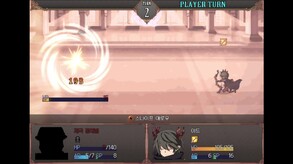
The gameplay centers on turn-based battles fought on grid-based maps, where positioning and careful planning determine success. Each unit has its own movement range, abilities, and role within the team, encouraging players to think strategically about how to approach each encounter. Terrain, attack range, and turn order all play a part in shaping outcomes, making each decision meaningful even within a relatively simple system. While the mechanics are familiar to fans of tactical RPGs, they are implemented in a way that feels stable and reliable, focusing on clarity rather than innovation. The game does not attempt to reinvent the genre, instead relying on well-established systems to deliver a consistent experience.
Character variety contributes to the gameplay by offering different tactical options. Each member of the party brings a distinct set of skills that can influence how battles unfold, from frontline fighters to support-oriented units. This encourages players to consider team composition and adapt their strategies depending on the situation. However, due to the game’s relatively short length, there is limited opportunity to fully explore these roles or develop more complex strategies. The system provides a foundation for depth, but it does not expand far enough to reach its full potential.
The narrative plays a central role in shaping the overall experience. The story unfolds through dialogue and scripted scenes between battles, gradually introducing the world and its conflicts. Themes of political tension, personal struggle, and shifting alliances are present, giving the setting a sense of depth. The perspective of guiding events rather than directly controlling a single hero allows the story to move between different viewpoints, offering glimpses into multiple sides of the conflict. However, as a prelude, the narrative feels more like a setup than a complete arc, introducing ideas that are not fully developed within the game’s limited scope.
Visually, Broken Blade: Prelude adopts a pixel-based style that reflects its indie origins. The environments and character sprites are functional and easy to read, ensuring that gameplay remains clear during battles. While the presentation lacks the detail and polish of higher-budget titles, it serves its purpose effectively. The interface is simple and intuitive, allowing players to navigate menus and manage units without confusion. Overall, the visual design prioritizes usability over aesthetic ambition, which aligns with the game’s focus on mechanics and storytelling.
Pacing is steady but constrained by the game’s short runtime. The progression from early battles to more complex encounters is handled smoothly, with new elements introduced at a manageable pace. However, just as the systems and story begin to gain momentum, the game reaches its conclusion. This brevity prevents both the gameplay and narrative from fully developing, leaving a sense that the experience is incomplete. It functions well as an introduction, but it lacks the depth and expansion needed to stand on its own as a fully realized title.
Replayability is limited, as the game follows a linear structure with little variation between playthroughs. Once the story has been completed, there are few incentives to revisit it beyond experimenting with different strategies in combat. The absence of branching paths or alternate outcomes reinforces its role as a single, contained experience rather than one designed for repeated play.
In the end, Broken Blade: Prelude offers a solid but modest tactical RPG experience that succeeds in laying the groundwork for a larger story. Its strengths lie in its clear combat mechanics and its attempt to weave narrative elements into gameplay, creating a cohesive if somewhat restrained experience. However, its limited scope, lack of mechanical innovation, and short length prevent it from leaving a stronger impression. It feels like the beginning of something more substantial, hinting at potential that is not fully realized within this installment.
Rating: 6/10