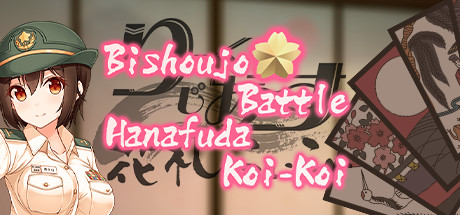
Bishoujo Battle Hanafuda Koi-Koi is a niche digital adaptation of a traditional Japanese card game that leans heavily into anime-style presentation while remaining largely faithful to the classic mechanics of hanafuda. Developed and published by Zoo Corporation, the game positions itself at the intersection of cultural tradition and modern fan-service-oriented design. Rather than attempting to modernize the rules or radically rework gameplay, it focuses on reframing a centuries-old card game through a stylized, character-driven lens, appealing to players who enjoy both casual card strategy and anime aesthetics.
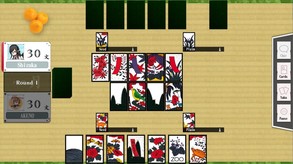
At its core, Bishoujo Battle Hanafuda Koi-Koi revolves around the standard rules of Koi-Koi, the most popular variant of hanafuda. Matches are one-on-one, turn-based affairs where players attempt to form scoring combinations known as yaku by matching cards of the same month. Each successful yaku introduces the central risk-reward decision of the game: whether to stop and score immediately, or call “koi-koi” and continue the round in hopes of earning additional points. This tension between greed and caution defines the strategic heart of the experience, and the digital format handles card recognition and scoring automatically, allowing players to focus on decision-making rather than memorization.
For players unfamiliar with hanafuda, the game includes tutorials and visual indicators that make the learning curve manageable. The interface clearly highlights valid matches and potential yaku, reducing the intimidation factor of a game that can otherwise feel opaque to newcomers. While this automation lowers the skill barrier, it also means experienced players may find the mechanical depth limited to the inherent complexity of Koi-Koi itself rather than any additional systems layered on top. The gameplay remains authentic, but largely unchanged from its real-world counterpart.
Where Bishoujo Battle Hanafuda Koi-Koi attempts to differentiate itself is in its presentation and framing. Matches are structured as “battles” against a roster of anime-style female characters, each with distinct visual designs and light personality flavoring. This framing gives the single-player mode a loose sense of progression, as players advance from one opponent to the next. However, the narrative elements remain minimal, serving more as aesthetic dressing than meaningful storytelling. The characters do not significantly alter gameplay, and their presence is primarily visual rather than mechanical.
The art direction is unapologetically focused on fan service, with suggestive character designs and an overall tone that contrasts sharply with the quiet elegance often associated with traditional hanafuda imagery. For some players, this stylization adds charm and novelty, making repeated matches feel more engaging. For others, it may feel disconnected from the refined simplicity of the card game itself, creating a mismatch between theme and mechanics. This stylistic choice largely defines the game’s appeal and also explains its polarized reception.
In addition to single-player matches, the game includes online multiplayer, allowing players to test their skills against others. This mode adds replay value and introduces a more competitive dynamic, but its effectiveness depends heavily on player population. With a relatively small community, finding matches can be inconsistent, limiting the long-term viability of online play for those who prefer human opponents over AI.
From a technical standpoint, the game is functional and stable, with straightforward menus and smooth turn flow. Animations are modest, focusing on clarity rather than spectacle, and performance issues are minimal. The overall package feels more like a digital tabletop adaptation than a fully fleshed-out modern card game, which aligns with its casual positioning.
Ultimately, Bishoujo Battle Hanafuda Koi-Koi is a very specific kind of product. It neither reinvents hanafuda nor deepens it with new strategic layers, instead offering a faithful Koi-Koi experience wrapped in anime-inspired presentation. Players who appreciate traditional card games and enjoy bishoujo aesthetics may find it relaxing and charming in short sessions. Those seeking deep progression systems, narrative depth, or innovative mechanics may find the experience shallow once the novelty wears off. As a result, the game works best as a casual, visually stylized way to enjoy a classic card game rather than as a robust competitive or strategic centerpiece.
Rating: 6/10