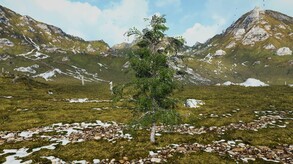
The main characters of modern games can be very different. Brave knights, brilliant scientists or superheroes saving entire worlds. This game offers you a more unusual experience. Here you can become a Birch.
Modeled estimate, not a reported figure. How we estimate →
About
Stats
All-time low is the lowest price we've recorded for this game since we started tracking it.
Languages: English, Russian
Engagement
Hours played at review time, across 41 reviews with recorded playtime.
Reviews
Themes across 41 recent reviews and how positive each mention is. A keyword signal, not full sentiment analysis.
positive critical· bar length = how often the theme comes up
Reviews
Birch Simulator, developed and published by Performance Artist, is an intentionally minimal and unconventional experience that quietly challenges the very idea of what a “game” is supposed to be. Rather than offering objectives, progression systems, or any form of traditional challenge, it presents a simple premise: you are a birch tree, placed within a natural environment, and your role is to exist. That’s not a metaphor or a narrative twist—it is the entirety of the concept, and the game commits to it fully. From the outset, it becomes clear that Birch Simulator is not designed for active engagement in the usual sense. There are no missions to complete, no enemies to defeat, and no skills to master. Instead, the experience revolves around presence and observation. Players can shift their position slightly within the environment and choose different locations or variations of trees, but these interactions are subtle and secondary. The real focus lies in the atmosphere: the sound of wind passing through leaves, ambient environmental noise, and the quiet stillness of the surrounding landscape. It invites players to slow down in a way that few games attempt. Visually, the game adopts a modest 3D style that prioritizes mood over realism. The environments are not densely detailed, but they are carefully composed to evoke calm and solitude. Whether standing in a quiet forest, a misty swamp, or a snowy clearing, each setting feels intentionally subdued. The lack of visual clutter reinforces the sense of stillness, allowing players to focus on the environment rather than interact with it. It’s a design choice that aligns perfectly with the game’s philosophy, even if it means sacrificing visual spectacle. What makes Birch Simulator particularly interesting is how it reframes inactivity as the central mechanic. In most games, engagement is driven by action—movement, decision-making, or progression. Here, the absence of those elements becomes the experience itself. The game encourages a kind of passive interaction, where simply being present in the world is enough. For some players, this can feel meditative, almost like a digital form of mindfulness. For others, it may come across as empty or lacking purpose, especially if they approach it expecting traditional gameplay. The audio design plays a significant role in supporting this atmosphere. Ambient sounds are subtle but effective, creating a sense of immersion without overwhelming the player. There is no dramatic soundtrack or dynamic audio cues to guide emotion; instead, the soundscape remains consistent and understated. This restraint helps maintain the game’s tranquil tone, reinforcing its identity as a space for quiet observation rather than stimulation. However, the same qualities that make Birch Simulator unique also limit its appeal. Without goals, progression, or evolving mechanics, there is little to sustain long-term engagement. Once players have experienced the different environments and understood the core concept, there is not much left to discover. The game does not build upon its initial idea or introduce new layers over time, which can make it feel more like a one-time experience than something to return to repeatedly. That said, its value lies less in longevity and more in the experience it provides in the moment. It offers a rare kind of digital space—one that doesn’t demand attention or reward efficiency, but instead allows players to simply exist without pressure. In a medium often defined by constant activity and achievement, this approach feels almost countercultural. Ultimately, Birch Simulator is best understood as an interactive art piece rather than a traditional game. It succeeds in creating a calm, reflective atmosphere and in committing fully to its minimalist vision. Whether that experience resonates will depend entirely on what the player is looking for. Those open to its slow, contemplative nature may find it quietly memorable, while others may struggle to connect with its lack of structure. Rating: 7/10
not worth it or a tree that runs around and thats it
best of the best
4/5 Проникся атмосферой настолько, что пустил слезу и ушел в Русский-народный запой, под песню Любе о березках... Из минусов: Мало нарядов. Где кокошник? Где лапти? Требуем кооператив, где можно держаться веточками со своей половинкой.
пашел я ♥♥♥♥♥
Not enough diversity in tree types
this game is frickin awesome
ИГРА ТОП, стоит каждого рубля, жаль нету реалистичного режима где не звука не шевелится и экран черный
The landscapes look kinda nice and the music is kinda nice, but there's basically nothing to do except walking around
ohhh birch simulator, Birch birch birch Great game, yet i will refund it. I am not worthy and the skill dif is too great. maybe one day i can become birch.
Related
Related
Trends
Modeled estimate over time, reconstructed from Steam's monthly review histogram.
Audience
Estimated from the language of this game's reviews — a proxy for where players are, not official Steam demographics.
Related
| Tell Me Everything | $1.4K | 72 | 61% | $0.99 |
| Distorted Reality | $1.4K | 72 | 21% | $4.99 |
| Neko Hacker Plus | $1.4K | 64 | 70% | $0.89 |
| King Of Water | $1.4K | 52 | 94% | $0.99 |
| Pirates Girls | $1.4K | 115 | 79% | $0.99 |
| Insane Decay of Mind: The Labyrinth | $1.4K | 71 | 56% | $0.89 |