Ballads at Midnight
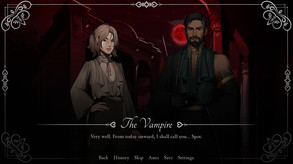
When a sarcastic bard is arrested and exiled to an abandoned castle, she expected to be at the mercy of a hungry, blood-thirsty vampire. She soon discovers that the vampire, Lucius, is not starving: he is gravely bored. She may just survive on borrowed time, one ballad each midnight.
Estimated lifetime revenue
Free-to-play
Revenue comes from in-game items and microtransactions, which our price-based model doesn't estimate. The player count below is how many people own it, not what they spent.
Est. players
9.8K
people who own it
Reviews
484
Review score
95%
9.5/10
Concurrent players
0
read Sep 18, 2026, 15:00 UTC
Followers
About
About the game
When a sarcastic bard is arrested and exiled to an abandoned castle, she expected to be at the mercy of a hungry, blood-thirsty vampire. She soon discovers that the vampire, Lucius, is not starving: he is gravely bored. She may just survive on borrowed time, one ballad each midnight.

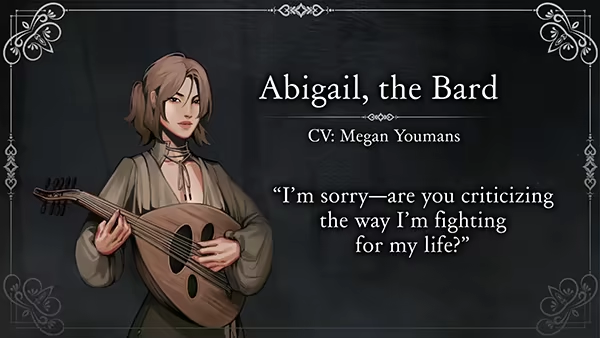
(The name can be changed)
A well-traveled and gifted bard. Abigail is quick-witted and quick to act, though not necessarily in that order. Sarcasm coats her words like calluses, formed through years of undergoing difficult journeys and indulging difficult people. While she has a strong sense of insight and genuine interest in others, she has a dogged impulse of announcing her observations. This is seldom appreciated, and at worst has led to face grave consequences.
Still, no one can deny that she has a flair and talent for entertainment. Not even a centuries-old vampire.
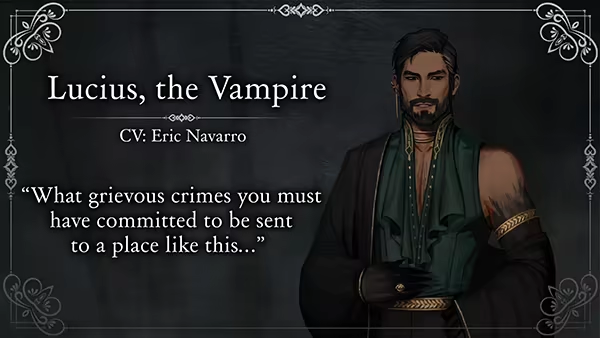
(Love interest)
One's first impression of Lucius is that he's menacing at worst, and witheringly unyielding at best. However, his coarse exterior is a thin veil for his impressively dry wit - which he's more than happy to reveal if he thinks his sense of humor will be heard. It's rather hard to share one's wit when your guests generally scream and run at the sight of you though.

♦ Enemies to lovers, found family, bonding through shared trauma, and even more of your favorite relationship tropes!
♦ A dark fantasy romance that seamlessly blends lighthearted moments and hidden depths, with believable dialogue and an abundance of banter. (Boy, they love to argue. ;p )
♦ Beautiful sprite and original music
♦ Three clearly-marked endings - abandon him as early as possible, remain in eternal bliss or discover gruesome secrets about the world around you.
♦ Flavor line choices: be an unabashed flirt or have a razor sharp tongue. The choice is yours, no consequences.
♦ More than 42 000 words (around 3-4h per playthrough)
♦ Partial voice acting & two original bard songs!
Ballads at Midnight is rated T for suggestive material, strong language, alcohol use, and allusions to trauma, child abuse, and fantasy violence.

Ayael (Director, UI designer & programmer, scripter) - Arrapso (Sprite, background artist), Wudgeous (Lead writer, narrative designer), Notafish (Writer), Jeneara (Editor), Rowanty (scripter), Eliana Zebro (Audio & voice director), Shar Joyner (composer), Megan Youmans (Voice actor - MC), Eric Navarro (Voice actor - Lucius), Kimi (Trailer creator)
This visual novel was created in one month during the NaNoReNo 2022 jam.
(The name can be changed)
A well-traveled and gifted bard. Abigail is quick-witted and quick to act, though not necessarily in that order. Sarcasm coats her words like calluses, formed through years of undergoing difficult journeys and indulging difficult people. While she has a strong sense of insight and genuine interest in others, she has a dogged impulse of announcing her observations. This is seldom appreciated, and at worst has led to face grave consequences.
Still, no one can deny that she has a flair and talent for entertainment. Not even a centuries-old vampire.
(Love interest)
One's first impression of Lucius is that he's menacing at worst, and witheringly unyielding at best. However, his coarse exterior is a thin veil for his impressively dry wit - which he's more than happy to reveal if he thinks his sense of humor will be heard. It's rather hard to share one's wit when your guests generally scream and run at the sight of you though.
♦ Enemies to lovers, found family, bonding through shared trauma, and even more of your favorite relationship tropes!
♦ A dark fantasy romance that seamlessly blends lighthearted moments and hidden depths, with believable dialogue and an abundance of banter. (Boy, they love to argue. ;p )
♦ Beautiful sprite and original music
♦ Three clearly-marked endings - abandon him as early as possible, remain in eternal bliss or discover gruesome secrets about the world around you.
♦ Flavor line choices: be an unabashed flirt or have a razor sharp tongue. The choice is yours, no consequences.
♦ More than 42 000 words (around 3-4h per playthrough)
♦ Partial voice acting & two original bard songs!
Ballads at Midnight is rated T for suggestive material, strong language, alcohol use, and allusions to trauma, child abuse, and fantasy violence.
Ayael (Director, UI designer & programmer, scripter) - Arrapso (Sprite, background artist), Wudgeous (Lead writer, narrative designer), Notafish (Writer), Jeneara (Editor), Rowanty (scripter), Eliana Zebro (Audio & voice director), Shar Joyner (composer), Megan Youmans (Voice actor - MC), Eric Navarro (Voice actor - Lucius), Kimi (Trailer creator)
This visual novel was created in one month during the NaNoReNo 2022 jam.