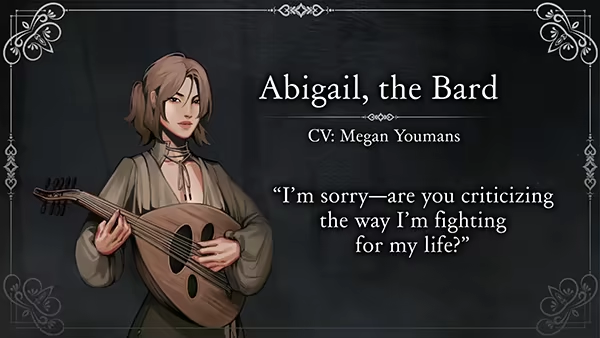
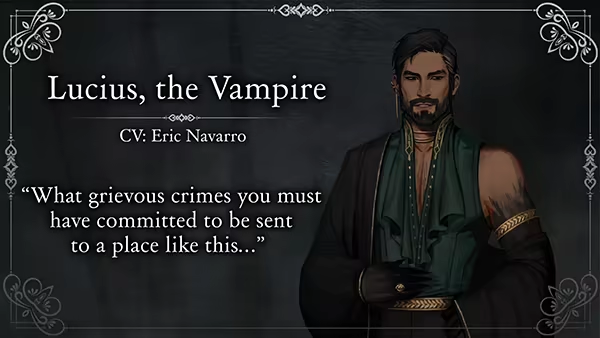
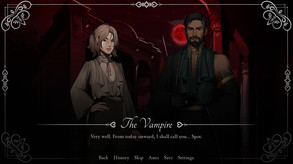
When a sarcastic bard is arrested and exiled to an abandoned castle, she expected to be at the mercy of a hungry, blood-thirsty vampire. She soon discovers that the vampire, Lucius, is not starving: he is gravely bored. She may just survive on borrowed time, one ballad each midnight.

Revenue comes from in-game items and microtransactions, which our price-based model doesn't estimate. Copies below reflect the player base, not paid sales.
Media

About


Genres
Stats
Languages: English**languages with full audio support
Engagement
Reviews
Themes across 40 recent reviews and how positive each mention is. A keyword signal, not full sentiment analysis.
Reviews
The writing is super well done! I loved the bits of world building and of course the interactions between the two main characters is fantastic and fills me with so much joy. Loved every minute of it!
Fun story, great lore, and very satisfying to play with all the different options.
Ballads at Midnight is a gothic fantasy visual novel that combines romance, humor, and emotional storytelling into a surprisingly heartfelt experience. Developed by Synstoria and published by Abiding Bridge, the game centers on the relationship between a wandering bard and an isolated vampire living within a crumbling castle. While the premise initially sounds familiar, the game quickly distinguishes itself through strong writing, engaging dialogue, and a sincere emotional core that gives the story far more depth than expected from its modest scope. Rather than relying entirely on dramatic twists or fantasy spectacle, it focuses on character interaction and gradual emotional development, creating an experience that feels intimate and memorable. The story begins with Abigail, a sarcastic and outspoken bard who finds herself exiled to a remote castle after a series of unfortunate events. Expecting to meet a terrifying monster, she instead encounters Lucius, a centuries-old vampire whose exhaustion and loneliness are far more noticeable than his supernatural power. This inversion of expectations immediately establishes the game’s tone. Instead of becoming a straightforward horror narrative, the story evolves into a slow-burning romance built around nightly conversations, emotional honesty, and reluctant companionship. The unusual setup allows the game to balance comedy and melancholy extremely well. The strongest aspect of Ballads at Midnight is unquestionably its writing. The dialogue feels natural, witty, and emotionally grounded throughout the entire experience. Abigail and Lucius have excellent chemistry because their personalities constantly clash in entertaining ways. Abigail’s impulsive behavior and sharp sense of humor contrast perfectly with Lucius’ reserved and cynical nature. Their conversations are filled with playful arguments, awkward emotional moments, and subtle vulnerability that gradually deepen their relationship. The game understands that believable romance depends on emotional progression, and it carefully develops trust between the characters rather than rushing toward dramatic confessions. What makes the relationship especially compelling is how both characters are clearly carrying emotional burdens. Beneath the humor and banter lies a story about loneliness, regret, and the difficulty of allowing another person into one’s life. Lucius struggles with centuries of emotional isolation, while Abigail hides her own fears and insecurities beneath sarcasm and confidence. The game handles these themes with surprising maturity, allowing emotional scenes to emerge naturally from the growing connection between the two leads. As a result, even quiet conversations feel meaningful because they slowly reveal hidden layers of both characters. The atmosphere also deserves significant praise. The abandoned castle setting creates a strong gothic fantasy mood without becoming excessively dark or oppressive. Candlelit hallways, quiet nighttime conversations, and the constant sense of isolation give the game a melancholic charm that perfectly complements the romance. The environments may not be visually extravagant, but they are effective at establishing tone and emotional intimacy. The castle feels less like a threatening prison and more like a lonely refuge occupied by two emotionally damaged individuals slowly learning to understand each other. The visual presentation is simple but appealing. Character sprites are expressive and help convey emotion effectively during conversations, while the backgrounds support the fantasy atmosphere without distracting from the writing. Although the game lacks the elaborate CG artwork found in larger visual novels, the art direction still maintains a consistent and attractive style. The focus clearly remains on dialogue and emotional interaction rather than visual spectacle, and in that regard the game succeeds. Music plays an important role throughout the experience as well. Since Abigail is a bard, songs naturally become part of the storytelling itself. The soundtrack helps strengthen both the fantasy atmosphere and the emotional themes of the narrative. Softer musical moments add warmth to emotional scenes, while quieter ambient tracks reinforce the loneliness of the castle setting. Partial voice acting further enhances immersion and gives important moments additional personality, even if the game does not feature full voice performances for every line. Another strength is the game’s approachable structure. Dialogue choices allow players to shape Abigail’s responses, whether through humor, flirtation, emotional openness, or defiance. While the choices do not create massive branching consequences, they still make the player feel involved in the evolving relationship. Multiple endings add replay value, encouraging players to revisit conversations and explore different emotional outcomes without becoming overly complicated. Despite its many strengths, Ballads at Midnight is limited somewhat by its relatively short runtime. The game can be completed in only a few hours, and certain aspects of the worldbuilding feel underdeveloped as a result. Lucius’ past, the surrounding fantasy world, and some background lore are intriguing enough that players may wish the story explored them more deeply. The concise length keeps the pacing focused, but it also leaves the impression that there was room for an even richer narrative. The game’s limited interactivity may also disappoint players searching for gameplay-heavy experiences. Ballads at Midnight is primarily a reading-focused visual novel, and most of its appeal comes from the writing and character chemistry rather than mechanical depth. Players who prefer puzzle-solving, exploration, or complex branching systems may find the experience too straightforward. However, those invested in narrative-driven romance games will likely appreciate the focused approach. Pacing occasionally slows during the middle portions because much of the game revolves around repeated nightly conversations between the two protagonists. While the dialogue remains entertaining, the structure can sometimes feel slightly repetitive. Fortunately, the emotional progression between Abigail and Lucius continues to evolve enough to maintain interest throughout the story. What ultimately makes Ballads at Midnight stand out is its sincerity. The game fully embraces its romantic and emotional themes without relying on irony or exaggerated melodrama. It allows its characters to be vulnerable, flawed, and emotionally complicated in ways that feel believable. The romance works because it develops through trust, shared loneliness, and mutual understanding rather than shallow fantasy tropes. The enemies-to-lovers dynamic is handled with particular care. Abigail and Lucius do not immediately become close, and their relationship evolves slowly through conversation and emotional support. Watching two guarded individuals gradually lower their defenses becomes genuinely rewarding by the final portions of the story. The emotional payoff feels earned because the game invests so much time in building believable chemistry between its leads. Ballads at Midnight may be a smaller indie visual novel, but it delivers a surprisingly affecting experience through strong character writing and atmospheric storytelling. Its gothic fantasy setting, memorable dialogue, emotional sincerity, and engaging romance help it leave a lasting impression despite its short runtime and limited scope. For players who enjoy character-driven visual novels focused on emotional connection rather than spectacle, it offers a heartfelt and thoroughly charming experience. Rating: 9/10
Related
Related
Trends
Concurrent players on Steam, sampled daily since tracking started.
Hours played at review time, across 40 reviews with recorded playtime.
positive critical· bar length = how often the theme comes up
Музыкальная нарративная игра с элементами визуальной новеллы: игрок погружается в истории, сопровождаемые мелодиями и балладами, принимает решения, влияющие на развитие сюжета, и исследует атмосферный мир через призму музыки и повествования. Плюсы: атмосферное звуковое сопровождение — мелодии и баллады создают особое настроение и усиливают эмоциональное восприятие сюжета; глубокий нарратив — истории затрагивают сложные темы, вызывают отклик и побуждают задуматься; эстетичный визуальный стиль — минималистичная, но выразительная графика гармонично сочетается с музыкальной составляющей. Минусы: пассивный геймплей — большая часть времени уходит на чтение и прослушивание, активных действий мало; ограниченная интерактивность — влияние решений на сюжет порой неочевидно, а вариантов выбора немного; узкая целевая аудитория — формат визуальной новеллы с акцентом на музыку и текст может не заинтересовать любителей динамичных игр. Итог: подойдёт поклонникам визуальных новелл, медитативных опытов и музыкальных нарративов — впечатляет атмосферой, эмоциональными историями и гармоничным сочетанием звука и изображения, но может разочаровать недостатком активного геймплея, скромной интерактивностью и специфичным форматом, не рассчитанным на широкую аудиторию.
I genuinely liked it.
Short but free, looks good and is written okay.
I loved this so much :) The plot was actually interesting! I did turn off the voice acting, though, as that's the most lackluster part of the game.
[b]Note: The playtime is not accurate, as I played the game on my Steam deck while disconnected from WiFi. It took me about three hours to complete the game, including all endings and achievements.[/b] This was a really unexpected gem of a game for me. I didn't expect it to be bad by any means, but this game exceeded my expectations in terms of my connection to the characters, the great relationship and development they go through, and the fun variety of different endings [spoiler]okay mutual corruption ending!!![/spoiler]. I think it can be very difficult to write a satisfying and believable romance in a shorter playtime, but the writers did an excellent job of it here. The pacing at the very end (from confession to uncertainty to all-in romance) felt a bit wonky, but I can forgive it given how much I was rooting for the relationship and the fact that this game was made in a month to stick to a game jam deadline. I also really liked the mystery, and the speed at which it's revealed alongside the romance. I think that a story with an element of mystery is very ambitious, and even more so to balance it with a romance, but it's done very well - there are enough clues and references dropped here and there to hold your attention, but not quite so many as to make the solution easily guessable. I was kept surprised and entertained by it the whole time - and I also liked the characters' realistic confrontation of the reveal, which was not all sunshine and rainbows. The art, from sprites to backgrounds to UI, are all absolutely gorgeous and complementary to one another as you can see by the screenshots. I would have really loved to see a CG or two, but again, jam game - it's forgiveable, especially as there art that is here is lovely. Some small things that don't need a lot of discussion, but which I loved: -The little easter eggs from putting certain names for the MC! They give you actually dialogue differneces which is super fun lol. -I really appreciate that both MC and Lucius are bi. This is by no means a requirement for me to check out a game, but I do love this sort of inclusivity, and I think it's fairly rare to find straight romance stories with bi characters as opposed to gay romance stories with bi characters. Some small, nitpicky things that didn't detract from my experience enough to spend long on: -At the very end of one route, there are a bunch of typos and grammatical errors back-to-back in a way that's a little jarring. It's not so bad that I can't understand it, nor is it an egregious amount of errors throughout the entire text, but the fact that they're clustered all together as if the editor gave up or missed the ending makes it stand out. -The voice acting that's there is nice, but it's only in a few short scenes and songs, and it didn't add overly much to my experience. I don't think it's bad by any means, but if you're hoping for a voice acting experience that richly contributes to making the characters come alive, you won't find it with this game. Again, I don't think this is an overall negative, but just something to keep in mind if you were particularly drawn to this game for the voice acting feature. Otherwise, I found this to be a really polished, complete, and refreshing VN experience. After playing this game, I checked out the developers and discovered that they also have a ghost romance VN available on Steam which I will DEFINITELY be checking out when I can - I loved these story, and I love ghost romance despite how rare it is compared to vampire or werewolf romance haha.
Both funny, sweet and sad moments with a hot vampire. 10/10
Highly anticipated and met expectations.
Audience
Estimated from the language of this game's reviews — a proxy for where players are, not official Steam demographics.