🗡️🏰 Assassin’s Creed Review 🏰🗡️
🕹 Length: 15–20 hours (main story) | More with side activities and collectibles
💰 Price vs. Content: Good value, although the repetitive structure can make the campaign feel longer than it actually is
⚙ Optimization: Mostly stable with some PC-specific issues; limiting the game to 60 FPS is recommended
🎮 Difficulty: Moderate; combat is accessible, while stealth requires more patience
🎮 Gameplay
The original Assassin’s Creed is one of those games where you can clearly see the great idea behind the series, but also see why Ubisoft had to make so many changes for the sequels.
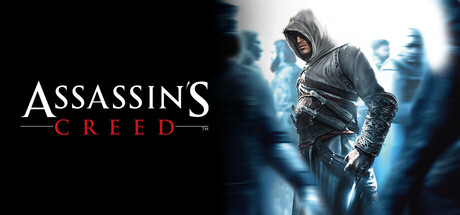
You play as Altaïr Ibn-La'Ahad, a highly skilled Assassin who is stripped of his rank after failing an important mission. To regain his status, he is sent to investigate and assassinate several targets across the Holy Land during the Third Crusade.
The basic gameplay loop is very straightforward:
Go to a Bureau → climb viewpoints → unlock investigation missions → complete investigations → assassinate your target → return to the Bureau.
And then... repeat.
The investigation system revolves around three main types of missions:
🗣️ Eavesdropping – Listen to conversations without being detected.
👊 Interrogation – Follow and beat up a target until they reveal information.
🤏 Pickpocketing – Steal important information from a target.
After completing enough investigations, you receive the information necessary to carry out the assassination.
The problem is that this structure barely changes throughout the game.
You climb a tower, unlock the same types of activities, complete them, and then assassinate someone.
It works initially, but after several targets, the repetition becomes extremely noticeable.
🏙️ The Cities
The game takes place across several major cities, including:
✔ Damascus
✔ Jerusalem
✔ Acre
The cities themselves are impressive for their time, especially considering how ambitious the game was in 2007.
However, there's a problem: they can feel very similar to one another.
The same rooftops, streets, towers, guards, civilians and investigation activities are repeated throughout the different locations. The architecture changes, but the gameplay experience doesn't change nearly enough.
The cities are fun to explore, but the lack of variety contributes heavily to the repetitive feeling.
🗡️ Assassinations & Progression
The actual assassination missions are where Assassin's Creed becomes much more interesting.
Each target has their own location, personality, and situation, and you're given some freedom in how you approach them.
You can:
✔ Sneak through rooftops
✔ Blend into crowds
✔ Use scholars
✔ Pickpocket guards
✔ Distract enemies
✔ Fight your way out
✔ Perform stealth assassinations
And after each successful assassination, Altaïr gradually becomes stronger.
As you progress, you unlock new abilities and equipment, increase your health, and gain access to additional weapons and combat techniques.
The progression isn't particularly deep by modern standards, but it gives you a nice feeling of becoming a more capable Assassin.
⚔️ Combat
The combat system is very different from later Assassin's Creed games.
It's heavily based around counterattacks, timing and waiting for enemies to make a move.
Once you understand the system, Altaïr can become extremely powerful, but early encounters can still be entertaining because you're encouraged to defend, counter and react instead of simply attacking constantly.
It definitely shows its age, though.
🏛️ Templars & Story
The main story is actually one of the game's stronger aspects.
The conflict between the Assassins and Templars, the political situation surrounding the Crusades, and the mystery behind Altaïr's targets become increasingly interesting as you progress.
The first half can feel like:
"Okay... I'm doing the same thing again."
But towards the later stages, the story becomes much more engaging.
The targets, the Templars, Al Mualim, and the revelations surrounding the Assassins make the final portion much more memorable.
The modern-day sections with Desmond Miles also establish a storyline that would become much more important in the later games.
🎯 Side Activities
There are several optional activities throughout the cities, including:
✔ Saving citizens
✔ Collecting flags
✔ Hunting Templars
✔ Completing viewpoint towers
They give you additional things to do while exploring, but honestly, they're not particularly impressive.
Saving citizens especially becomes repetitive because the encounters are largely variations of the same situations.
The collectibles can be fun if you're a completionist, but they don't add much to the experience itself.
💻 Technical Aspects
🎨 Graphics: Surprisingly impressive for a 2007 game. The cities, crowds, architecture and environments still have a strong visual identity.
🎶 Sound: Good soundtrack and solid environmental audio, although the voice acting and dialogue can occasionally feel dated.
🐞 Bugs: The PC version can have some annoying issues, especially on modern hardware. Thankfully, there are several Steam community guides that provide fixes and workarounds for common problems.
One thing I'd strongly recommend is limiting the game to 60 FPS, as running it at higher framerates can cause various gameplay or physics issues.
⚠️ Another annoyance is the subtitle situation. At least in the PC version I played, I couldn't find a proper way to enable subtitles, which is pretty disappointing for a story-heavy game.
✅ The Good:
✔ Excellent concept that established the Assassin's Creed formula
✔ Great atmosphere and historical settings
✔ Interesting Assassin vs. Templar storyline
✔ Beautiful cities for its time
✔ Fun parkour and climbing mechanics
✔ Assassinations become increasingly interesting
✔ Altaïr's progression feels rewarding
✔ Strong final portion of the campaign
✔ Historically inspired world feels unique
❌ The Bad:
✖ Extremely repetitive mission structure
✖ Same three investigation types repeated constantly
✖ Cities feel too similar to each other
✖ Side activities aren't particularly interesting
✖ Combat becomes easy once mastered
✖ PC version requires some community fixes
✖ Recommended to play at 60 FPS to avoid issues
✖ Subtitle options are lacking / difficult to enable
⭐ Final Verdict
Assassin's Creed is a fascinating game to revisit because you can see both the brilliance of the original concept and the problems that Ubisoft would fix in the sequels.
The idea of exploring historical cities, climbing towers, gathering information and carefully assassinating important targets was incredibly fresh at the time.
The problem is that the game takes that formula and repeats it way too many times.
The first few assassinations are great. Eventually, you realize you're doing the same investigation missions, climbing the same towers, returning to the Bureau and repeating the same process again.
Fortunately, the story becomes much more interesting toward the end, especially when the Templar conspiracy and the mysteries surrounding Altaïr and Al Mualim start coming together.
It's also worth remembering just how ambitious this game was for 2007. The parkour, crowds, cities and overall concept were genuinely impressive.
It may not have aged perfectly, but it's still an extremely important game and the foundation for one of gaming's biggest franchises.
👉 Rating: 8/10 🗡️🏰🦅