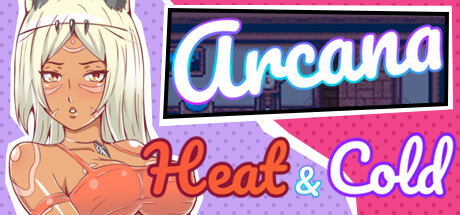
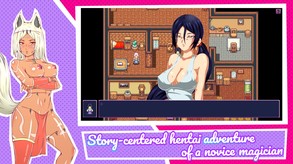
The misfortunes of the unskilled magician who just wanted to make some money and not get into any troubles.
Modeled estimate, not a reported figure. How we estimate →
Media

About


Stats
All-time low is the lowest price we've recorded for this game since we started tracking it.
Languages: English, Russian, Polish
Engagement
Hours played at review time, across 40 reviews with recorded playtime.
Reviews
Themes across 40 recent reviews and how positive each mention is. A keyword signal, not full sentiment analysis.
positive critical· bar length = how often the theme comes up
Reviews
почему он а не я...
В целом поиграть можно.
Довольно та ки забавная и интересная серия игр. Увлекательный сюжет. Arcana: Heat and Cold. Season 1, Arcana: Heat and Cold. Season 2 и Arcana: Heat and Cold. Stories. Ждём 3го сезон.
Отличная игра, автор гений
Boring STEAM is garbage, tries to control what we post.
Arcana: Heat and Cold. Season 1 is the introductory chapter of an episodic, adult-oriented fantasy series developed by PixelGreeds in collaboration with HarDDeer and published by PixelGreeds. It presents itself less as a conventional game and more as an interactive narrative experience, drawing heavily from visual novel traditions while framing its story through humor, fantasy absurdity, and mature themes. From the start, it makes clear that player engagement is meant to come primarily from reading, choice-making, and character interaction rather than mechanical complexity or challenge. The story follows a clumsy and underqualified magician whose life becomes entangled with a strange phenomenon known as “Arcane fever,” a mysterious condition affecting various individuals throughout the world. Rather than positioning the protagonist as a heroic savior, the narrative embraces his ineptitude, using it as a source of comedy and unpredictability. The plot unfolds episodically, focusing on encounters with different characters who are each dealing with their own peculiar problems. These interactions form the backbone of the experience, with the story drifting naturally from one situation to another rather than following a tightly structured quest line. Gameplay is intentionally minimal and narrative-focused. Players advance by reading dialogue, observing scenes, and selecting responses at key moments that influence how events unfold. Choices may alter character reactions, shift the tone of encounters, or determine which scenes are unlocked, but they rarely introduce complex branching systems that require strategic planning. Instead, decisions are more about role-playing and curiosity, encouraging players to explore different conversational paths and outcomes over multiple playthroughs. This design reinforces the feeling that Season 1 is an interactive story first and a game second. Visually, the experience relies on anime-inspired character art and illustrated scenes to convey personality and mood. Characters are expressive and stylized, with artwork doing much of the heavy lifting in terms of storytelling. Animation is limited, but transitions between scenes and character poses are used effectively to maintain pacing. Mature scenes are integrated directly into the narrative flow, presented as natural extensions of character interactions rather than detached bonus content. This integration ensures that the adult elements feel consistent with the game’s tone and thematic direction. The writing leans strongly into humor and lighthearted fantasy satire, frequently poking fun at genre tropes and the protagonist’s lack of competence. Dialogue often shifts between playful banter and more overtly mature situations, creating a rhythm that keeps the narrative unpredictable. While the story can feel meandering at times, this looseness is part of its charm, allowing characters and scenarios to take center stage rather than forcing everything toward a single dramatic arc. World-building is delivered gradually through conversation and implication rather than exposition, inviting players to piece together the setting organically. Audio design plays a subtle supporting role. Background music is used to establish mood rather than dominate attention, shifting gently between relaxed, comedic, or sensual tones depending on the scene. Sound effects are minimal, and there is little emphasis on voice acting, keeping the focus squarely on text and visuals. This restrained approach suits the visual novel format, ensuring that nothing distracts from reading and narrative immersion. As the first season, this entry functions largely as a foundation for what follows in later chapters of the series. It introduces the core cast, establishes the tone, and familiarizes players with the episodic structure. Those who continue into subsequent seasons will notice expanded mechanics and additional systems, but Season 1 remains deliberately lightweight, prioritizing story setup and character introductions over mechanical depth. This makes Rating: 8/10
This game is basically a light novel with a bit of gameplay outside of dialogue. It’s linear, with no choices that affect the story. I’d say it has an interesting design, with really nice art, while the scenes OK. A big plus for me is the inclusion of monster girls. One thing to note, though, is that the main character often does or says things I find dumb—but that may simply be because he isn’t very smart in the lore. for it's price I would recommend.
имба только пришел лечит пациента и сразу ебаться
The game has a good style and a funny plot
10/10
Related
Related
Trends
Concurrent players on Steam, sampled daily since tracking started.
Audience
Estimated from the language of this game's reviews — a proxy for where players are, not official Steam demographics.
Related
| Head Goal: Soccer Online | $15.8K | 825 | 79% | $0.99 |
| Days of Heroes: D-Day | $15.8K | 60 | 70% | $14.99 |
| DAISY THE SWIMMER | $15.8K | 122 | 64% | $5.99 |
| Temp Zero | $15.8K | 170 | 95% | $4.99 |
| CAPSULE | $15.8K | 186 | 74% | $4.99 |
| Hazing - Night Shift | $15.8K | 213 | 69% | $2.39 |