365 Days, developed and published by Mugle Studio, is an indie survival simulation game that immerses players in the experience of living off the land over the course of an entire year. Released in early 2019, the game tasks players with navigating the challenges of wilderness survival, including building shelter, sourcing food, managing health, and interacting with a variety of wildlife. While the concept is ambitious, aiming to provide a realistic and immersive survival experience, the game has received mixed reception, largely due to technical issues and execution gaps that hinder its overall potential.
The core premise of 365 Days revolves around day-to-day survival in a natural environment that responds to the player’s actions. Animals in the game exhibit reactive behaviors, fleeing or defending themselves depending on the player’s approach, which is intended to create a more believable and immersive ecosystem. Players are encouraged to observe and adapt, learning how to manage resources and navigate hazards in a realistic, though often unforgiving, setting. While this concept adds depth and engagement, inconsistencies in AI behavior and game mechanics can sometimes disrupt immersion, making the survival experience feel uneven.
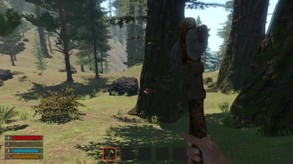
Visually, the game employs a simple, low-poly aesthetic that emphasizes functionality over realism. Environments range from forests to open fields, with each area offering opportunities for exploration and resource gathering. While the minimalist style can convey a sense of isolation and quiet, many players have noted that the graphics feel dated and lack refinement, which can detract from the game’s intended atmosphere. The user interface similarly suffers from design limitations, with clunky menus and awkward controls that complicate basic tasks such as inventory management, crafting, and navigation.
Gameplay centers on traditional survival activities: gathering resources, crafting tools, constructing shelters, and maintaining health, hunger, and stamina. A dynamic day-night cycle and seasonal changes add additional challenges, requiring players to plan ahead and adapt their strategies over time. However, technical issues—including unresponsive controls, bugs in the inventory system, and glitches in AI interactions—can interrupt the flow of gameplay and create frustration. These problems make what should be a methodical and engaging survival challenge feel inconsistent and sometimes punishing.
The game attempts to incentivize progression through achievements, unlockable items, and trading cards, encouraging exploration and skillful resource management. Despite these features, the lack of meaningful advancement and limited variety in activities can make long-term play feel unrewarding. Additionally, 365 Days is a purely single-player experience, with no multiplayer or social features, which further reduces its replayability and limits engagement for players seeking cooperative or competitive interactions.
In summary, 365 Days presents an intriguing and ambitious take on the survival genre, with a focus on realistic wilderness interactions and the challenges of long-term survival. Its strengths lie in the concept and the potential for immersive gameplay, but its execution is marred by technical issues, outdated visuals, and limited progression. While the game may appeal to enthusiasts of survival simulations who are patient and willing to overlook flaws, those seeking a polished, feature-rich experience are likely to find it lacking. The mixed reception reflects these challenges, highlighting a title with promise that struggles to fully realize its vision.
Rating: 4/10