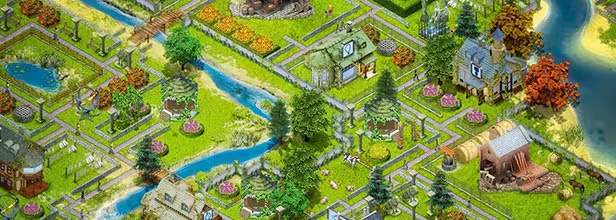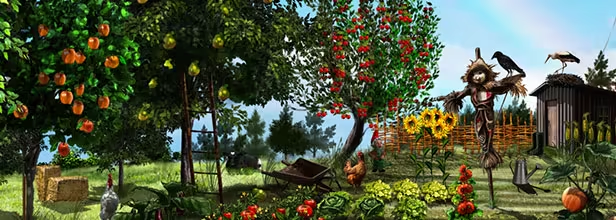
Discover Uptasia! Create your own little 19th century town with fantastic production sites and shops. Master a wide variety of hidden object game challenges. Put your reactions and strategic skill to the test. Download Uptasia now!
Revenue comes from in-game items and microtransactions, which our price-based model doesn't estimate. Copies below reflect the player base, not paid sales.
Media

About


Genres
Stats
Languages: English, French, German, Danish, Dutch, Polish, Romanian, Russian, Czech, Hungarian
Engagement
Reviews
Themes across 40 recent reviews and how positive each mention is. A keyword signal, not full sentiment analysis.
Reviews
Uptasia is a free-to-play hybrid simulation game developed and published by upjers that combines city-building mechanics with hidden-object puzzle gameplay. While both genres have existed for decades, they are rarely blended together in a meaningful way. Uptasia attempts exactly that by allowing players to construct and manage a growing industrial-era town while simultaneously progressing through a large collection of visual puzzle challenges. The result is a relaxing and accessible experience that appeals to players who enjoy casual management games but also appreciate observation-based gameplay. Set during the nineteenth century, the game transports players into an age of invention, trade, and industrial growth. Starting with a modest settlement, players gradually transform their town into a bustling economic center filled with workshops, factories, businesses, and decorative landmarks. The setting provides a refreshing alternative to the fantasy kingdoms and modern cities commonly found in city-building games. The focus on the industrial era gives the game a distinct atmosphere while providing plenty of opportunities for production chains and economic expansion. The management side of Uptasia revolves around creating goods, upgrading facilities, and expanding infrastructure. New buildings become available as progress is made, allowing players to manufacture an increasingly diverse range of products. From artisan workshops and pharmacies to shipyards and glassmaking facilities, the variety of production sites helps maintain a steady sense of growth. Every new structure contributes to the development of the town while opening additional opportunities for advancement. What truly separates Uptasia from conventional city-building games is its hidden-object gameplay. Rather than simply waiting for resources to accumulate, players actively participate in detailed puzzle scenes where they must locate specific objects hidden within elaborate illustrations. These challenges are integrated directly into the progression system and serve as one of the primary methods of earning rewards. Success depends on observation, concentration, and speed, creating an engaging contrast to the slower pace of city management. The hidden-object scenes themselves are among the game's strongest features. Each environment is filled with carefully placed details, colorful artwork, and cleverly concealed items that encourage players to examine every corner of the screen. As players advance, the puzzles become increasingly challenging, requiring sharper observation skills and faster reactions. The variety of scenes helps prevent repetition and ensures that the puzzle-solving component remains entertaining over extended periods. A particularly effective aspect of the design is the way both gameplay systems support one another. City expansion unlocks new hidden-object challenges, while completing puzzles provides resources and benefits that contribute to economic growth. This relationship creates a satisfying gameplay loop where neither system feels secondary. Instead, the puzzle and management mechanics function as equal partners, constantly feeding into one another and encouraging continued progression. The visual presentation is consistently appealing. Buildings, decorations, and production facilities are rendered in a colorful and inviting style that perfectly complements the game's casual nature. The hidden-object scenes receive especially impressive attention, featuring detailed illustrations that remain enjoyable to explore even after multiple visits. The art direction successfully captures the charm of the nineteenth century while maintaining a lighthearted and approachable atmosphere. Customization also plays a meaningful role in the experience. Players are given considerable freedom when arranging buildings and designing their settlements. While efficient layouts help maximize productivity, there is also room for creativity. Decorative elements allow towns to develop their own personality, encouraging players to create communities that are visually pleasing as well as economically successful. Beyond the core gameplay, Uptasia includes social features that help foster player interaction. Guilds, friendships, cooperative systems, and seasonal events provide additional objectives and opportunities for collaboration. These features contribute to the game's longevity by giving players goals beyond simple expansion. Regular updates and themed events help keep the experience active while introducing new content and rewards throughout the year. One of the game's greatest strengths is its accessibility. The mechanics are easy to understand, making it approachable for players of all experience levels. There is little pressure to optimize every decision, and the overall pace remains relaxed. This makes Uptasia particularly suitable for players seeking a low-stress gaming experience that can be enjoyed in short sessions. However, the game is not without weaknesses. As with many free-to-play titles, progression can sometimes feel gradual, particularly during later stages of development. Players who prefer fast-paced advancement may find certain aspects of the economy slow. The management systems also lack some of the complexity found in dedicated city-building simulations, which may leave strategy enthusiasts wanting more depth. Additionally, community reception has been mixed, reflecting differing opinions regarding progression speed and monetization. Despite these concerns, the game's core concept remains appealing and well executed. What makes Uptasia memorable is its willingness to merge two seemingly unrelated genres into a cohesive experience. The satisfaction of expanding a successful town is complemented by the immediate engagement of hidden-object puzzles, creating a gameplay loop that feels both relaxing and interactive. Few city-builders offer such a distinctive combination of mechanics, and that originality helps the game stand out even years after release. Uptasia is a charming and enjoyable casual simulation that succeeds by offering something different. Its industrial-era setting, attractive artwork, accessible mechanics, and inventive blend of city management and hidden-object gameplay create an experience that remains engaging without becoming stressful. While it may not satisfy players seeking deep economic strategy or intense challenge, it provides a pleasant and rewarding journey for those who enjoy relaxed progression and observation-based puzzles. Rating: 6/10
Related
Related
Trends
Concurrent players on Steam, sampled daily since tracking started.
Hours played at review time, across 40 reviews with recorded playtime.
positive critical· bar length = how often the theme comes up
Uptasia'yı keşfedin! Harika üretim alanları ve mağazalarla kendi küçük 19. yüzyıl kasabanızı yaratın. Çok çeşitli gizli nesne oyunu zorluklarında ustalaşın. Tepkilerinizi ve stratejik becerilerinizi test edin. Uptasia'yı hemen indirin!
i like this
Ну на разок.
Безкорисна гра заточена на постійну купівлю гемів, яка не вартує ні 1 цента
[h1] [/h1]
:D
es fehlen teilweise Sachen in den Bildern, sind verkehrt benannt, und es stürzt ständig ab
nice
cute game
Momentum
Pace estimated from the game's recent review growth (our daily snapshots) at its own sales-per-review ratio — a momentum signal, not booked sales.
Audience
Estimated from the language of this game's reviews — a proxy for where players are, not official Steam demographics.