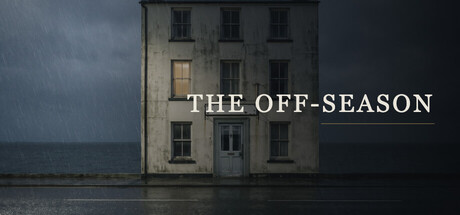
The Off-Season
You are the winter caretaker of a seaside hotel nobody visits between October and March. The owner's rules are pinned above the desk: no guests, no exceptions. Then somebody knocks — off the last bus, in the rain, with cash and no booking. You decide who gets a key, and which room.
Estimated lifetime revenueLow confidence
—gross
—
Modeled estimate, not a reported figure. How we estimate →
Est. copies sold
0
mid estimate
Reviews
0
Review score
—
Concurrent players
About
About the game
The hotel is closed for the winter. You have the keys.
A seaside hotel on a coast nobody comes to between October and March. The owner is away until spring. Her rules are pinned above the desk in her own handwriting: no guests, no exceptions, the boiler runs at four. The season has an instalment to make and the boiler eats oil, so an empty house is not safe — it is bankrupt. The first thing this game tells you is that obeying the rules loses.Then somebody knocks.
Off the last bus, in the rain, with cash and no booking, and a reason they would rather not give. Nobody comes to this coast in winter without one. You can ask — but you are a stranger behind a desk at night, and every question you ask is one they now know you wanted answered.You decide who gets a key. And which room.
Four answers, and none of them is yes or no.- Give a key. They are in the house tonight. Their money is in the box, and so is whatever came with them.
- Refuse. The last bus has gone. Refusing costs something, sometimes before morning.
- Give a particular room. The one that matters.
- Take the money and leave the night out of the book. The cash is yours, not the house's — and the register never says they were here.
The rooms are not interchangeable, and the house teaches you that slowly.
3 looks over the road — you can see who arrives, and so can they. 7 and 8 share a wall, so whoever sleeps in them hears each other. 12 is the only room with a line out. 19 is top floor, at the end, where nobody hears anything at all. A refusal is one bit of information. A room is a sentence: the man who asked about the road went in 19, and the woman who kept looking at the door went in 12, so she could call someone.A full house is bad.
You cannot take every night's money and stay safe, and you cannot turn everyone away and stay solvent. Cash is the currency of danger — the more a stranger pays, the more it is worth asking why. And the rules above the desk are not stupid and they are not right. They are what somebody wrote in September about a February she will not be here for.The register remembers, and so does room 24.
Pages are missing from the book on the desk. The town's list and the register disagree about who was here last winter, and the disagreement is legible if you keep both. The board still has the key to 24 — the previous caretaker's room. You can open it on the first night. What is in there does not stop the season; it changes how you read every knock after it.What's inside
- A season of nights — arrivals, rooms, money, and the morning the ledger closes.
- A hotel you walk — the desk, the corridor, the rooms you let, in cold painted first person.
- Guests who stay — a key given is a key out. The board fills up, and the quiet room may already be holding someone.
- Consequences that arrive late — what you let in comes back at the house, not at the guest.
- A thread you assemble rather than solve — the register, the town's list, and the room nobody has opened since last winter.
- One season, one thread — it closes the way it was always going to close, and what changes is the last page of the register: who wrote it, and what they left out.
- No death, no failure that erases a run. You get dismissed, or the season ends with a room you never opened.
