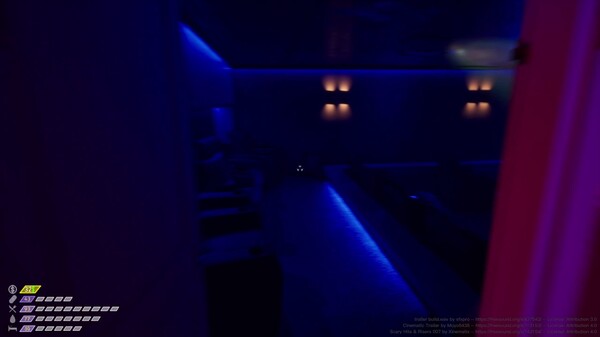
Experience the mind of a man with schizophrenia in a surreal, single-room narrative. Manage his daily needs, maintain mental stability, and explore shifting memories in a calm, intense psychological journey.
Modeled estimate, not a reported figure. How we estimate →
Media

About
Still Room: I Miss You is a psychological narrative experience that explores the fragile border between reality and illusion through the mind of a person living with schizophrenia.
You play as a man confined to a single room, trying to function as his mental state slowly begins to unravel. Over roughly 90 minutes of gameplay, you go through ordinary daily routines: working on your thesis, staying in touch with a loved one through text messages, and doing everything you can to remain mentally stable.
Your survival depends on managing basic needs such as eating, drinking, sleeping, and taking medication regularly. Neglecting any of them changes how the world is perceived. The room distorts, reality bends, and familiar surroundings become increasingly unsettling.
Although the game takes place mostly within one room, the space does not remain static. Behind closed doors, fragments of memories and ambiguous visions begin to surface. Their meaning is never fully explained. The psychedelic, surreal visuals and oppressive sound design reflect the confusion, anxiety, and chaos of a fractured mind.
Still Room is not an action game. It is a slow, intense narrative experience focused on observation, interpretation, and reflection. The story unfolds subtly, inviting players to piece together what is real, what is imagined, and what lies somewhere in between.
Psychological narrative game exploring schizophrenia
Mental stability and needs management system
Text-based conversations with a close loved one
Story with multiple possible endings
Psychedelic, surreal visual style
Approximately 90 minutes of story-driven gameplay
A single intimate space that reacts to the character’s mental state

Genres
Stats
All-time low is the lowest price we've recorded for this game since we started tracking it.
Languages: English*, Polish*languages with full audio support
Reviews
I got this game from the developers' official Discord and I wasn't disappointed. The game is amazing and has an incredible atmosphere. The gameplay is very enjoyable, and you can really get into the story. And I really love the little robot on the desk, he's so funny :D I highly recommend it!!
Still Room: I Miss You is a slow-burning psychological narrative experience that focuses more on emotional isolation and mental deterioration than traditional horror mechanics. Developed and published by Pohybelnia, the game traps players inside a small apartment alongside a protagonist struggling with schizophrenia, loneliness, and unresolved emotional trauma. Rather than relying on combat, jump scares, or complicated puzzles, the experience builds tension through atmosphere, repetition, and subtle environmental changes that gradually distort reality. The result is a deeply intimate indie title that feels unsettling not because of monsters or violence, but because of how convincingly it portrays emotional collapse and psychological instability. The game takes place almost entirely inside a single room, which initially seems like an unusual limitation. However, this confined setting quickly becomes one of the game’s greatest strengths. The apartment slowly transforms from a familiar living space into something oppressive and unpredictable as the protagonist’s mental condition worsens. Lighting changes, objects shift unexpectedly, and strange visual distortions begin appearing without warning. The room itself becomes a reflection of the protagonist’s deteriorating perception, creating a constant feeling of unease even during quiet moments where nothing dramatic appears to happen. The developers use environmental storytelling effectively, proving that horror can emerge from subtle discomfort rather than loud scares. Gameplay is intentionally minimalistic and revolves around maintaining simple daily routines. Players spend time eating meals, taking medication, studying, sleeping, and communicating with someone emotionally important through messages. These mundane activities become central to the experience because neglecting them causes reality to become increasingly unstable. The game does not attempt to create traditional challenge through difficult mechanics. Instead, it uses repetition and routine to immerse players inside the protagonist’s fragile mental state. This design choice will likely divide players because the experience is deliberately slow and introspective, but it fits the psychological themes remarkably well. One of the game’s strongest elements is its writing. The story unfolds gradually through fragmented dialogue, environmental clues, and personal interactions that reveal more about the protagonist’s emotional condition over time. Themes involving grief, denial, loneliness, and fear of abandonment are explored with surprising subtlety. The narrative avoids sensationalizing mental illness and instead focuses on confusion, vulnerability, and emotional exhaustion. This grounded approach makes the experience feel more personal and emotionally authentic than many psychological horror games that depend heavily on exaggerated symbolism or constant shock value. The visual design plays a massive role in maintaining the game’s atmosphere. Surreal imagery and psychedelic effects are introduced carefully, often appearing during otherwise ordinary moments to create uncertainty about what is real. The game balances realism and distortion effectively, allowing hallucinations and visual shifts to feel genuinely uncomfortable because they interrupt familiar surroundings. The changing appearance of the apartment gradually transforms the environment into something dreamlike and emotionally oppressive without relying on graphic imagery or excessive horror clichés. Sound design is arguably the game’s most powerful tool. Ambient noises, distorted audio cues, and subtle environmental sounds constantly create tension even when the screen appears calm. Certain effects feel intentionally disorienting, reinforcing the protagonist’s unstable perception of reality. The soundtrack itself is restrained, but the use of silence and background noise helps maintain psychological pressure throughout the experience. Playing with headphones significantly enhances the immersion because many of the game’s most effective moments rely on subtle audio manipulation. The pacing is deliberately slow and methodical, which works both as a strength and a weakness. Players expecting constant progression or traditional gameplay variety may find the routine structure repetitive. Much of the game involves simply existing within the apartment and observing gradual changes in the environment. However, that monotony is essential to the emotional experience. The repetitive routines reinforce the protagonist’s sense of isolation and emotional stagnation, making the psychological breakdown feel more believable and intimate. Another aspect that may divide players is the game’s ambiguity. Still Room: I Miss You leaves many story elements open to interpretation, especially regarding the nature of the hallucinations and the emotional meaning behind certain events. The multiple endings avoid providing complete clarity, encouraging players to form their own conclusions about what truly happened. Some players will appreciate this subtle storytelling style, while others may find the narrative too abstract or emotionally distant. The relatively short runtime also means the game ends before fully exploring every idea introduced during the experience. While the concise structure prevents the atmosphere from becoming repetitive, it can leave players wishing for deeper exploration of the protagonist’s relationships and backstory. Even so, the focused pacing helps preserve the emotional intensity from beginning to end without unnecessary filler. Still Room: I Miss You succeeds because it understands how to create discomfort through emotional vulnerability rather than conventional horror tropes. Its confined setting, surreal visual design, oppressive soundscape, and emotionally grounded storytelling combine to create a haunting experience that lingers long after completion. While the slow pacing and minimal gameplay will not appeal to every player, those interested in psychological narratives and atmospheric indie horror will likely find it deeply memorable and surprisingly affecting. Rating: 7/10
Related
Related
Trends
Modeled estimate over time, reconstructed from Steam's monthly review histogram.
Related
| Pizza Bike Rider | $1.3K | 53 | 89% | $0.99 |
| The Rare Nine | $1.3K | 101 | 52% | $0.65 |
| Cyber Pussy 2020 | $1.3K | 114 | 70% | $1.99 |
| Fisher Idle | $1.3K | 52 | 63% | $1.99 |
| TOTOBALL | $1.3K | 69 | 78% | $0.99 |
| The Tale of a Common Man | $1.3K | 74 | 89% | $0.79 |