Samurai Aces III: Sengoku Cannon, developed by CITY CONNECTION and Zerodiv and published by CITY CONNECTION, marks a bold but uneven evolution of the classic Psikyo shoot ’em up lineage. As the third entry in the Samurai Aces series, it shifts the formula from the traditional vertical format of its predecessors into a horizontal-scrolling shooter, an uncommon direction for Psikyo’s games. While this change brings with it a few new ideas—most notably the Cannon Shot system and 3D backgrounds—it also alters the fundamental feel of what made the earlier titles such tightly crafted arcade experiences. The result is a game that both pays homage to the studio’s bullet-hell roots and simultaneously struggles to replicate their mechanical precision and visual charm in a new dimension.
At its foundation, Sengoku Cannon retains the hallmarks of Psikyo’s design philosophy: brisk pacing, challenging enemy waves, and a scoring system built around mastery rather than mere survival. Players can choose from a diverse roster of characters, each equipped with unique weapons, movement speeds, and special attacks. These characters are drawn from the series’ distinctive fusion of Japanese mythology, fantasy, and steampunk aesthetics, creating a world where samurai pilots and mechanical demons coexist in a bizarrely cohesive setting. The game’s defining mechanic, the Cannon Shot, adds a layer of strategy that distinguishes it from the earlier Samurai Aces and other Psikyo titles. When enemies are destroyed using this special attack, their bullets are converted into bonus items, rewarding players for taking calculated risks and timing their shots carefully. It’s a satisfying twist that ties the scoring system directly to the player’s skill, adding a rhythm of buildup and release that keeps the action engaging.
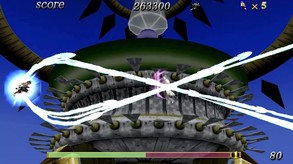
However, the transition from vertical to horizontal gameplay introduces both strengths and weaknesses. The change allows for a greater emphasis on environmental detail and stage variety, but it also highlights limitations in camera movement and depth perception. The shift to 3D backgrounds, combined with 2D character sprites, gives the game a layered visual style that can be striking in moments but often feels inconsistent. The environments, while colorful and dynamic, can occasionally obscure incoming bullets or blend too closely with projectile effects, making it difficult to maintain the precision that Psikyo’s shooters typically demand. The frame rate, which is locked at 30 frames per second on many ports, further detracts from the sense of speed and responsiveness that genre veterans expect. This technical constraint dulls the edge of what should be razor-sharp gameplay, giving Sengoku Cannon a slightly sluggish feel compared to its predecessors’ crisp, arcade-perfect execution.
The level design maintains the brisk tempo of Psikyo’s usual formula but shows signs of compromise. Stages are longer and more visually diverse, yet they lack the tightly structured escalation that made earlier games such adrenaline-fueled experiences. Enemy patterns and boss encounters often repeat similar ideas, and while the visual flair of the bosses is impressive, their mechanical design rarely evolves beyond predictable attack patterns. Still, the presence of multiple difficulty settings and adjustable options—such as continues, lives, and screen filters—ensures that players of all skill levels can enjoy the game at their own pace. The inclusion of online leaderboards also gives score chasers a reason to return, adding a modern layer of replayability to the nostalgic structure.
Aesthetically, Sengoku Cannon carries forward the series’ colorful, eccentric identity. The mix of feudal Japanese motifs and sci-fi weaponry gives it a distinctive flair, enhanced by the quirky character designs that combine humor and heroism in equal measure. Each pilot has a short narrative thread that adds flavor to the campaign, and the voice acting gives personality to what might otherwise be silent avatars. Unfortunately, the audio design doesn’t quite reach the same heights. The soundtrack, while functional and occasionally catchy, lacks the punch and memorability of Psikyo’s earlier compositions. The sound effects, too, are serviceable but fail to deliver the visceral satisfaction of more polished contemporaries. In short bursts, the presentation is charming, but it struggles to maintain energy across repeated playthroughs.
The most divisive aspect of Samurai Aces III is how it fits into the legacy of its predecessors. Fans of Psikyo’s earlier shooters often point to its predecessor, Tengai (Samurai Aces II), as a near-perfect blend of visual creativity and mechanical balance. By comparison, Sengoku Cannon feels like an experiment that never fully settles into its own identity. The Cannon Shot system is clever, but the game’s pacing and technical shortcomings prevent it from reaching the same rhythmic intensity that defines Psikyo’s best work. It’s not without moments of brilliance—certain stages burst with visual energy, and the character-specific weapon systems add genuine variety—but these flashes of excellence are offset by inconsistent execution and dated production values. Still, as a piece of the series’ history, it’s a fascinating look at how a studio known for vertical shooters tried to reinvent its formula in a changing arcade landscape.
For those who appreciate the heritage of Japanese shoot ’em ups, Samurai Aces III: Sengoku Cannon offers enough to justify a visit. It’s a flawed but intriguing entry that demonstrates both the strengths and limitations of Psikyo’s experimentation. The game captures the essence of its lineage—fast, expressive, and unapologetically arcade-like—while revealing how delicate the balance of the genre truly is. Its imperfections are visible, but so too is the ambition behind them. For longtime fans, it’s a nostalgic extension of a beloved franchise; for newcomers, it serves as a colorful, if uneven, introduction to the world of Psikyo shooters. Though it may not stand among the studio’s best, Sengoku Cannon remains an important reminder of an era when shoot ’em ups dared to evolve without losing their spirit.
Rating: 5/10