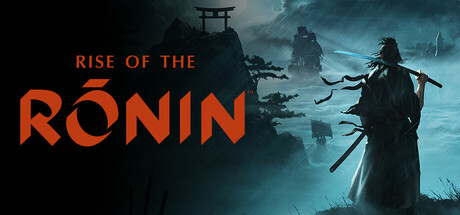
Rise of the Ronin is Team Ninja’s attempt to mix Assassin Creed-like exploration with soulslike combat and, despite some interesting ideas, they don’t quite manage to pull it off, with so-so combat and an over-reliance on the same repetitive side activities that so many open world games fall prey to.
Surprisingly, I actually found Rise of the Ronin’s story to be one of it’s strong points. My eyes usually glaze over when sitting through the interminable cutscenes of a Team Ninja game, but this time I was, much to my surprise, invested in the plot. There are no supernatural entities here, but rather a retelling of the end of the Edo period, where the increasing encroachment of the west into Japanese trade and politics eventually led to a rift between the incumbent shogunate and various anti-western factions.
It’s a fascinating time in Japanese history, and getting to forge alliances all while rubbing shoulders with well-known historical figures such as Shoin Yoshida, Ernest Satow, and Kaishu Katsu is great. In fact, I’d go as far to say that the story is far better than Assassin’s Creed Shadows which had a plot so thin it was almost transparent.
My only gripe is that, as Team Ninja are wont to do, there are far too many characters, including some that disappear for hours at a time only to reappear at head-scratching moments. If you bounce from one alliance to the other as most players will, you’ll also often end up fighting an NPC only to go on a sidequest with him moments later. The story was great, but if the developers had just pruned down the fifty or so NPCs to a dozen or so, it would have been even better.
Team Ninja’s typical lust for excess spills over into the other mechanics as well. Loot bloat is back with a vengeance, though tempered somewhat by the fact that you can auto-sell or auto-dismantle stuff at every checkpoint which alleviates some of the frustration. Each item has up to four minor passive bonuses (such as get 0.5% more of… something) that I continue to ignore, with only the set bonuses worth keeping an eye on.
The open world falls into the same trap as the later Assassin’s Creed games, with scores of boxes to check, but only three main collectibles : cats, photos, and chests. Now I love petting a cat as much as the next man, but after collecting 85 of the furry felines I was starting to dread the moment I’d have to sit through the same animation for the umpteenth time. To get the collectibles to show up on your map you need to clear out enemy bases to restore public order. Again, these are all eerily similar and are completed more or less in the same way : by stealthing your way in there, killing as many as you can undetected, then finishing off the remainder when the unko hits the fan.
Similarly, side quests are lacking in variety. You’re often either rescuing someone, or assassinating someone, which leads to you navigating a closed-off level until you reach the miniboss at the end. There were a few exceptions such as investigating a haunted village or taking photos in a brothel, but they were few and far between.
The carrot on the stick for finding all the collectibles in a region is a stat point or two and a constant trickle of resources. Stat points can be spent in one of four skill trees (strength, dexterity, intelligence, and charm) to unlock additional combat moves, lower store prices, or expand choices during conversations. It kind of works, but it didn’t give me the flexibility I was looking for as in most cases stat points are specific to a skill tree so you are levelling all stats equally rather than customizing your build.
Luckily, the combat is serviceable, though I think it’s probably my least favourite of all the Team Ninja games, a mix of Nioh and Wo Long with a heavy focus on parries that I didn’t quite jive with. Ki-management and stances are back, with different stances doing more or less damage against different enemy types. Gone, however, is the ki-pulse, replaced by a blade flash, which is a gauge that fills as you attack with your weapon and can then be expended at the end of a combo. After being so used to ki-pulsing, I found this additional resource to manage to be a bit finicky, and not being able to get ki back after a block or a dodge was annoying.
Speaking of finicky, Rise of the Ronin’s parries, or “countersparks” are also harder to pull off, especially as you have to parry the entire enemy combo (sometimes up to six or seven hits in a row) to see any meaningful effect on ki. Even worse, martial arts are back, but you can’t cancel out of most of them, and even the weaker enemies have absolutely ludicrous amounts of hyper armour, not reacting in the slightest to a flurry of greatsword swings to the face. It made me frustrated enough to limit my parrying attempts to bosses and brute force my way through most of the weaker enemies which I’m not sure it what Team Ninja intended.
Firearms have always been powerful additions to Team Ninja games, but here they are incredible. Rifles and bows will kill weaker enemies in a single headshot, and 8 bullets from a rifle will take a full third of a boss’s health. Plentiful resources mean you can add fire, poison, or electricity to your blade or bow, and these can also trivialise some fights, making most of the late game rather easy, including the final boss who I set on fire three times in a row and watched burn to death.
As is often the case, by trying to split their focus between two genres, Team Ninja have mastered neither. The exploration is not quite varied or enticing enough, and while the combat flows well (apart from a few hiccups due to finicky ki-management), it doesn’t have that extra spark to raise it up to the level of a Nioh or a Wo Long.